
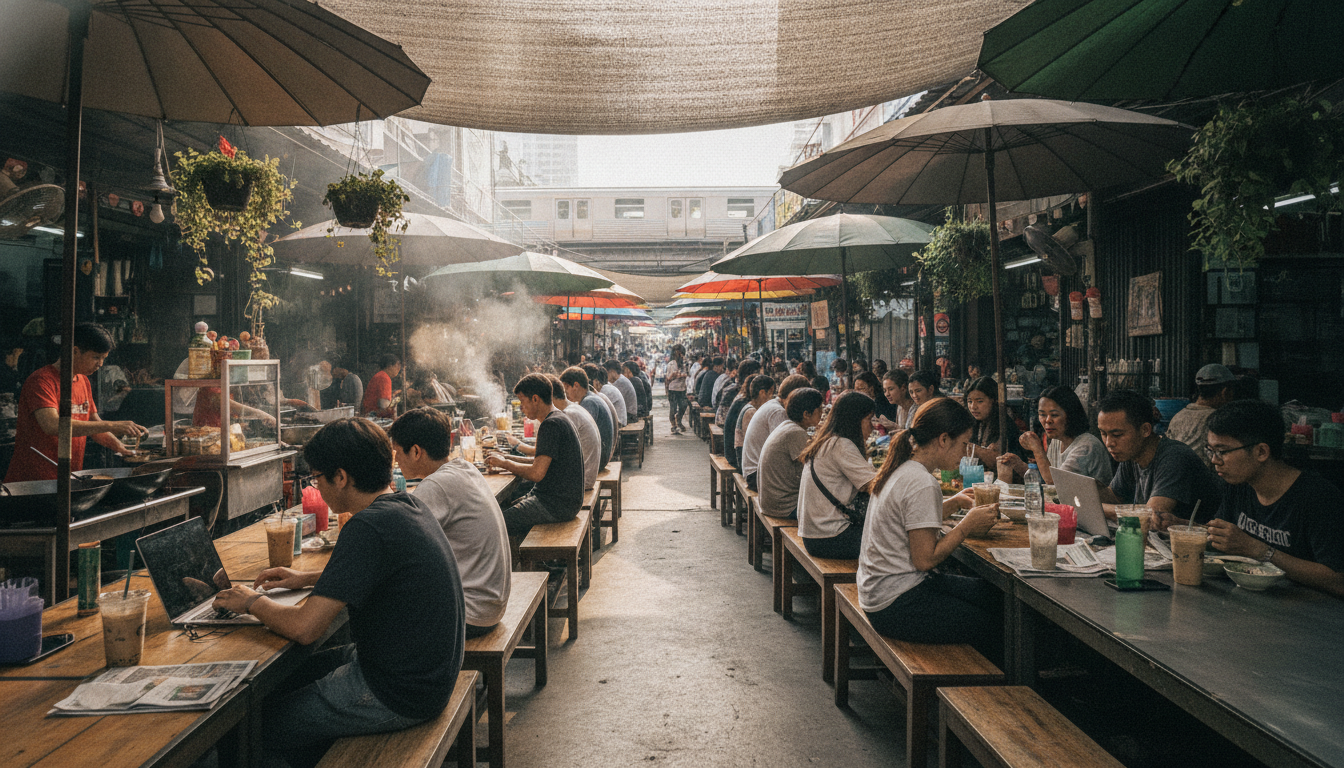
Market-style Eateries in Bangkok Transform Neighborhood Streets into Cafe-Bar Coworking Hubs
Market-style eateries in Bangkok turn local streets into cafe-bar and coworking hubs, serving residents far from train stations while fostering community.
Bangkok is seeing a noticeable shift as market-style eateries in residential districts multiply, offering food, drink and workspace to locals who live away from major transit hubs. These venues combine casual dining with amenities traditionally found in downtown cafés and coworking sites, drawing customers who previously had to commute to stations for similar services. Operators and residents say the trend is reshaping daily life in neighborhoods where commercial options were previously limited.
New Model for Neighborhood Dining
Local entrepreneurs are repurposing small storefronts and former shophouses into hybrid cafe-bars that open early for coffee and stay late for drinks and gatherings. Many of these venues intentionally design staggered seating, electrical outlets and reliable Wi-Fi to accommodate daytime remote workers and evening social crowds. The format borrows elements from market stalls, casual eateries and boutique offices, creating flexible spaces that change use over the course of a day.
These hybrid venues also emphasize affordability and local supply chains, often sourcing ingredients from nearby markets and adjusting menus to match neighborhood tastes. Proprietors have reported longer dwell times and steady weekday traffic as freelancers, students and parents use the spaces for work, study and meetings. The combination of food service and soft infrastructure has proved attractive in areas outside Bangkok’s dense rail corridors.
Growth Beyond Transit Corridors
Urban growth and higher rents along BTS and MRT lines have concentrated cafés and bars near stations, leaving many residential pockets underserved. Market-style eateries in Bangkok are responding by filling that gap, opening in mid-density districts and soi streets where foot traffic is primarily local. This geographic diversification reduces the need for short commutes and distributes economic activity across a wider urban footprint.
City planners and local councils have taken notice as these venues often activate streets that were otherwise quiet after business hours. Some municipalities have relaxed minor zoning restrictions or expedited permitting to encourage small food operators, arguing that neighborhood commerce increases safety and improves access to services for residents without private transport. The result is a more polycentric pattern of urban life.
Blending Food Service and Coworking
A defining feature of these market-style eateries in Bangkok is the deliberate combination of dining and workspace features. Layouts include communal tables, power strips, and quiet corners separated from louder dining zones to support work and socializing simultaneously. This blending allows operators to capture revenue across different dayparts and appeal to multiple user groups without significant additional investment.
Staff training and menu design reflect the hybrid role: quick lunch options and reliable coffee in the morning give way to small plates and local beers in the evening. Some venues host events such as language exchanges, pop-up markets and skill workshops that further embed them into neighborhood life. For many customers, the convenience of a nearby place to both eat and work outweighs the allure of trendier outlets along transit lines.
Business Strategies and Economic Viability
Owners say lower rents in residential corridors, combined with diversified revenue streams, make the market-style model financially viable. Daytime coworking users buy coffee and meals, while evening customers provide bar sales and longer tabs, smoothing income swings that hurt single-purpose venues. Operators also profit from partnerships with delivery platforms and community events that bring new foot traffic.
However, challenges remain: managing noise, maintaining reliable internet, and balancing the needs of workers and diners can strain staffing and layout decisions. Some proprietors are experimenting with membership models or timed seating to ensure a steady flow without overcrowding. The adaptive strategies suggest these eateries will continue to refine their offerings rather than rely on a single template.
Residents’ Experiences and Local Demand
Residents interviewed in emerging neighborhoods describe these venues as practical alternatives that save time and enhance everyday life. Parents with young children, older residents who prefer shorter walks, and remote workers who want a change of scenery all cite convenience as a primary reason for patronage. The social dimension is also important; many see market-style eateries in Bangkok as places to meet neighbors and discover local producers.
Feedback from users indicates a demand for consistent opening hours, reliable connectivity and comfortable seating—features that can make or break repeat visits. Where these elements are present, venues often become informal civic spaces, hosting charity drives, communal meals and small cultural events. The concentration of such activities can accelerate the transformation of quiet residential streets into lively local centers.
Implications for Urban Policy and Planning
The spread of market-style eateries raises questions for urban policy on infrastructure, waste management and public space use. Local authorities may need to upgrade pedestrian pathways, manage waste collection more frequently, and consider small-scale traffic calming to support increased foot traffic. There is also scope for targeted support, such as microgrants or simplified licensing for small food operators that contribute to neighborhood vitality.
Planners must weigh residents’ quality-of-life concerns against the economic benefits of distributed commercial activity. Where managed carefully, officials say, neighborhood eateries can reduce pressure on transport networks and provide local employment opportunities. The emerging pattern points to a more decentralized urban fabric supported by small-scale entrepreneurs.
As Bangkok’s housing and commuting patterns evolve, market-style eateries in Bangkok are likely to remain a prominent feature of neighborhood life, offering practical services and creating new social nodes for communities outside the city’s major transit arteries.

