
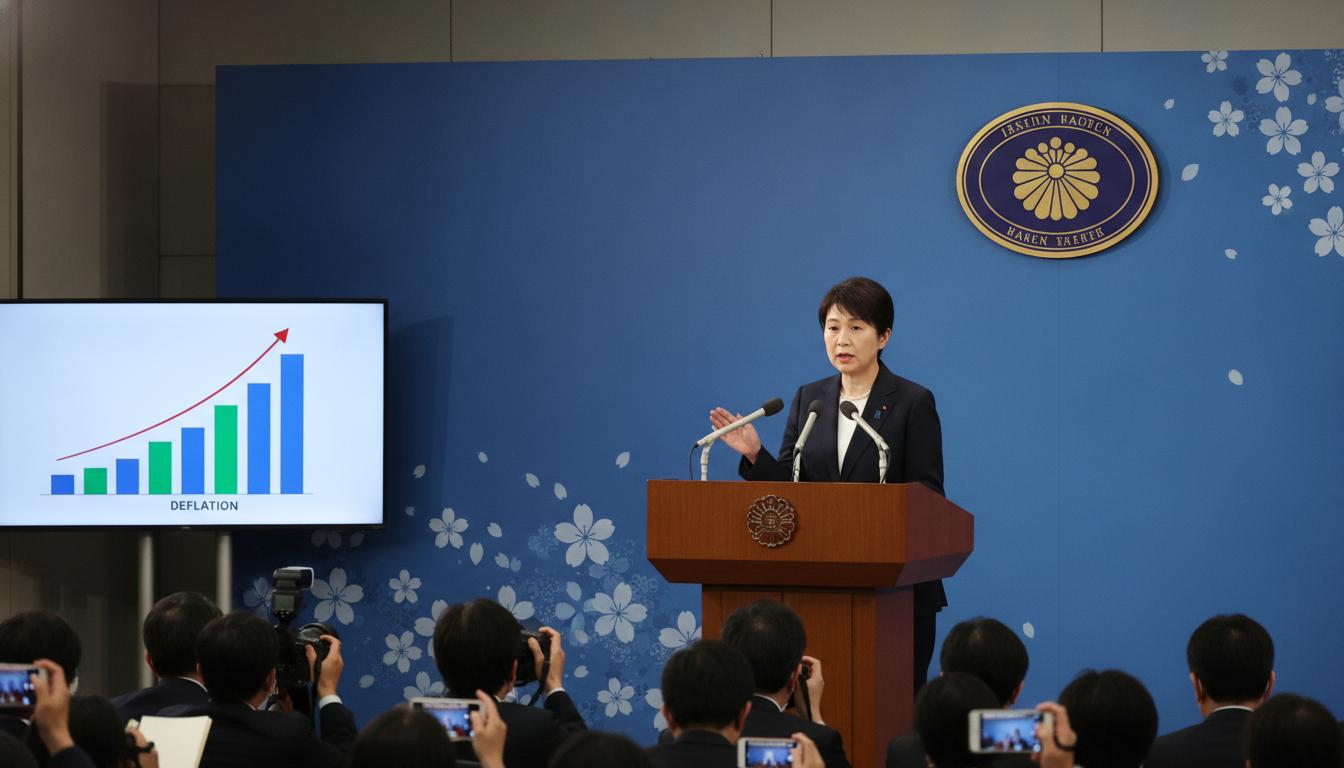
Takaichi Defends 370 Trillion Yen Growth Drive Amid Market Concerns
Sanae Takaichi defends a 370 trillion yen growth drive, arguing it will bolster Japan’s economy and tackle lingering deflation worries.
TOKYO — Prime Minister Sanae Takaichi on July 27, 2026, publicly defended her administration’s 370 trillion yen growth drive, insisting the package is targeted at strengthening long-term economic fundamentals rather than prompting unchecked spending. Takaichi said Japan has not “escaped deflation” despite recent price rises and framed the program as necessary to lift productivity and private investment. Her remarks came amid mounting market scrutiny of the plan’s fiscal scale and policy design.
Takaichi defends 370 trillion yen growth drive
Takaichi told reporters at the prime minister’s office that the growth drive is designed to broaden the economy’s capacity and support sustainable expansion. She emphasized measures will aim to mobilize private capital and modernize infrastructure while avoiding impulsive fiscal loosening.
The prime minister rejected characterizations that the package would simply fuel consumption-driven inflation, saying careful implementation and oversight will accompany the spending. Her office presented the initiative as a multi-year effort to address structural weaknesses that have restrained growth.
Markets voice concern over fiscal scale
Market participants have expressed unease about the sheer size of the 370 trillion yen growth drive and the potential implications for government finances. Investors and analysts say the programme’s funding profile and timing will be scrutinized for risks to sovereign creditworthiness and bond market stability.
While Takaichi sought to reassure markets, the announcement prompted renewed debate among traders and fund managers about the balance between fiscal stimulus and monetary stability. Observers said volatility could increase if details on financing and sequencing remain vague.
Government outlines fiscal guardrails and oversight
Officials close to the administration say the growth drive will include fiscal guardrails intended to mitigate overheating and to preserve long-term balance-sheet integrity. The government is reportedly preparing rules to phase commitments, tie spending to benchmarks and prioritize projects with demonstrable returns.
Takaichi’s aides argue those mechanisms will help steer funds toward productivity-enhancing investments, such as digital infrastructure and green transition projects. They contend such targeting will make the package more likely to attract private co-investment and reduce reliance on sustained deficit financing.
Inflation, deflation and the policy dilemma
Takaichi’s comment that Japan has not “escaped deflation” despite rising prices revived a long-standing macroeconomic debate in Tokyo. Policymakers face the paradox of transitory price pressures on certain goods while underlying demand and wage growth remain subdued.
Economists note that headline inflation readings can mask weak domestic demand and that achieving sustained inflation consistent with wage-led growth requires structural change. Critics caution that large fiscal commitments without clear supply-side gains could produce short-lived price spikes rather than durable improvements in living standards.
Political stakes and parliamentary scrutiny
The administration’s growth drive carries significant political risk as opposition parties prepare to subject the plan to close parliamentary review. Lawmakers are expected to press for greater transparency on project selection, cost estimates and the timeline for implementation.
Takaichi’s government must also reconcile competing public expectations: voters want visible economic improvements, but many remain wary of long-term debt burdens. How the Tokyo leadership communicates the plan’s safeguards and measurable targets will shape public and market confidence.
Japan’s central institutions and private sector reactions will be pivotal as the government moves from announcement to execution. Analysts say clarity on financing, independent oversight and milestones for private sector engagement will determine whether the growth drive strengthens the economy as intended.
The coming weeks will see the administration publish more detailed proposals, face legislative debate and respond to market signals as it seeks to transform its 370 trillion yen growth drive from headline figure into tangible reforms that assuage both economic and fiscal concerns.

