
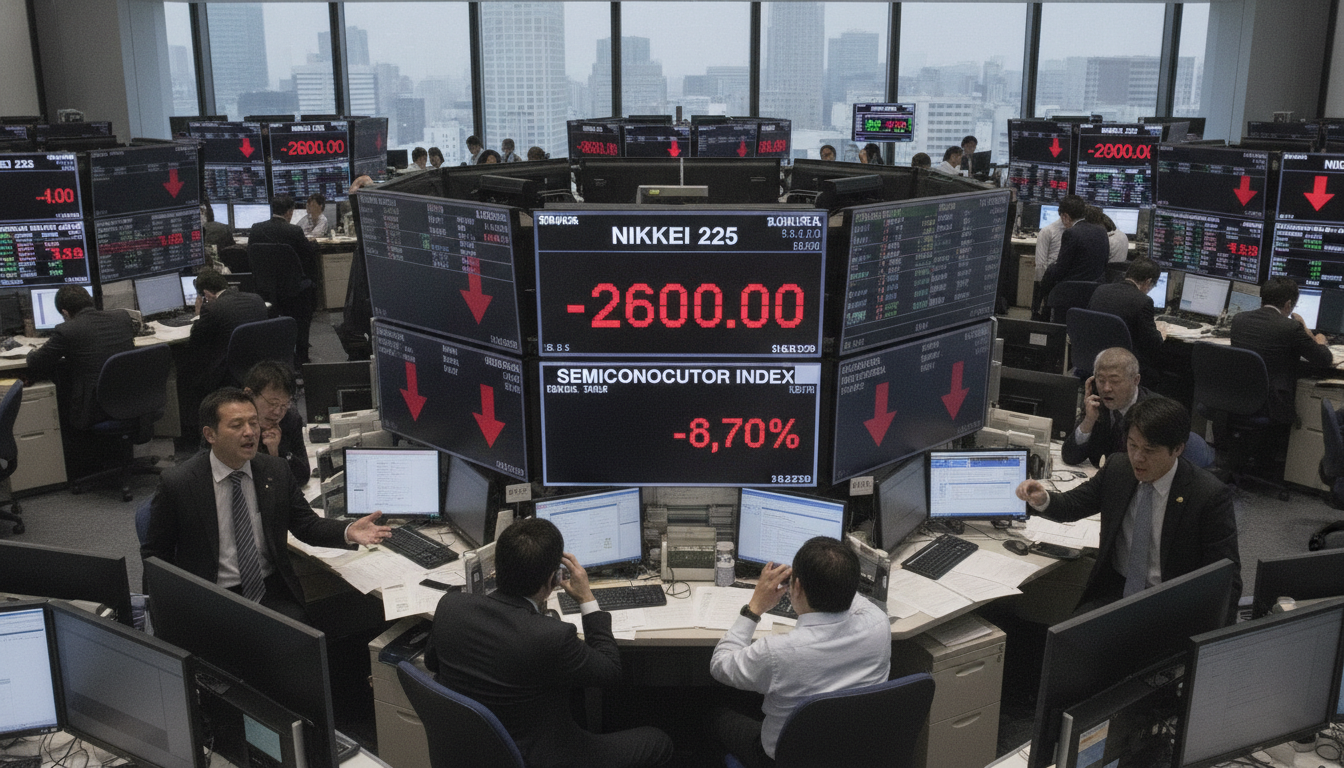
Nikkei 225 plunges over 2,600 points as semiconductor sell-off ripples from New York
Tokyo stocks tumble after US semiconductor rout; Nvidia-led AI capex fears and a sharp drop in Seoul widen losses for the Nikkei 225 on July 28, 2026.
Nikkei 225 opens sharply lower on July 28, 2026
On July 28, 2026, the Nikkei 225 fell more than 2,600 points in intraday trading, extending early-morning losses as selling spread across major sectors. The drop followed a pronounced sell-off in New York on July 27 that hit semiconductor and AI-linked stocks hardest, prompting risk reduction by Tokyo traders. Market participants said the scale of the decline reflected heightened investor caution over large-scale AI equipment spending in the United States and its implications for profit expectations.
Wall Street semiconductor rout sparks Tokyo selling
Traders in Tokyo attributed the initial wave of selling to weakness in US chipmakers on July 27, which pressured global technology valuations overnight. Semiconductor names were particularly sensitive to news that some investors view as a signal of elevated capital expenditure in AI that could reshape industry margins. The spillover into Tokyo was swift because Japanese markets are closely linked to US trading in both technology demand narratives and portfolio flows.
Nvidia and AI capex concerns cited by market participants
Market sources pointed to heavy selling in Nvidia and other leading AI-related suppliers as a key trigger for risk aversion among institutional investors. Concerns focused on whether massive AI hardware investment commitments by some US firms could create uneven demand dynamics, benefiting a few suppliers while straining broader earnings expectations. Traders said volatility around those names amplified index moves as algorithmic strategies and stop-loss orders accelerated selling.
Seoul decline widened losses across Asia
The sell-off in Tokyo was compounded by a sharp fall in South Korea’s stock market, which deepened regional risk sentiment and reduced offshore demand for Japanese equities. Investors noted that Korea’s heavy weighting in semiconductors and related components made it particularly susceptible to the same US-driven worries. The combined Asian weakness left the Nikkei 225 vulnerable to further declines as cross-border portfolio rebalancing intensified.
Investor flows and intraday trading dynamics
Sales were driven by a mix of institutional repositioning and retail caution, with some funds trimming equity exposure amid unclear near-term demand signals. Market makers reported increased volatility and wider bid-ask spreads in technology and export-oriented stocks, reflecting rapid shifts in order flow. Analysts said intraday moves also reflected technical factors, including index futures adjustments and automatic liquidity withdrawals during the sharp downtrend.
Implications for exporters and monetary watchers
A steep drop in the Nikkei 225 raises immediate alarms for exporters and financial stocks that are sensitive to global demand and currency swings. A weaker market can increase pressure on corporate funding costs and weigh on confidence ahead of earnings season, prompting closer attention from policymakers. While the Bank of Japan has signaled policy stances in recent months, sharp equity moves are likely to factor into discussions about market stability and economic outlook.
Broker and analyst reactions to the sell-off
Brokerage notes circulated in the morning trading session recommended selective risk management, advising clients to reassess exposure to highly cyclical semiconductor chains. Several analysts said they would monitor order books and inventory data to judge whether the sell-off was a short-term technical correction or the start of a more sustained re-pricing. Market strategists emphasized the importance of watching forthcoming US corporate updates and macro releases for clues on demand and investment trends.
Outlook for the coming sessions
Traders expect volatility to remain elevated in the near term as markets digest corporate earnings, tech sector capital expenditure announcements, and any policy commentary from central banks. Some portfolio managers signaled readiness to buy on deeper weakness, seeing long-term fundamentals for parts of the market as intact, while others urged caution until clearer visibility on AI-driven capex and global demand emerges. Liquidity conditions and cross-market flows will be key determinants of whether the Nikkei 225 stabilizes or endures further pressure.
The Nikkei 225’s steep intraday decline on July 28 underlines how quickly global technology narratives can reshape regional markets, and it leaves investors watching both corporate developments and broader economic indicators for signs of recovery or further downside.

