
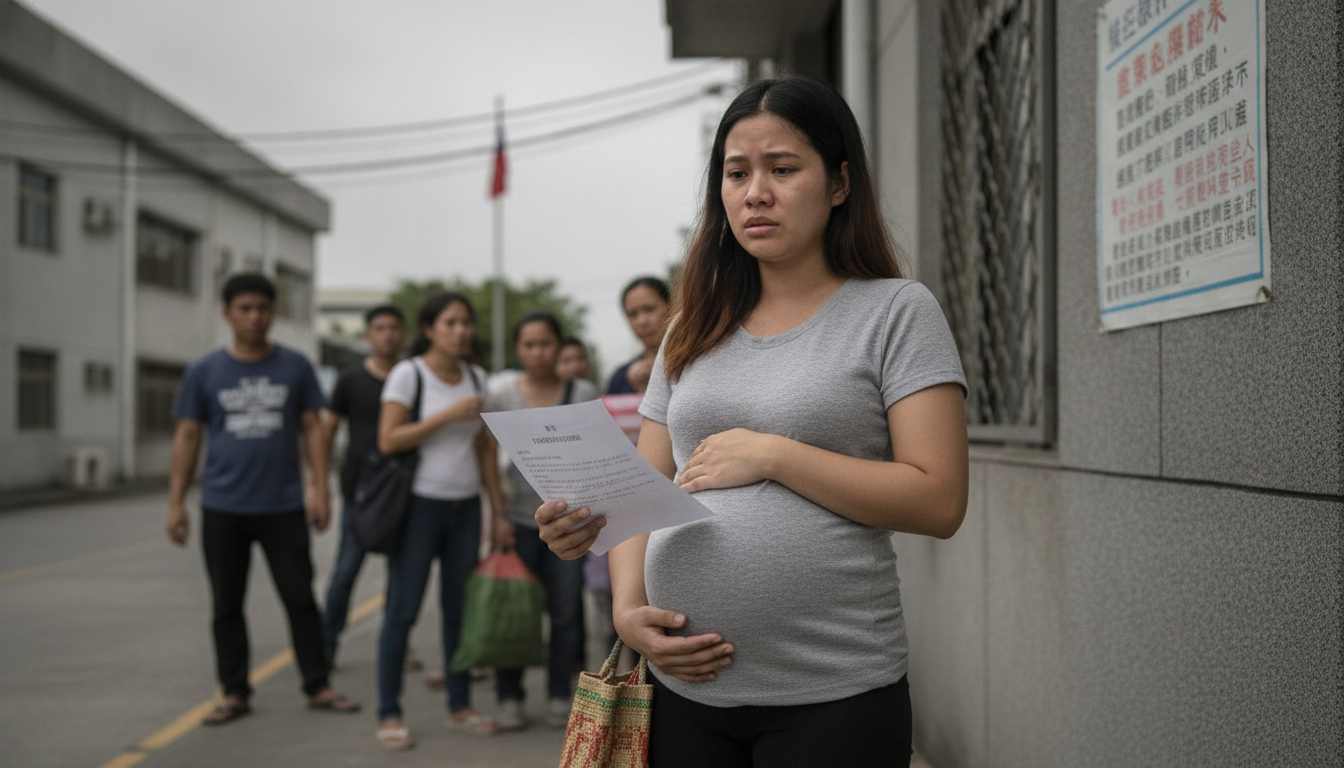
Pregnant migrant workers in Taiwan face dismissal despite new labor guidelines
Pregnant migrant workers in Taiwan face dismissal and limited childcare despite new labor guidance, prompting calls for stronger enforcement and policy reform.
When Mae, a Philippine contract worker in Taipei, is due to give birth in September she plans to stay with her newborn for only two weeks before the child is sent home to the Philippines. Her partner would like the family to remain together for months, but rising costs and employer rules make that impossible for many. The situation underscores growing concerns about how pregnant migrant workers in Taiwan are treated even after authorities issued guidance intended to protect them.
Worker accounts: limited choices after pregnancy
Mae and other Filipino workers say they are routinely offered two choices after discovering a pregnancy: arrange for a relative to care for the newborn abroad, or leave Taiwan with the baby. Many cite fear of losing their jobs, steep medical and childcare expenses, and restrictive employment contracts that make extended parental leave unaffordable. The result is a pattern where family reunification is deferred or abandoned because workers cannot afford to stay.
New labor guidance and remaining enforcement gaps
Taiwanese authorities have introduced labor guidance aimed at preventing discrimination and protecting the rights of pregnant foreign workers, including recommendations on maternity care and job retention. Labor advocates and migrant rights groups say these guidelines lack teeth, with inconsistent inspections and limited sanctions for employers who dismiss pregnant staff. Enforcement challenges are compounded by complex visa rules and the heavy dependence of migrant workers on employer sponsorship.
Economic pressures shaping decisions
Low wages, high living costs, and the expense of long-term childcare create powerful incentives for migrant workers to send infants home. Many families depend on remittances and cannot risk months without income, while part-time or informal care options in Taiwan are limited for non-resident children. These financial pressures, combined with precarious employment arrangements, force caregivers to choose between job security and parenting in Taiwan.
Employer practices and sector differences
Employers in Taiwan’s tech and domestic-care sectors vary in their approach to pregnant workers, with some offering short paid leave and others pressuring staff to resign. Industry observers say firms with temporary-contract workforces are more likely to terminate or phase out pregnant employees instead of accommodating extended leave. Labor groups have documented cases where pregnancy leads to reassignment, reduced hours, or contract non-renewal despite official guidance advising otherwise.
Advocacy, legal avenues and community support
Migrant advocacy organizations and labor unions are pushing for clearer statutory protections, stronger penalties for unlawful dismissals, and accessible legal support for affected workers. Community-run childcare initiatives and mutual-aid networks have stepped in to offer temporary relief, but those services are limited in scale and often localized. Advocates argue that only a combination of legal reform, proactive inspections and affordable childcare will change the structural incentives that push families apart.
The policy debate now centers on how to move from guidance to enforceable rights that reduce the economic and bureaucratic barriers facing pregnant migrant workers. Proposed measures discussed by rights groups include mandatory notice periods, guaranteed medical leave for foreign workers, and subsidies for childcare that allow parents to remain on the job. Employers and government agencies say they are assessing compliance mechanisms, but advocates insist on a clear timetable for reform.
Long-term solutions will require coordinated action across ministries, clearer lines of responsibility for inspections, and outreach to employers about lawful practices. Equally important, migrant communities need information about available benefits and legal protections in languages they can access. Without such measures, many pregnant migrant workers will continue to face the stark choice between employment and family unity.
As Mae prepares for her child’s arrival, her story exemplifies the human cost behind policy gaps and enforcement shortfalls. The coming months will test whether recent guidance is matched by concrete changes that allow pregnant migrant workers in Taiwan to keep their jobs and their families together.

