
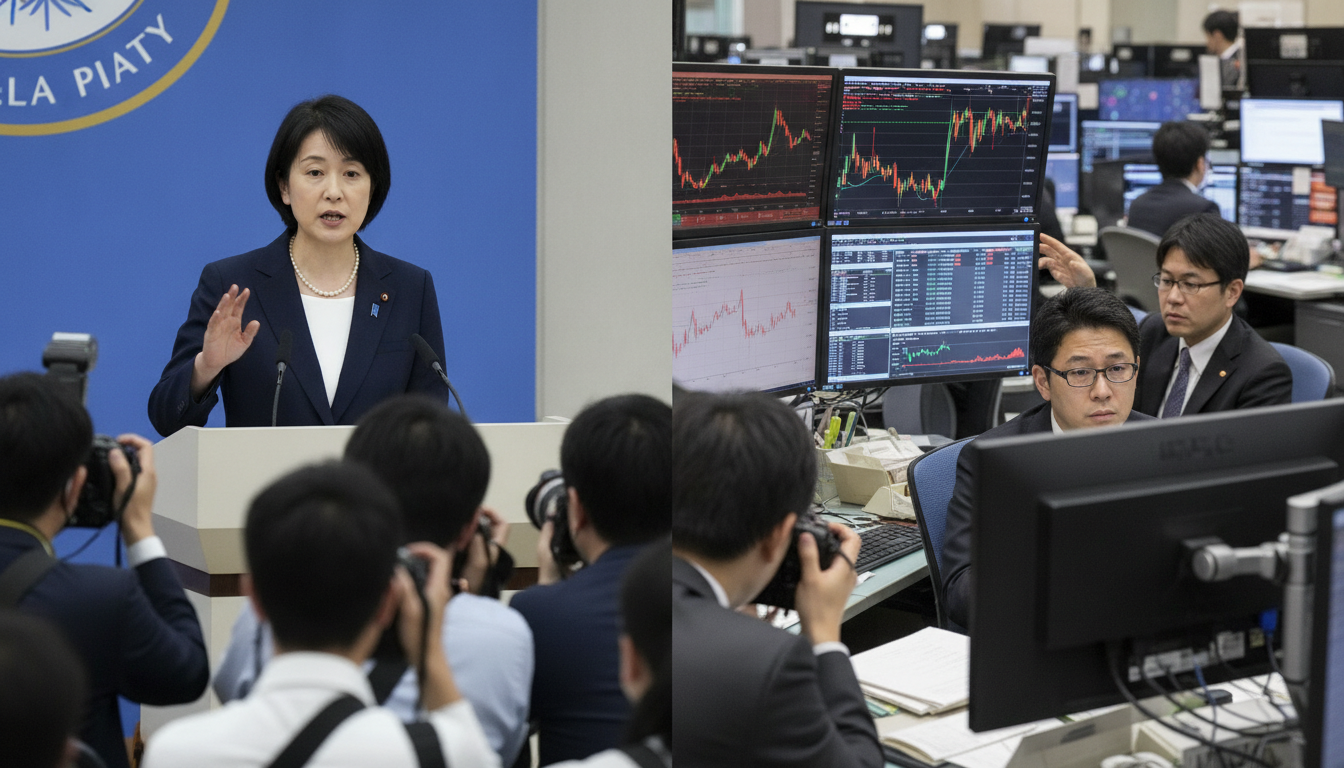
Sanae Takaichi tax cut plan fuels bond market jitters as approval ratings fall
Japanese Prime Minister Sanae Takaichi’s move to pursue a consumption tax cut is stirring concern in financial markets as her administration’s falling approval ratings raise questions about future fiscal policy and higher borrowing costs. Market participants say the proposal, paired with speculation of a cabinet reshuffle, has increased perceived risk premiums and put upward pressure on domestic interest rates.
Bond Market Reaction to Takaichi’s Approval Slide
Domestic bond yields rose as investors reassessed fiscal and political risk linked to the government’s policy direction. Traders and portfolio managers cited a combination of weaker public support for the cabinet and the prospect of expansionary measures intended to shore up popularity as factors pushing yields higher.
Dealers said the sell-off in government bonds reflected a recalibration of future risk premiums rather than immediate concerns over solvency. The shift has widened the yield premium on some maturities, prompting renewed debate about the cost of financing Japan’s public debt.
Planned Consumption Tax Legislation
Prime Minister Sanae Takaichi has indicated plans to submit legislation to reduce the consumption tax, a move aimed at boosting household income and stimulating consumer spending. Officials close to the administration frame the proposal as both a political signal to voters and a policy intended to revive domestic demand.
Economists warn that a tax cut without offsetting revenue measures could widen fiscal deficits and complicate the Bank of Japan’s efforts to manage inflation and growth. The timing and scale of any cut remain central questions for markets weighing the fiscal outlook.
Fiscal Expansion and Rising Risk Premiums
Market analysts say the prospect of larger-than-expected fiscal stimulus has shifted investor expectations about future issuance and the government’s balance sheet. Even modest increases in anticipated deficits can translate into higher term premia as global and domestic investors demand compensation for uncertainty.
The combination of policy-driven spending and the potential for lower tax receipts is prompting some fixed-income investors to reduce duration exposure. Portfolio managers are monitoring auction results and issuance schedules for signs of sustained pressure on yields.
Political Maneuvering and Cabinet Reshuffle Speculation
Rumors of an impending cabinet reshuffle have circulated in Tokyo as the prime minister seeks to reset her political standing amid falling approval figures. Political strategists say a reshuffle and a high-profile tax proposal could be paired to present a revitalized government agenda to voters.
Opposition parties have criticized the move as short-term politics that could undermine fiscal discipline, while supporters argue it is a necessary response to economic headwinds. The intra-party dynamics will be watched closely for their influence on both policy content and market sentiment.
Implications for Monetary Policy and Investors
The Bank of Japan faces a delicate balancing act as fiscal policy risks become more pronounced and domestic yields climb. Any sustained uptick in long-term rates could force the central bank to reassess its guidance and interventions, adding complexity to monetary decision-making.
Institutional investors say they are prepared to adjust asset allocations if the government signals a permanent shift toward looser fiscal settings. Equity and currency markets may also react to heightened uncertainty, making coordination between fiscal and monetary authorities more consequential.
International and Domestic Investor Responses
Foreign holders of Japanese sovereign debt are tracking developments closely, with some trimming exposure amid concerns over rising issuance and political volatility. Domestic banks and pension funds, large holders of government bonds, are likewise reassessing portfolio strategies to guard against further yield increases.
Analysts note that clear communication from the government about the fiscal roadmap and offsetting measures would help stabilize markets. Until then, investor uncertainty is likely to remain a key driver of short- and medium-term bond-market dynamics.
The coming weeks will be critical as the government clarifies the scope of any consumption tax cut and whether a cabinet reshuffle accompanies that policy push. Markets will be watching auction results, official fiscal projections and the tone of political debate for signals on how quickly risk premiums might settle.

