
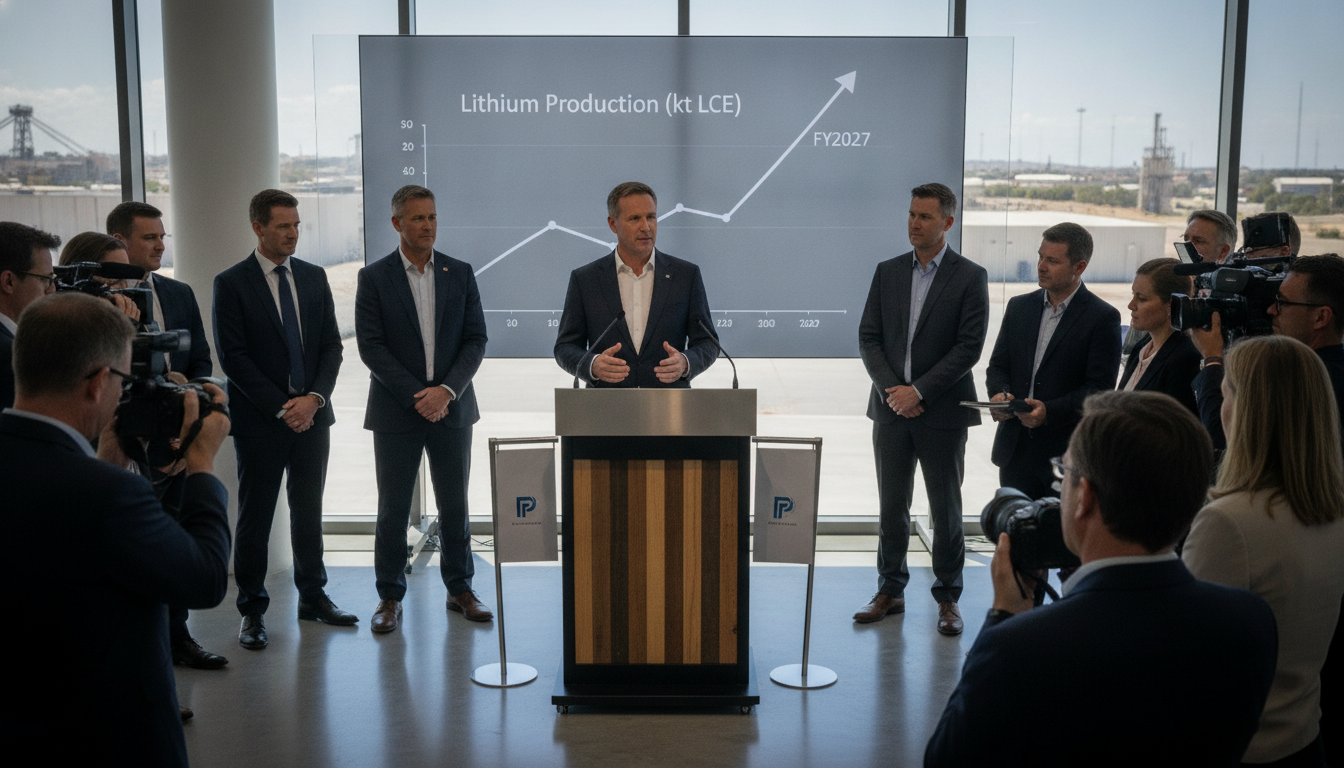
PLS to Boost Lithium Production by about 20% in Fiscal 2027 as EV Demand Strengthens
Australian miner PLS plans a roughly 20% rise in lithium production in fiscal 2027, joining industry expansions as global EV demand outside China strengthens.
PLS Targets 20% Production Increase in Fiscal 2027
PLS announced on Thursday that it aims to lift lithium output by about 20% in fiscal 2027, underscoring a renewed push among Australian producers to expand supply. The company framed the target as a response to rising demand for battery-grade lithium driven by the electric vehicle market. Management said the increase forms part of wider development and optimisation programs at its existing operations.
The planned uplift will require coordinated execution across mining, processing and logistics, company officials indicated. PLS joins several Australian peers that are accelerating projects to capture a larger share of the lithium value chain.
Demand Drivers: Rising EV Sales Outside China
Industry watchers point to stronger EV uptake in markets outside China as a principal reason miners are stepping up production planning. Sales growth in Europe, North America and parts of Asia has prompted battery makers and automakers to secure longer-term raw material supplies. That trend has shifted the calculus for miners, who say now is the time to scale capacity to meet multi-year offtake expectations.
Automakers’ commitments to electrification are also encouraging investors to underwrite expansions, and downstream buyers are increasingly signing supply agreements. The result is greater visibility for producers, even as short-term price volatility persists.
Australian Miners Respond with Project Expansions
Across Australia, producers of the critical battery metal are moving from feasibility studies to development and throughput increases. PLS’s announcement mirrors activity from other firms that have signalled capacity additions or optimisation of processing plants. The concentration of resources and established infrastructure in Australia gives local companies a strategic advantage in rapidly scaling output.
Investments are focused not only on mining but on downstream processing to produce higher-margin battery precursor materials. This integrated approach aims to shorten supply chains and meet the quality specifications required by battery manufacturers.
Market Dynamics: Prices, Contracts and Inventory
Lithium markets have seen swings in pricing as supply and demand balance shifts, motivating both buyers and sellers to adjust strategies. Producers seeking to expand face the dual challenge of timing capital expenditure against uncertain short-term prices while responding to longer-term demand forecasts. Buyers, meanwhile, are pursuing fixed-term contracts and strategic partnerships to lock in volumes.
These commercial arrangements are influencing when and how quickly mines increase production, with offtake agreements often underpinning project finance. Analysts say the accumulation of contracts outside China has altered market flows and improved project bankability for some Australian developers.
Operational Requirements and Timelines
Achieving a 20% production increase will require PLS to fine-tune existing operations and potentially invest in plant capacity and workforce training. Efficiency gains, greater recoveries in processing circuits and smoother logistics will all contribute to meeting the fiscal 2027 target. Given the technical complexity of lithium extraction and refinement, operational readiness remains a critical factor.
Permitting, supply-chain reliability for reagents and equipment, and access to skilled labour are among the practical considerations companies must manage. PLS’s timetable suggests the company believes these constraints are addressable within the coming financial year.
Policy and Investment Implications for Australia
The move by PLS highlights the role Australian miners play in global battery supply chains and may attract further capital into the sector. Policymakers are watching as the nation’s resource base becomes central to international decarbonisation efforts. Support for value-added processing and infrastructure could accelerate downstream activity and create new commercial opportunities domestically.
Environmental and community expectations will also shape project development, with companies needing to demonstrate robust environmental management and social licence to operate. How producers balance expansion with sustainability commitments will be closely scrutinised by stakeholders.
PLS’s production target reflects a broader industry response to evolving demand fundamentals for lithium and the strategic priorities of automakers and battery makers worldwide. As companies proceed with expansion plans, the coming months will reveal whether supply growth keeps pace with the accelerating transition to electric vehicles.

