
Electric vehicle sales surge across Asia as fuel prices rise, China cools
IEA: Electric vehicle sales surged across Asia after the U.S.-Iran war, with Southeast Asia up 62% and several markets doubling while China cools amid fuel shock
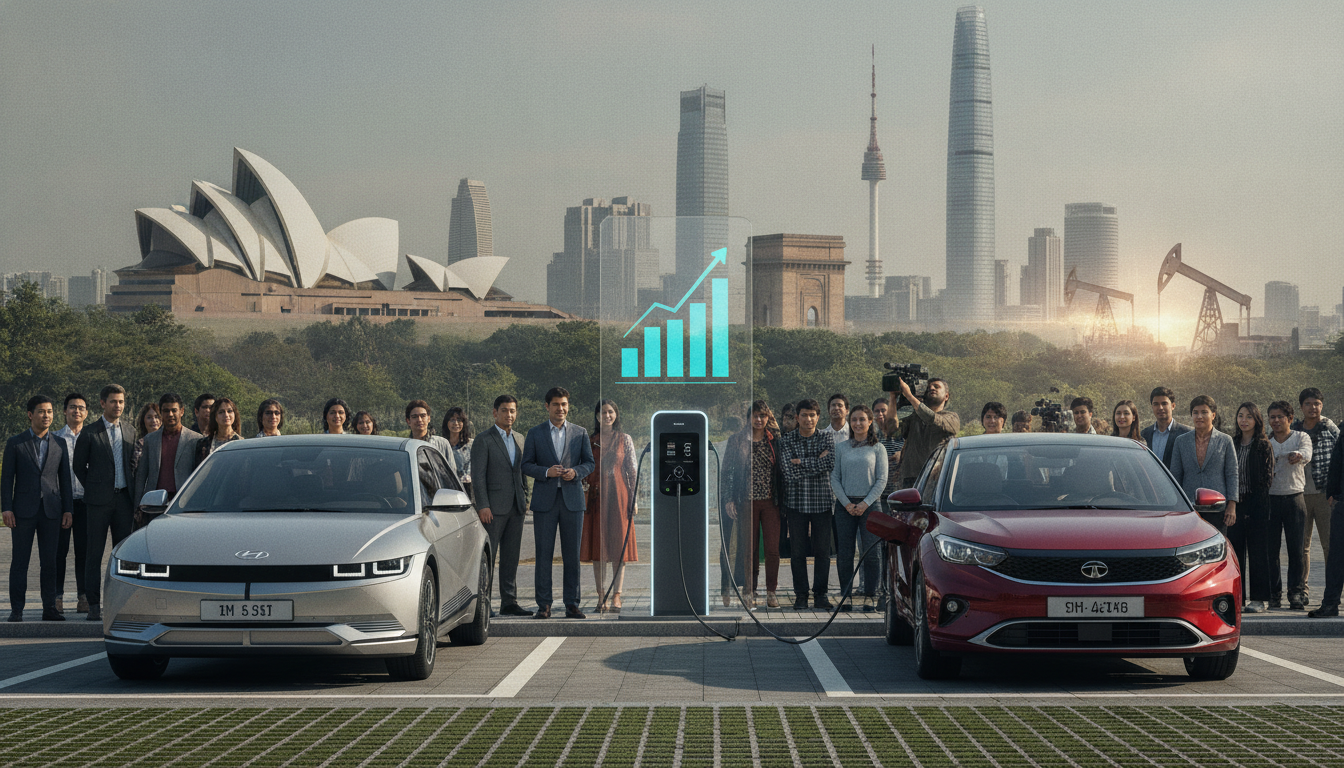
Electric vehicle sales across Asia have jumped markedly, driven by higher fuel costs linked to the U.S.-Iran war and shifting consumer demand, the International Energy Agency says. Growth in many Asian markets has outpaced Europe, with Southeast Asia recording a 62% year-on-year increase between March and June and several countries seeing sales double since the conflict began. China, by contrast, has cooled after Beijing rolled back purchase subsidies, creating a more mixed regional picture for automakers and policymakers.
IEA analysis highlights Asia’s rapid EV uptake
The International Energy Agency’s recent reporting shows a pronounced shift toward electric vehicles in much of Asia following spikes in global fuel prices. The agency cited a strong correlation between rising petrol and diesel costs and consumer interest in EVs as households and fleet operators seek to reduce running expenses. Analysts say the pace of change has been unusually rapid, with adoption in some markets accelerating within months of the price shock.
This trend has left Europe comparatively slower in recent months, according to the IEA, which pointed to a combination of policy signals and price incentives as amplifying demand in Asia. The agency’s data collection across national registries and industry sales figures underscores how acute external shocks can reshape transport choices in the short term.
Southeast Asia led by Thailand, Vietnam and Indonesia
Southeast Asia emerged as a regional growth leader, where electric vehicle sales rose 62% year on year between March and June, driven by strong demand in Thailand, Vietnam and Indonesia. The region’s growth reflects both rising consumer interest and aggressive market entries by regional and Chinese manufacturers, who have rolled out affordable models tailored to local needs. Observers noted that public displays of EV brands, such as BYD vehicles at regional motor shows, helped raise awareness and normalized electric cars for first-time buyers.
Governments in the region have also taken targeted steps to support uptake, from tax breaks to infrastructure investments, though the pace and scale of those measures vary. Industry participants caution that sustaining the momentum will hinge on continued price competitiveness and the expansion of charging networks outside major urban centers.
Australia, India, South Korea and Vietnam record doubling of sales
Several larger and midsized markets have seen electric vehicle sales roughly double since the start of the U.S.-Iran conflict, the IEA said. Australia, India, South Korea and Vietnam reported the most pronounced gains, reflecting differing but complementary drivers: policy shifts, growing model availability, and acute sensitivity to fuel costs. In India, for example, local two- and three-wheeler electrification alongside passenger EV rollouts has contributed to a broad-based rise in electric mobility.
The doubling of sales in these markets underscores how volatile geopolitical events can accelerate structural transitions in transport. Automotive firms and parts suppliers are now recalibrating production and marketing plans in response to shifting demand patterns across these faster-growing markets.
China’s market cools after subsidy rollback
China, the world’s largest electric vehicle market, diverged from the region by experiencing a slowdown after Beijing scaled back purchase subsidies. The policy adjustment, intended to normalize market incentives and reduce fiscal support, has temporarily dampened sales momentum and prompted automakers to revise short-term forecasts. The IEA highlighted that while overall EV penetration remains substantial in China, the immediate effect of subsidy changes is visible in reduced monthly registrations.
Manufacturers have responded by emphasizing product upgrades, financing offers and export pushes to offset softer domestic demand. Analysts warn that while subsidy reductions can slow sales in the short run, longer-term prospects for electrification in China remain strong if automakers and local governments continue to invest in technology and infrastructure.
Industry response and supply-chain adjustments
Automakers and suppliers across Asia are adjusting to the new sales patterns, rebalancing production and redirecting inventories where demand is strongest. Chinese brands expanding in Southeast Asia and other growth markets are positioning lower-cost models to capture price-sensitive buyers switching from petrol vehicles. Meanwhile, legacy automakers are accelerating EV rollouts and exploring new partnerships to secure battery supply and local assembly capacity.
Supply-chain pressures, particularly for batteries and semiconductors, remain a constraint in some segments but are being mitigated by investment in regional manufacturing and logistics. Companies caution that rapid swings in demand—whether driven by geopolitics, subsidies, or fuel prices—require flexible production systems and nimble distribution strategies.
Outlook for consumers and policymakers
The recent uptick in electric vehicle sales shows how quickly consumer behavior can pivot when operating costs change and policy signals align. For policymakers, the challenge is to translate temporary surges into sustained adoption through stable rules, infrastructure investment and targeted incentives. For consumers, the calculus will continue to weigh purchase price, total cost of ownership, and charging convenience.
As the market adjusts, industry watchers say the balance between short-term shocks and long-term electrification goals will determine whether the current spike becomes a durable shift or a temporary correction in a still-evolving sector.

