
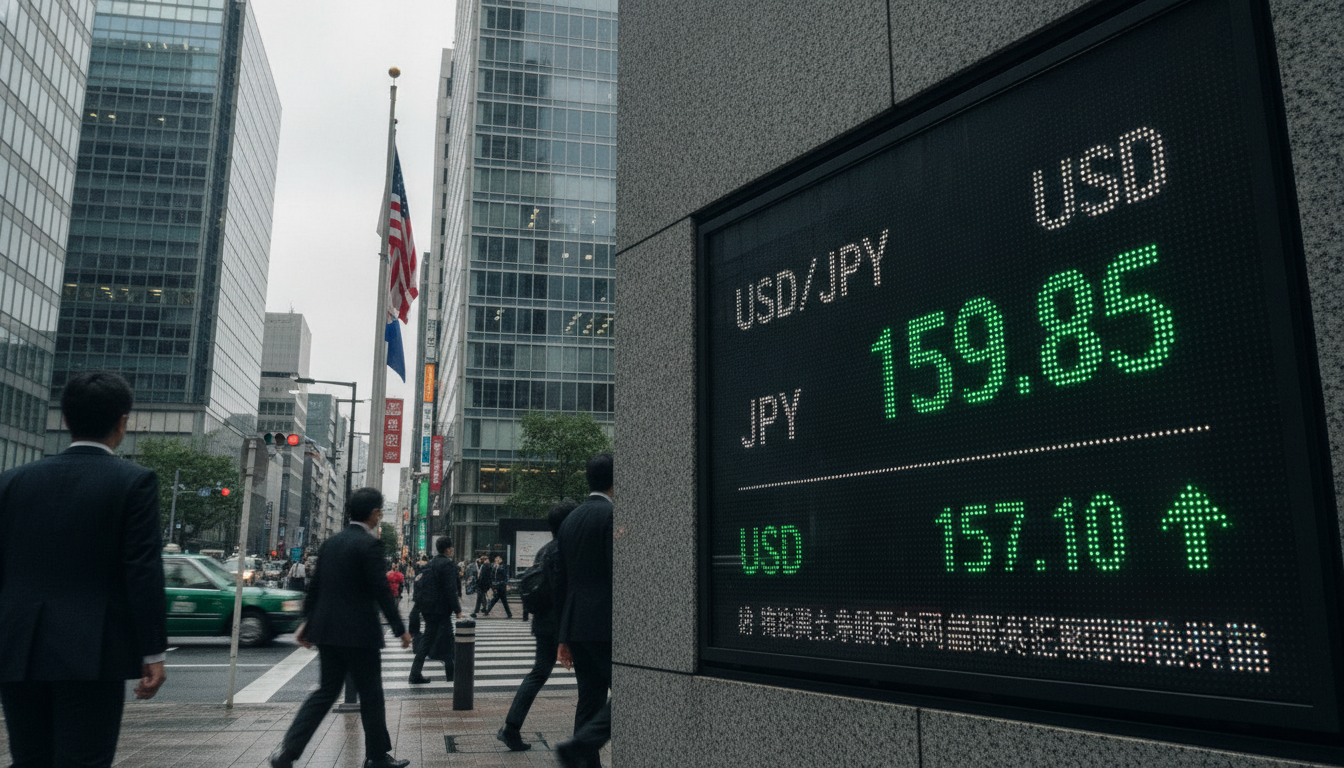
Yen intervention sparks overnight rally to 157 then slips back into 160s as dollar demand returns
Yen intervention triggered an overnight rally to the 157 level, but the yen slid back into the 160s on July 31, 2026 as importers bought dollars and markets weighed policy signals.
The yen’s brief surge after reported yen intervention late on Thursday set off a wave of market activity in Tokyo and beyond. Traders said the move to the 157 per dollar level was followed by renewed dollar buying by import-dependent corporates, which pushed the exchange rate back above 160 by Friday. Regional equity markets also responded, with South Korea’s KOSPI jumping on optimism toward sustained AI spending that bolstered risk appetite across Asia.
Overnight intervention and immediate market move
Market participants in Tokyo said foreign-exchange desks registered an abrupt yen rally late on Thursday, an action widely interpreted as yen intervention by Japanese authorities. The rally reached roughly the 157 per dollar mark before market flows shifted and supply-demand dynamics reasserted themselves.
Within hours, importers and corporate treasuries moved to hedge exposure and buy dollars after the sharp appreciation, eroding some of the yen’s gains. That follow-through buying pressure sent the yen back into the 160 range by trading in Tokyo on Friday.
Corporate flows and import-related dollar demand
Bank traders described the second-phase move as classic corporate reaction: sudden currency strength prompts importers to convert yen back into dollars to cover invoices and shipping costs. These natural hedging flows tend to be large and swift, and they can offset short-lived central bank or government actions in currency markets.
Several market sources said the volume of dollar purchases from Japanese companies was sufficient to absorb much of the intervention-triggered demand for yen, illustrating how private-sector flows can blunt official efforts to sustain a strengthened currency.
Policy signals and government posture
Tokyo has repeatedly signalled concern about excessive yen weakness this year, and authorities have warned they stand ready to act to ensure orderly markets. The reported late-night operation added to that narrative, but officials have not publicly detailed the size or precise timing of any intervention.
Analysts said the episode nevertheless carries a message: authorities remain prepared to step in when moves in the currency are judged disorderly, yet sustaining a stronger yen may require broader policy shifts beyond one-off interventions.
Impact on financial markets and yields
The yen’s erratic moves on July 30–31 reverberated through Asian financial markets, affecting government bond yields and equity sentiment. A stronger yen typically eases inflationary pressures by lowering import costs, while a weaker yen can push yields higher if investors demand compensation for currency risk.
In Japan, the immediate impact on bond markets was muted as investors parsed whether intervention represented a sustained policy change or a short-term stabilising action. Market participants emphasized that lasting currency appreciation would likely need clear changes in monetary or fiscal posture.
Regional equities and KOSPI’s surge
Equities in the region reacted to the currency swings and separate developments in the technology sector. South Korea’s KOSPI rallied strongly, an 18% advance in recent trading that traders attributed in part to renewed hopes for sustained AI-related investment after positive signals from major cloud and software firms.
That equity strength supported risk-on flows into Asian markets, which in turn influenced currency dynamics by encouraging some dollar selling in markets outside Japan even as Tokyo’s supply of dollars remained ample.
Outlook for intervention and market expectations
Traders said market attention will now focus on whether Tokyo repeats intervention or pivots to other tools, such as verbal guidance or coordinated action with other central banks. The effectiveness of intervention often depends on timing, scale and whether it occurs alongside complementary policy measures.
Analysts cautioned that with global interest-rate differentials still favouring the dollar, sustaining a stronger yen could be challenging without clearer signals of policy shifts at home or abroad.
Markets will watch upcoming economic data, corporate flows and any official statements for clues on Tokyo’s next steps.
The yen’s abrupt move between the 157 and 160 levels on July 30–31 underscored how a single night of intervention can reshape short-term market dynamics but may not be enough to override persistent structural forces driving currency trends.

