
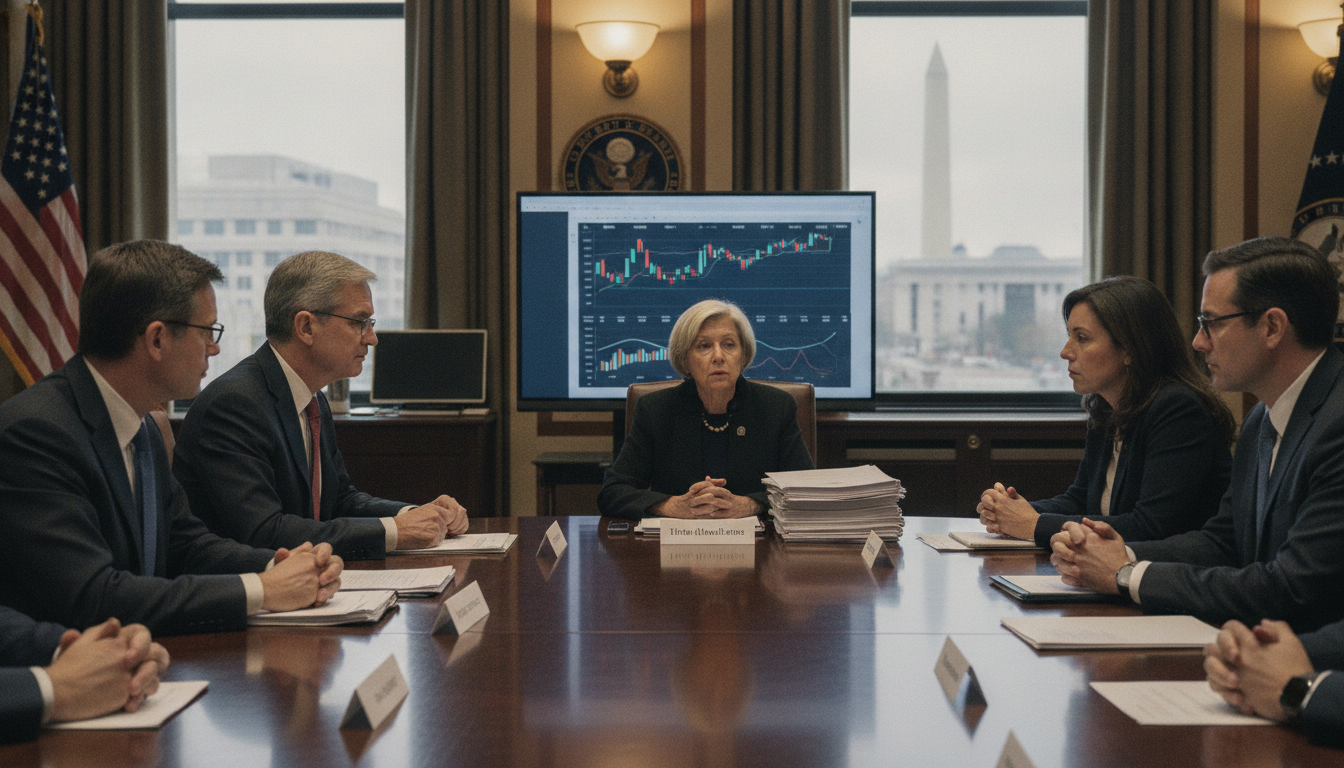
Japan readies banks as U.S. Treasury signals possible follow-up to yen intervention
U.S. Treasury warned markets after Tokyo’s yen intervention on July 30, 2026; banks were instructed to prepare for possible further yen intervention soon.
Japan’s currency intervention on July 30, 2026, prompted an alert from the U.S. Treasury that market participants should prepare for a potential additional intervention, according to multiple official communications. The phrase “yen intervention” entered trading desks’ priorities as the Bank of Japan and government offices acted to support the currency, and the yen strengthened to its firmest level since mid-May. Financial institutions were told to stand ready in case authorities needed to step in again to stabilize foreign-exchange markets.
U.S. Treasury alerts market participants
The U.S. Treasury’s message to banks and trading firms was described as a preparatory notice rather than a declaration of coordinated action. Officials signaled that they are monitoring volatility and exchange-rate movements closely and expect market participants to be ready to execute directives if necessary. The alert reflected heightened global attention on policy shifts in Tokyo and the potential impact on dollar-yen liquidity.
Tokyo’s intervention on July 30, 2026
Japanese authorities intervened in the foreign-exchange market on Thursday, July 30, 2026, buying yen and selling dollars in an effort to slow rapid depreciation of the currency earlier in the month. The intervention aimed to counter sharp swings after weeks of yen weakness that had raised concern among policymakers about domestic price stability and market functioning. Officials framed the action as targeted and defensive, focused on restoring orderly market conditions rather than changing long-term exchange-rate trends.
Market reaction and yen appreciation
Following the intervention, the yen jumped to its strongest level since mid-May, prompting a swift reassessment by currency traders and hedge funds. Volatility spiked during the immediate aftermath as stop-loss orders and rapid position adjustments amplified intraday moves. Liquidity conditions normalized later in the session, but market participants remained alert to the possibility of follow-on operations that could produce renewed intraday swings.
Banks instructed to prepare for further operations
Domestic and international banks received specific instructions to be on standby for possible future directives, including rapid execution of large FX transactions on short notice. The guidance emphasized operational readiness, confirmation procedures and contingency arrangements to ensure that any intervention could be implemented smoothly across time zones. Banks were also reminded to coordinate internally between trading, risk and settlement teams to limit operational friction in the event of another intervention.
Implications for global markets and investors
The intervention and subsequent U.S. Treasury advisory reverberated through equity, bond and commodity markets, with investors weighing the implications for interest-rate differentials and portfolio flows. A stronger yen can weigh on exporters’ revenues and global corporate earnings projections, while also altering cross-border capital movements as currency hedges are adjusted. Portfolio managers signaled that they would revisit currency hedging strategies and near-term allocations in response to the elevated policy risk backdrop.
Policy context and potential coordination
Japanese authorities have historically intervened to counter disorderly moves in the yen, and the recent move underscores Tokyo’s willingness to use reserves or direct market operations when needed. The U.S. Treasury’s engagement, framed as preparatory communication, stops short of confirming formal coordination but indicates close monitoring between major economies. Analysts say that explicit coordination remains a policy choice tied to the scale of volatility and the risk that market dysfunction could spill across asset classes.
The announcement reshaped short-term trading desks’ priorities, as traders repositioned flows and adjusted algorithmic parameters to account for heightened intervention risk. Options markets priced in increased volatility, and bid-ask spreads widened in some dollar-yen venues during the immediate response. Market infrastructure providers reported increased inquiries about operational readiness and settlement windows to accommodate potential elevated trade volumes.
Authorities emphasized that intervention is intended to be a defensive measure to restore orderly price formation rather than a tool for long-term exchange-rate targeting. Tokyo’s actions reflect concern about episodic disorderly moves that can damage market confidence and economic stability. Officials also noted that monetary policy decisions remain the domain of the central bank, while intervention is a separate instrument available to the government in exceptional circumstances.
Investors and corporate treasuries are now focused on forthcoming economic data and central bank communications that could influence the yen’s trajectory. Interest-rate expectations, domestic inflation readings and global risk sentiment will all play into whether further interventions are needed. Market participants are watching for any signal that authorities intend to sustain operations or that the episode was limited to the isolated action on July 30, 2026.
Sentiment on trading floors has shifted toward caution, with many desks adopting smaller position sizes and tighter risk controls until volatility subsides. Currency strategists say the immediate outlook depends on the balance between Japan-specific developments and broader dollar strength or weakness driven by global macro forces. For now, authorities’ readiness to act and the U.S. Treasury’s advisory have placed the yen at the center of short-term market attention.

