
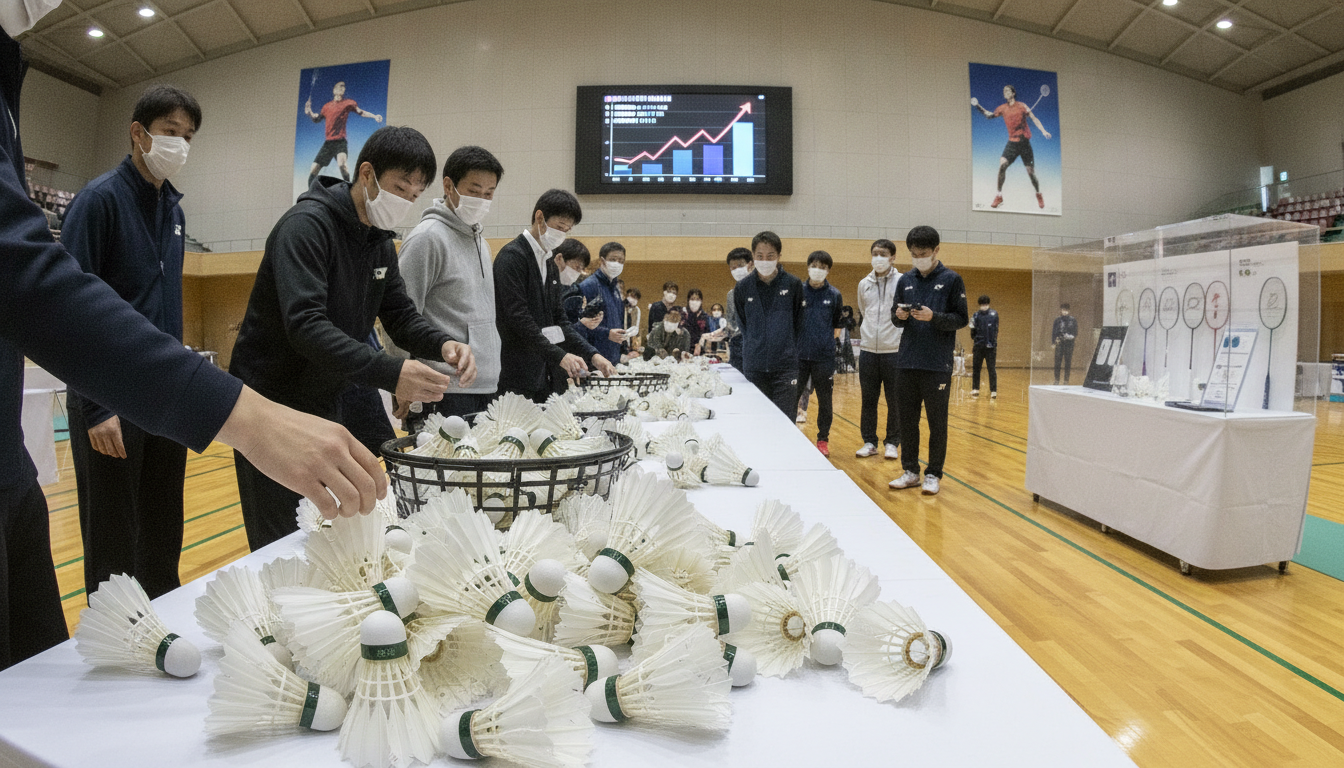
Shuttlecock shortage in Japan drives Yonex and other makers to fast-track synthetic alternatives
Japan faces a shuttlecock shortage after feather imports from China fell amid avian flu, prompting Yonex and others to speed synthetic shuttlecock production.
Badminton players and retailers across Japan are confronting a growing shuttlecock shortage as a drop in available goose and duck feathers from China has pushed prices higher and strained supply chains. The shortage, tied to avian influenza outbreaks affecting feather suppliers, has forced major manufacturers such as Yonex and smaller producers to explore synthetic alternatives and adjust production strategies. Demand for shuttlecocks has also risen with the sport’s expanding popularity, compounding the immediate supply squeeze. The evolving response from manufacturers and distributors will shape availability for clubs, tournaments and recreational players in the months ahead.
Feather supply disruptions traced to avian influenza
A decline in feather shipments from China is the central factor behind the shuttlecock shortage in Japan, industry insiders say. Avian influenza outbreaks in regions that supply feathers have led to culls, tighter controls and reduced exports, shrinking the pool of natural materials used to make traditional feather shuttlecocks. Producers who rely on specific feather quality have seen lead times extend and sourcing costs climb. That has prompted wholesalers in Japan to ration stocks and to raise retail prices as inventories thin.
Manufacturers accelerate development of synthetic shuttlecocks
Faced with constrained feather supplies and rising costs, manufacturers are intensifying efforts to commercialize and scale synthetic shuttlecocks. Yonex, long known for its feather models used in elite competition, has publicly signaled investment into engineered alternatives that mimic flight and durability. Other makers are testing polymer and composite designs that aim to meet play standards while offering longer life and reduced weather sensitivity. Engineers and product teams are balancing performance fidelity with cost and environmental considerations as they refine prototypes for mass production.
Impact on grassroots clubs and tournament organizers
Local clubs, school teams and tournament organizers report immediate strain from the shuttlecock shortage and price increases. Many clubs purchase large quantities of feather shuttlecocks for training and matches, and sudden cost hikes can disrupt budgets and program schedules. Tournament directors face higher operational expenses and, in some cases, are considering rules adjustments to allow approved synthetic models in open events. For players, especially juniors and recreational participants, the shift toward synthetics may mean lowered ongoing equipment costs but also a period of adaptation to different flight characteristics.
Supply-chain responses and inventory management
Importers and distributors in Japan are changing inventory practices to cope with the supply disruption and to avoid shortages during peak demand periods. Some wholesalers report diverting supplies from lower-use channels to prioritize schools and competitive teams, while others are seeking alternative feather sources in Southeast Asia. Advances in logistics and closer coordination with manufacturers aim to smooth deliveries and reduce the risk of sudden stockouts. Retailers are also educating customers about the differences between feather and synthetic shuttlecocks to manage expectations during the transition.
Yonex and industry coordination on standards
As leading brands pursue synthetic options, industry groups and equipment standards bodies are increasingly involved in testing and certification. Maintaining consistent flight behavior, weight and durability is essential for acceptance in competition and for consumer confidence. Yonex and peer manufacturers are submitting prototypes for standardized evaluation and adjusting designs based on player feedback. The process seeks to ensure that any approved synthetic shuttlecock will be predictable under play conditions and acceptable to both professionals and recreational users.
Cost, sustainability and long-term market shifts
Beyond immediate availability, the shuttlecock shortage is accelerating conversations about cost-efficiency and environmental impact in the badminton equipment market. Synthetic shuttlecocks typically offer longer usable life than feather models, which could reduce waste and recurring expenses for frequent players. However, manufacturers must also consider material sourcing, carbon footprints and recyclability when scaling new products. Market analysts expect that a gradual shift toward hybrid or fully synthetic models could reshape supplier relationships and consumer preferences over the next several seasons.
The shuttlecock shortage in Japan highlights how a localized supply disruption can ripple through a global sport supply chain and affect everyday players. As manufacturers, distributors and standards bodies work to mitigate the impact, many in the badminton community are watching product trials closely and preparing for a transition that could redefine what players expect from shuttlecock performance and durability.

