
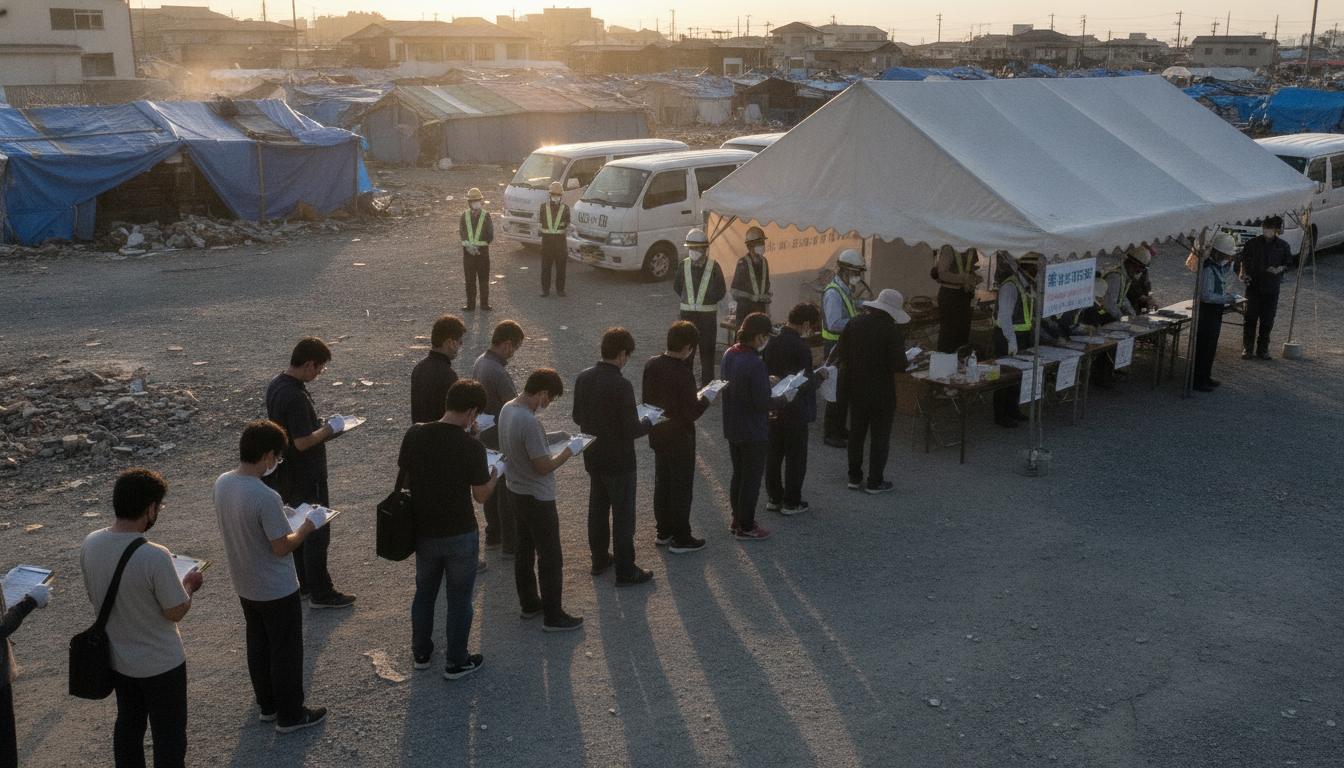
Kumamoto disaster volunteers begin pre-registration as municipalities open intake across affected towns
Kumamoto disaster volunteers begin pre-registration now as towns open intake Aug 1–4, 2026. Register through municipal social welfare councils online.
The prefecture has launched a coordinated pre-registration drive for Kumamoto disaster volunteers after the magnitude-shaking tremors that struck the region, and multiple municipalities have opened volunteer intake this week. Kumamoto disaster volunteers are being asked to register in advance through municipal social welfare councils to support cleanup, transport and shelter operations. Local governments set staggered start dates between August 1 and August 4, 2026, and emphasized that needs will change rapidly.
Municipalities opening volunteer intake in stages
Mashiki Town and Kashima Town began accepting volunteers and carrying out activities on August 1, 2026, marking the first operational deployments in the hardest-hit areas. Mifune Town opened volunteer intake and operations on August 2, 2026, while Uto City and Uki City plan to begin volunteer work on August 3, 2026. Misato Town scheduled a start date of August 4, 2026, and Kosa Town began recruitment on August 2, 2026, with daily intake targets announced by local officials.
Registration handled by municipal social welfare councils
Each municipality’s social welfare council (shakyo) is the designated point for pre-registration and volunteer coordination, and councils are publishing application forms and guidance on their websites. Officials said all volunteers should complete online registration before arriving to ensure placements match current needs and to facilitate briefings and safety checks. The prefectural office reiterated that volunteers should use the municipal shakyo portals for the latest schedules and detailed instructions.
Early turnout and work in Mashiki
Mashiki Town reported strong early turnout: 52 volunteers worked on August 1, 2026, and 43 volunteers continued on August 2, focusing on indoor cleanup and the removal of broken household goods. Volunteers there have been assigned to clear debris from residences, remove damaged furniture and assist homeowners in making spaces safe for inspection and short-term living. Municipal staff and shakyo coordinators said activities are being scheduled to reduce overlap and to direct manpower where it is most urgently required.
Shelter support and logistics tasks in Uki and Uto
Uki City and Uto City will begin volunteer operations on August 3, 2026, with duties that include assembly of cardboard beds at evacuation centers, receiving donated goods and transporting supplies between distribution points. Municipal officials emphasized that shelter work requires logistical coordination and familiarity with hygiene and privacy practices in temporary accommodations. Volunteers assigned to these duties will receive on-site briefings covering infection prevention, heat management and safe handling of relief items.
Prefectural guidance: wait where recruitment has not started
The Kumamoto prefectural government has asked volunteers to refrain from going directly to municipalities that are not yet recruiting, noting that unmanaged arrivals can create additional burdens on local staff and disrupt operations. Because needs evolve hour by hour, officials urged prospective volunteers to monitor municipal shakyo websites and official prefectural announcements for the most recent information. The prefecture emphasized that organized, pre-registered volunteers are prioritized to ensure safety, match skills to tasks and maintain an orderly response.
Local recruitment numbers and scheduling details
Kosa Town announced a plan to recruit roughly 20 volunteers per day as it opens intake, reflecting a measured approach tied to available supervision and task requirements. Other municipalities set intake caps and time slots to prevent overcrowding at coordination hubs and to provide necessary training and safety briefings upon arrival. Municipal social welfare councils have also indicated they will scale volunteer intake up or down depending on damage assessments and the pace of recovery work.
Volunteers are being asked to register early, indicate relevant skills such as heavy lifting, logistics or care work, and to specify availability so coordinators can assign appropriate roles. Municipalities will confirm assignments after registration, and volunteers should await official placement notices rather than arriving unannounced.
Volunteers and residents alike face operational challenges in the coming days as recovery moves from immediate search and rescue to debris removal, household salvage and shelter management. Coordinated volunteer mobilization through municipal social welfare councils aims to direct help where it is most effective while minimizing additional strain on local authorities.
Local officials continue to urge caution and adherence to instructions issued by municipal shakyo and the prefectural office, and they stressed that up-to-date information will be provided online as volunteer needs change. Volunteers should check the specific municipal social welfare council webpages for details on registration, start times, required equipment and health precautions before traveling to volunteer sites.

