
U.S. Energy Department Welcomes Japanese Tech Firms to Genesis Mission on Fusion and Supercomputing
U.S. Energy Department invites Japanese technology firms to join the Genesis Mission for nuclear fusion, supercomputing and quantum projects with partners
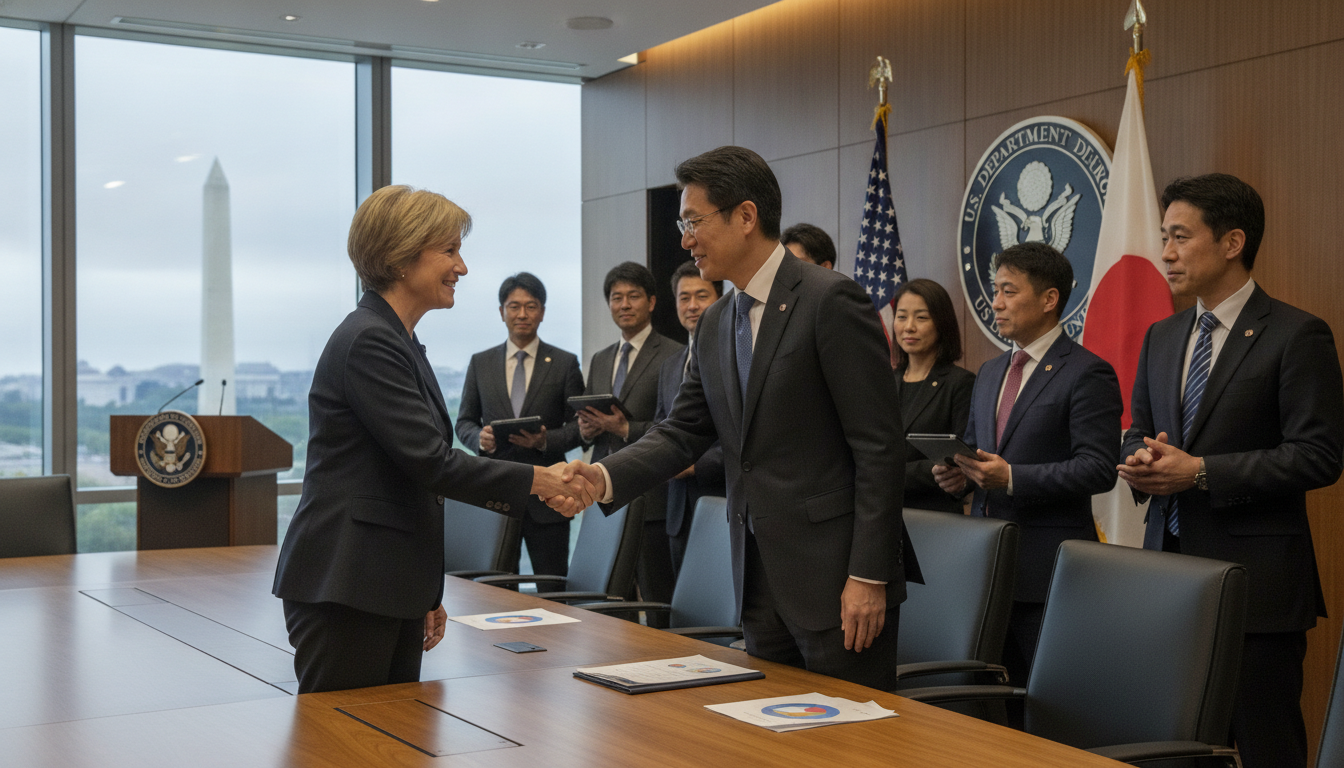
The U.S. Department of Energy has publicly welcomed leading Japanese technology companies to participate in its Genesis Mission, a slate of research and development initiatives that includes nuclear fusion and advanced supercomputing projects. Dario Gil, the department’s under secretary for science, said in Washington that the United States seeks industry partners to accelerate breakthroughs under the Genesis Mission. The announcement signals an effort to deepen technology ties with Japan across high-performance computing, quantum research and clean-energy innovation.
U.S. outreach to Japanese technology sector
Dario Gil framed the Genesis Mission as an open invitation for collaboration between U.S. science agencies and major international technology firms. He emphasized that the department values private-sector participation to translate laboratory advances into deployable systems. The outreach reflects a broader U.S. strategy to leverage commercial capabilities alongside federal research funding to meet ambitious scientific targets.
Japanese companies were singled out for their strengths in hardware engineering, materials science and systems integration that can complement U.S. national laboratories. Officials described engagement as mutually beneficial: U.S. facilities gain access to advanced industrial capacity while Japanese firms can test technologies at scale. The approach aims to bind academic, governmental and commercial capabilities into joint programs.
Nuclear fusion listed as a priority area
Among the Genesis Mission’s priorities, nuclear fusion stands out as a high-profile target for collaboration. The department has signalled that private-sector partners could accelerate development of reactor components, superconducting magnets and control systems. Gil noted that partnerships can help bridge the gap between proof-of-concept experiments and the engineering required for sustained fusion operations.
Industry involvement could also speed supply-chain development for critical materials and manufacturing processes that fusion power demands. Officials said that integrating corporate expertise with national-lab infrastructure may reduce technical risk and shorten development timelines. The department remains cautious about timelines but stressed the value of international collaboration to achieve scalable outcomes.
Supercomputing and quantum research collaboration
Supercomputing and quantum computing were identified as complementary pillars of the Genesis Mission, providing computational capacity to model complex physical systems. The DOE’s high-performance computing facilities are positioned to work with industrial partners on simulation, materials discovery and algorithm development. That cooperation could enhance design cycles for fusion devices and other large-scale scientific systems.
Quantum technologies are expected to play a role in solving problems that strain classical computing resources, and the department is exploring joint projects that pair quantum research with supercomputing. Collaboration with leading technology firms could facilitate prototype development and testing, while advancing software and hardware co-design efforts. The strategy relies on cross-disciplinary teams spanning hardware engineers, computational scientists and domain experts.
Operational and policy considerations for collaboration
Officials acknowledged several practical considerations for multinational cooperation, including export controls, intellectual property protection and funding mechanisms. The department said partnerships will need to navigate regulatory frameworks while preserving opportunities for open scientific exchange. Discussions are underway to structure agreements that align national-security interests with research goals.
Funding models could include joint ventures, cooperative research agreements and industry consortia, according to department representatives. These arrangements would be designed to encourage private investment while ensuring access to national-lab capabilities for vetted partners. The DOE indicated it would move deliberately to create frameworks that enable both collaboration and responsible stewardship of sensitive technologies.
Implications for Japan–U.S. scientific ties
Analysts say the Genesis Mission outreach could deepen Japan–U.S. cooperation in cutting-edge technology sectors and strengthen supply-chain resilience. Greater industrial engagement may foster long-term partnerships that extend beyond single projects, potentially influencing standards, workforce development and cross-border investment. For Japan, participation offers access to large-scale U.S. facilities and an opportunity to test commercial solutions under research-grade conditions.
The initiative also underscores shared strategic interests in energy innovation and computing leadership, areas where both countries maintain substantial research ecosystems. Collaborative projects could catalyze private-sector activity in Japan while aligning research trajectories with U.S. national priorities. Observers note that clear governance and transparent collaboration terms will be critical to sustaining trust and momentum.
The Department of Energy said the Genesis Mission remains an evolving program that will be shaped by technical progress and partner commitments. Officials expect to announce specific engagement opportunities and solicitations in upcoming months, while continuing to coordinate with international and domestic stakeholders. The department reiterated its interest in productive, responsible partnerships that advance scientific goals and public benefit.

