
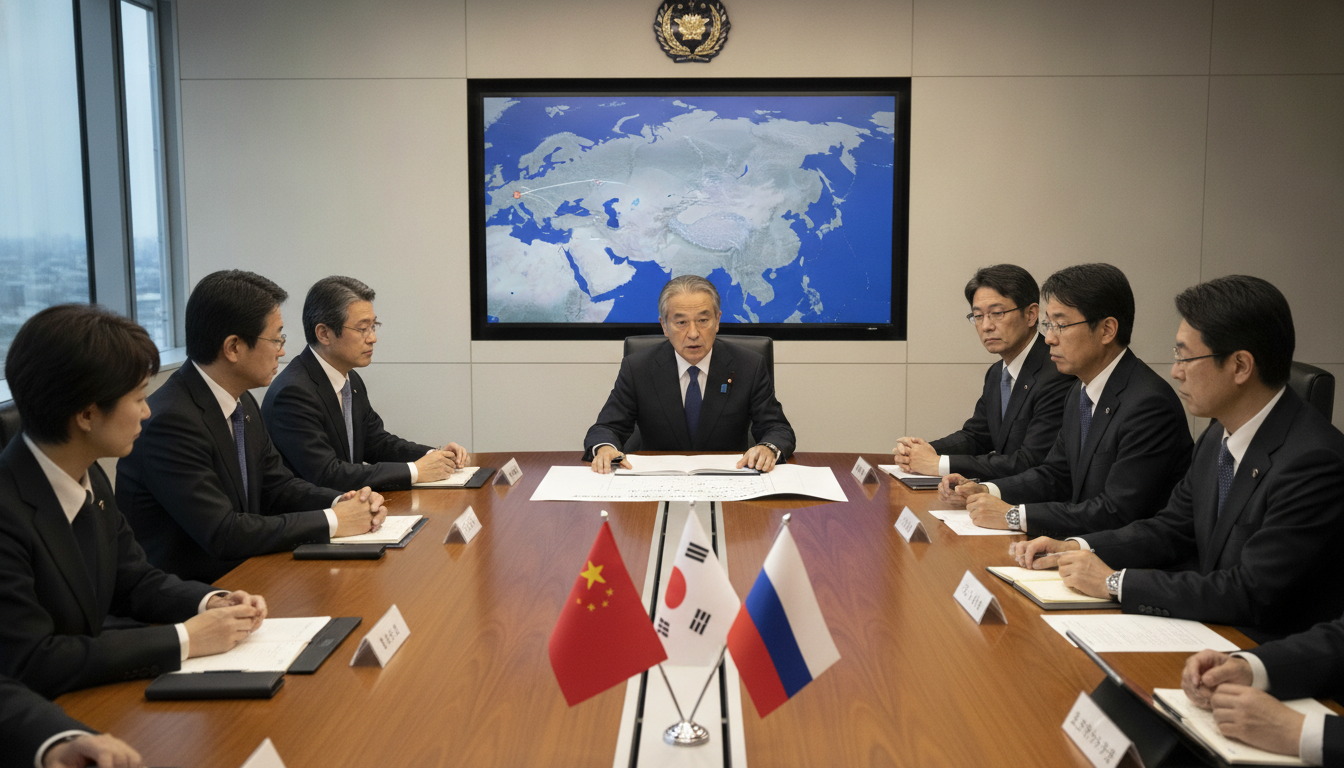
Japan warns Russia-North Korea military cooperation could strengthen Pyongyang, Defense of Japan 2026 says
Defense of Japan 2026 warns Russia-North Korea military cooperation could strengthen Pyongyang, urging vigilance over closer Beijing–Moscow ties and wider risks.
Japan on August 4, 2026 published its annual Defense of Japan 2026 white paper, warning that expanding Russia-North Korea military cooperation could materially boost Pyongyang’s military capabilities and increase regional security risks. The report, introduced by Defense Minister Shinjiro Koizumi, ties shifts in the global security environment — including lessons from the Ukraine war — to a greater threat environment for Japan and neighbouring states. Officials say the document calls for strengthened deterrence and closer coordination with allies to manage the growing challenge.
Key findings from the Defense of Japan 2026 white paper
The white paper states that tangible increases in technical cooperation and exchanges between Russia and North Korea are raising Pyongyang’s capacity to develop and deploy weapons that threaten regional stability. It highlights that such ties, coupled with North Korea’s accelerated weapons testing, create "a more severe security environment" for Japan and the broader Indo-Pacific. The Ministry of Defense frames the assessment as part of a broader review of how interstate alignments are shifting since 2022.
Reported forms of Russia-North Korea military cooperation
The document describes a range of activities it associates with Moscow-Pyongyang cooperation, including technology transfers, personnel exchanges, and the sharing of tactical knowledge. While the white paper avoids naming specific classified transfers, it points to an observable uptick in bilateral military contacts and logistical cooperation that could improve North Korea’s missile and conventional strike capabilities. Tokyo emphasizes monitoring and intelligence collection to better quantify the scope and intent of these exchanges.
Ukraine war’s influence on Pyongyang’s posture
Defense officials told the report that the conflict in Ukraine has provided a practical model for military adaptation that Pyongyang may seek to emulate, from battlefield tactics to sanctions resilience. The white paper argues that the war has demonstrated both vulnerabilities and opportunities for revisionist states, encouraging North Korea to refine its force posture and procurement strategies. Tokyo warns this learning effect, combined with external support, increases the pace at which Pyongyang can field more sophisticated systems.
Concerns over deeper Beijing-Moscow ties
Beyond direct Russia-North Korea links, the report cautions that closer strategic alignment between Beijing and Moscow could complicate efforts to check proliferating threats. The white paper notes that converging political and military interests among the three capitals might weaken diplomatic pressure and create supply-chain pathways that are harder to interrupt. Officials stress that the combination of bilateral cooperation and tri-party convergence warrants renewed multilateral engagement and contingency planning.
Japan’s defensive steps and alliance cooperation
In response, Japan is proposing stepped-up measures including enhanced missile defenses, accelerated acquisition of surveillance assets, and increased joint training with the United States and other partners. The white paper calls for deepening intelligence-sharing arrangements and refining rules of engagement to ensure a credible deterrent posture. Tokyo also outlines plans to bolster cyber and space resilience, arguing that modernized capabilities are essential to offset asymmetric threats posed by emergent military cooperation in the region.
Regional reactions and diplomatic avenues
The white paper signals Tokyo’s intent to press allies and partner states to maintain a united front while keeping diplomatic channels open with North Korea and Russia where feasible. Tokyo reiterates the role of sanctions, export controls and international inspections as tools to deny the transfer of critical technologies. Analysts in the region say the report is likely to prompt renewed consultations among Japan, South Korea, the United States and Southeast Asian partners on coordinated risk-reduction measures.
The Defense of Japan 2026 white paper frames the growing Russia-North Korea military relationship as a driver of near-term uncertainty and a catalyst for strategic adjustments across the Indo-Pacific. Tokyo’s assessment underscores a mix of military readiness and diplomatic engagement as the preferred approach, while signalling that monitoring and rapid adaptation will be central to Japan’s defence posture in the months ahead.

