
U.S. Confirms Role in Yen Intervention to Stabilize Asian Currencies
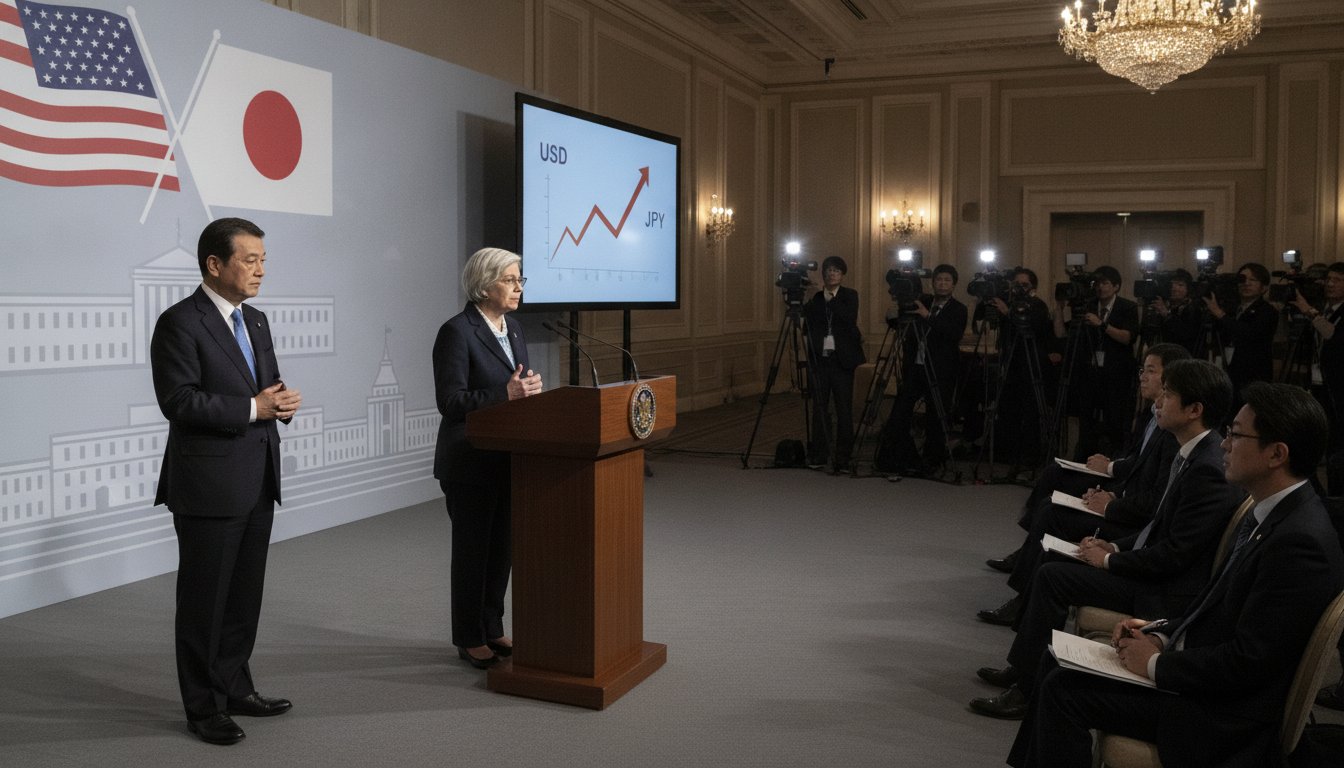
U.S. Treasury Secretary Scott Bessent told Nikkei that the United States joined a coordinated yen intervention on Aug. 4, 2026, to prevent yen weakness from triggering wider Asian currency instability.
WASHINGTON — The United States joined a coordinated yen intervention with Japan to prevent a slide in the yen from spreading volatility across Asian currencies, U.S. Treasury Secretary Scott Bessent told Nikkei in an exclusive interview on Aug. 4, 2026. The confirmation marks an unusually candid acknowledgement of direct U.S. participation in a yen intervention, with Bessent citing lessons drawn from the Asian financial crisis of the 1990s as a guiding rationale. Treasury officials framed the action as targeted and temporary, aimed at preserving orderly market conditions rather than managing long-term exchange-rate levels.
U.S. Confirms Participation
Bessent said Washington took part in a yen-buying operation alongside Japanese authorities to check sharp depreciation pressures. He stressed the operation was intended to reduce the risk of contagion to other Asian currencies and to restore orderly conditions in foreign-exchange markets. The Treasury’s acknowledgement follows coordinated action that analysts say is rare explicitly to publicize, reflecting the sensitivities of intervening in currency markets.
Why Officials Cited 1990s Lessons
In the Nikkei interview, Bessent invoked the Asian financial crisis of the late 1990s as a historical lesson informing current policy choices. He argued that allowing disorderly currency moves to fester can amplify regional economic stress and damage trade and investment ties. Treasury officials described the intervention as a preventive step designed to avoid the rapid contagion and capital flight that marked the earlier crisis.
Coordination with Japanese Authorities
According to Bessent, the intervention involved close coordination between the U.S. Treasury and Japanese counterparts, reflecting shared concerns about regional stability. Tokyo has at times acted unilaterally to support the yen, but this operation emphasized synchronized action to broaden its market-stabilizing effect. Officials on both sides framed the move as part of a cooperative effort rather than a bilateral exchange-rate targeting campaign.
Market Reaction and Immediate Impact
Currency markets showed signs of stabilization in the hours following the operation, with the yen recovering some losses against the dollar and other Asian currencies easing from their weakest levels. Traders and regional central banks monitored liquidity and volatility measures closely to gauge whether the intervention achieved its immediate objective. Market participants warned that while interventions can calm short-term turbulence, underlying economic differentials will continue to influence exchange rates.
Regional Implications for Asian Currencies
Treasury officials emphasized that preventing the yen’s disorderly decline was important to guard against spillovers to emerging-market currencies across Asia. Many Asian exporters and debtors are sensitive to sudden swings in major regional currencies, and a weakened yen can trigger competitive and financial strains. Policymakers in the region have closely watched the intervention as a signal of willingness among major economies to act in defense of stability.
Policy Signals and Forward Guidance
While Bessent described the move as tactical and limited, he declined to offer detailed guidance on future interventions, saying decisions would be made based on market conditions. The Treasury reiterated that interventions are not a substitute for domestic economic policy and that structural factors such as growth differentials, interest-rate policies, and fiscal positions remain central determinants of exchange rates. Officials indicated they would continue dialogue with international partners to monitor risks and coordinate where necessary.
Analysts’ Read on Effectiveness
Economists and market strategists gave mixed assessments of the long-term effectiveness of the intervention, noting that market confidence can be fragile if underlying macroeconomic imbalances persist. Some analysts argued the operation could buy time for more sustainable adjustments, while others cautioned against overreliance on currency operations to resolve core issues. The intervention’s success, they said, will depend on how quickly volatility subsides and whether it prevents broader financial stress.
The Treasury’s public acknowledgement of U.S. involvement in the yen intervention underscores the growing focus among major economies on preventing cross-border contagion in a volatile global environment. As policymakers emphasize coordination, markets will closely watch economic indicators and central-bank signals for clues on whether further joint actions might be needed.

