
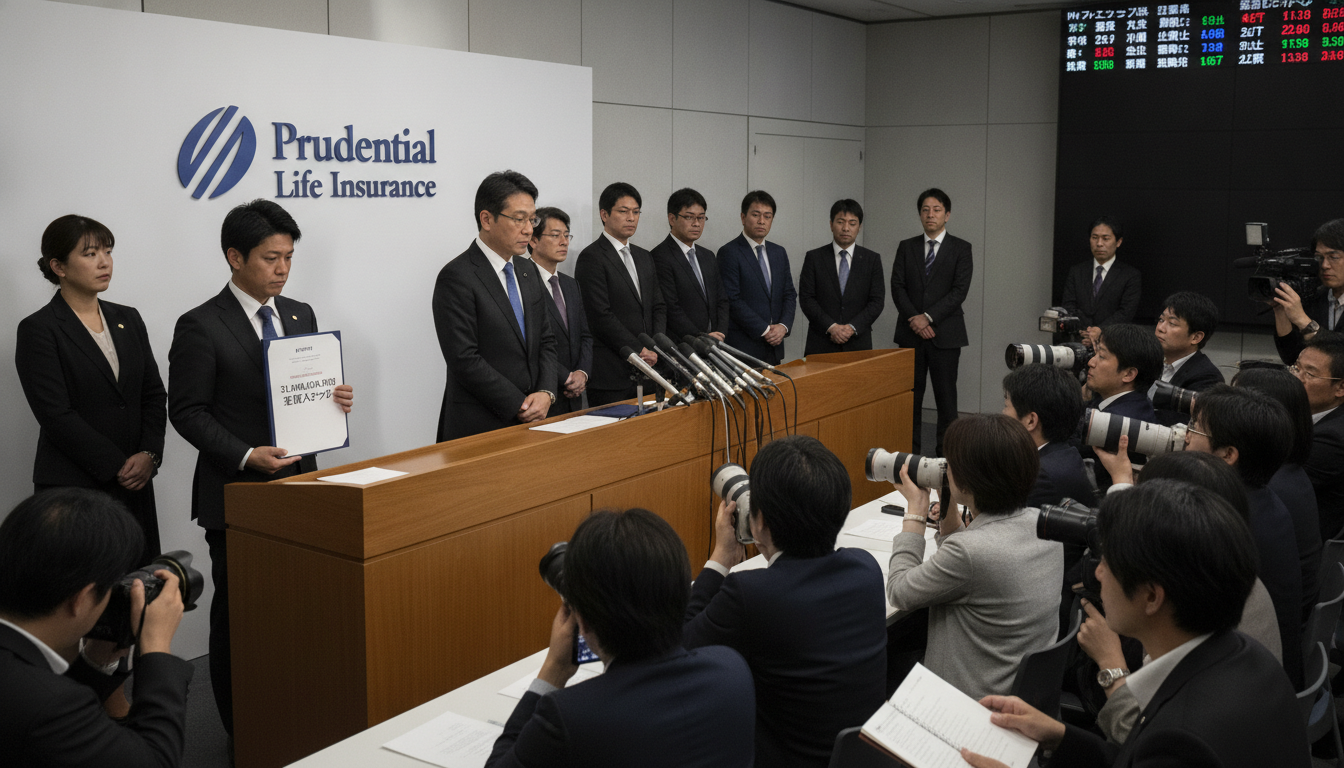
Prudential Life Insurance halts new sales as fraud fallout leaves staff idle and training strained
Prudential Life Insurance halts new sales after fraud revelations, leaving life planners idle and compliance training stretched as the company extends its suspension to Nov. 5.
Prudential Life Insurance suspended all new sales in February after the company disclosed a large-scale internal fraud, and branches in major cities now show a strikingly subdued workplace atmosphere. Life planners who normally work in the field are spending long days at their desks, with some observed dozing or watching online videos instead of meeting clients. Management has rolled out compliance and sales retraining, but those measures have so far struggled to fill the gap left by halted operations.
Branch workers idle as sales freeze continues
At a suburban high-rise near a busy station, a Prudential Life Insurance branch presents an uncommon scene for a weekday.
Employees who would normally be conducting client visits are present in the office, with small groups chatting, others appearing bored, and some continuing to stream video on their smartphones.
Several life planners said they have used the downtime to prepare for unrelated qualifications, reflecting uncertainty about when normal sales activity will resume.
Timeline and scale of the misconduct
The crisis began in January 2026 when the company announced that more than 100 current and former employees had been implicated in schemes that defrauded roughly 500 customers.
The company reported the total financial damage at about 3.1 billion yen and has since received a surge of additional complaints. On April 22 the insurer disclosed that new victim reports and consultations had reached approximately 700 cases.
Faced with those numbers and public outcry, Prudential Life Insurance halted new contract acquisition in February and initially set the suspension through early May before extending it by six months to November 5.
Management interventions and training efforts
Company executives framed immediate measures as necessary to strengthen oversight of life planners, introducing mandatory office attendance and a slate of training videos covering compliance and sales practices.
An early directive required life planners to report to the office for one hour a day; after questions from regulators about the sufficiency of that policy, the company tightened the rule to full-day attendance from 9 a.m. to 5 p.m. each weekday.
Despite the added presence requirement, internal sources say the company quickly ran short of fresh training material and struggled to maintain productive programming for staff stranded by the sales freeze.
Regulatory scrutiny and public response
Regulatory officials signaled concern that initial remedial steps were inadequate, noting that brief daily check-ins would not address systemic failures in supervision and sales conduct.
The Financial Services Agency and other watchdogs have pressed insurers to demonstrate concrete changes to internal controls and to explain how customers were exposed to fraud by trusted staff.
Public criticism has been strong, and the accumulation of additional victim reports has intensified pressure on the company to provide redress and to show sustained governance reforms.
Operational and reputational costs for life planners
The pause on new sales has disrupted the work patterns and earnings prospects of many life planners who typically rely on regular client meetings.
Some agents have pivoted to internal administrative tasks or pursued outside certifications, while others report anxiety about performance reviews and future income.
Industry analysts warn that prolonged idleness and visible morale issues could complicate efforts to rebuild customer trust and to retain experienced sales staff once normal operations resume.
Prudential Life Insurance faces a multifaceted recovery challenge that requires repairing client relationships, rebuilding internal controls, and restoring confidence among regulators and the public. The extended suspension underscores how quickly misconduct by a subset of staff can ripple through operations and reputation, leaving day-to-day branch life markedly different from the customer-facing activity typical of the business.

