
Government approves two-year 1% food consumption tax cut starting April 1, 2027
Government approves a two-year 1% food consumption tax cut from April 1, 2027; opposition, analysts raise doubts over funding, inflation impact and bill passage.
The government decided on August 5, 2026 to lower the consumption tax rate on food to 1% for a limited two-year period, a move described as a targeted relief measure and framed as the "food consumption tax cut." The policy is to take effect from April 1, 2027 through March 31, 2029, but it requires passage of related legislation in the extraordinary session of the Diet in autumn 2026 to be implemented. Officials argue the measure aims to ease the burden on low- and middle-income households, while critics question its fiscal cost and whether the tax cut will effectively address rising prices.
Cabinet decision and legislative timeline
The cabinet formally approved the plan on August 5, 2026, setting a clear timetable that ties implementation to the Diet session scheduled for autumn 2026. If the bill is enacted during that extraordinary session, the reduced 1% rate will be applied to food items from the start of the fiscal month on April 1, 2027 and remain in place for two years until March 31, 2029. Government documents emphasize the temporary nature of the cut and describe it as a stopgap measure intended to provide immediate relief ahead of longer-term policy solutions.
Prime Minister frames cut as relief for low- and middle-income households
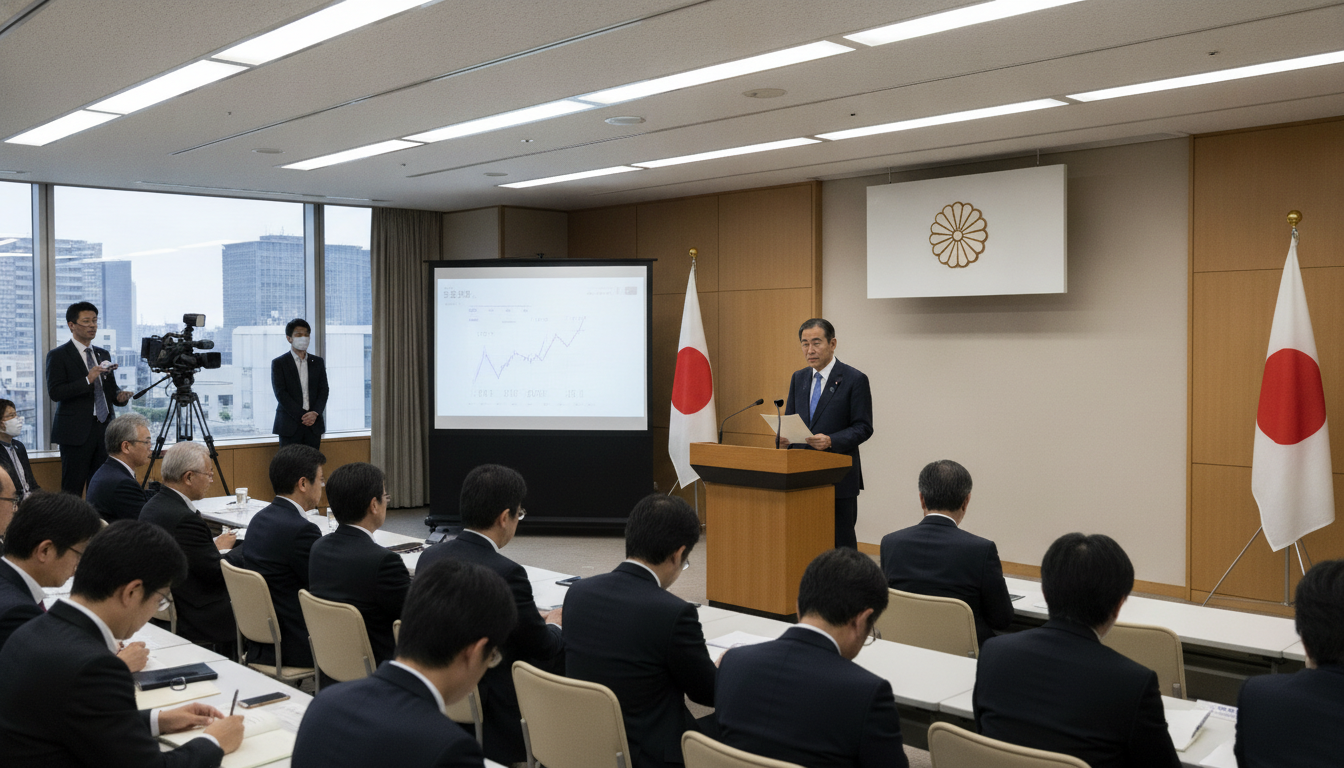
Prime Minister Sanae Takaichi told reporters on August 5, 2026 that reducing the consumption tax on food is aimed at lightening the burden on middle- and low-income households and that the government has worked to realize the measure as quickly as possible. She expressed gratitude for officials involved in the policy discussions and characterized the tax cut as a priority measure to address household strain. The prime minister’s comments underline that political momentum within the cabinet and ruling party drove the timetable and the decision to make the relief temporary.
Opposition parties criticize approach and signal resistance
Opposition leaders voiced sharp objections after the cabinet decision, with Democratic Party for the People leader Yuichiro Tamaki saying on August 5, 2026 that his party had raised numerous concerns and that it was regrettable the cabinet had moved ahead without sufficient answers. Several opposition parties maintain that direct cash transfers or targeted benefits would be a more effective response to price increases than a across-the-board tax reduction on food. Those parties have signaled they may withhold support for the bill in the extraordinary Diet session, casting doubt on the government’s ability to secure timely passage.
Internal deliberations and the Social Security National Council report
The decision-making process drew scrutiny after the Social Security National Council consolidated differing views into a report that was ultimately appended rather than determinative, leaving the prime minister to make the final call. Opposition delegates and some independent experts argued in council meetings that benefits would better reach vulnerable households and more directly counteract inflationary pressures. Critics now warn that the way the cabinet navigated internal consultations—by prioritizing a single policy path over broader compromise—could complicate negotiations in parliament and erode cross-party support for the proposed amendment.
Fiscal cost and funding gaps under debate
Analysts and lawmakers have highlighted unresolved issues regarding how the government will secure the funds needed to offset the revenue loss from the food consumption tax cut. Estimates circulated in policy circles indicate that even a 1% reduction targeted only at food could result in substantial shortfalls for local and central government budgets over the two-year period. Questions remain about whether the central government will reallocate existing appropriations, tap reserve funds, or identify new revenue sources, and opponents argue that uncertainty over fiscal offsets weakens the policy’s credibility.
Effectiveness as a price-stability measure questioned
Economists and consumer advocates expressed skepticism that a temporary 1% reduction in the food consumption tax will materially lower overall living costs or alter inflation expectations. Some experts note that retail price adjustments do not always track tax changes uniformly, and that supply-side factors and global commodity prices continue to drive food inflation. Opposition-led proposals favoring targeted subsidies or means-tested payments are premised on the view that direct support would more effectively assist those hit hardest by rising prices.
The coming weeks are likely to shape whether the government’s plan becomes law or stalls amid partisan disagreement and fiscal scrutiny. Lawmakers will debate amendments and demand detailed fiscal projections during the extraordinary Diet session in autumn 2026, and both sides of the aisle will face pressure to produce concrete measures that protect vulnerable households while maintaining budgetary discipline.

