
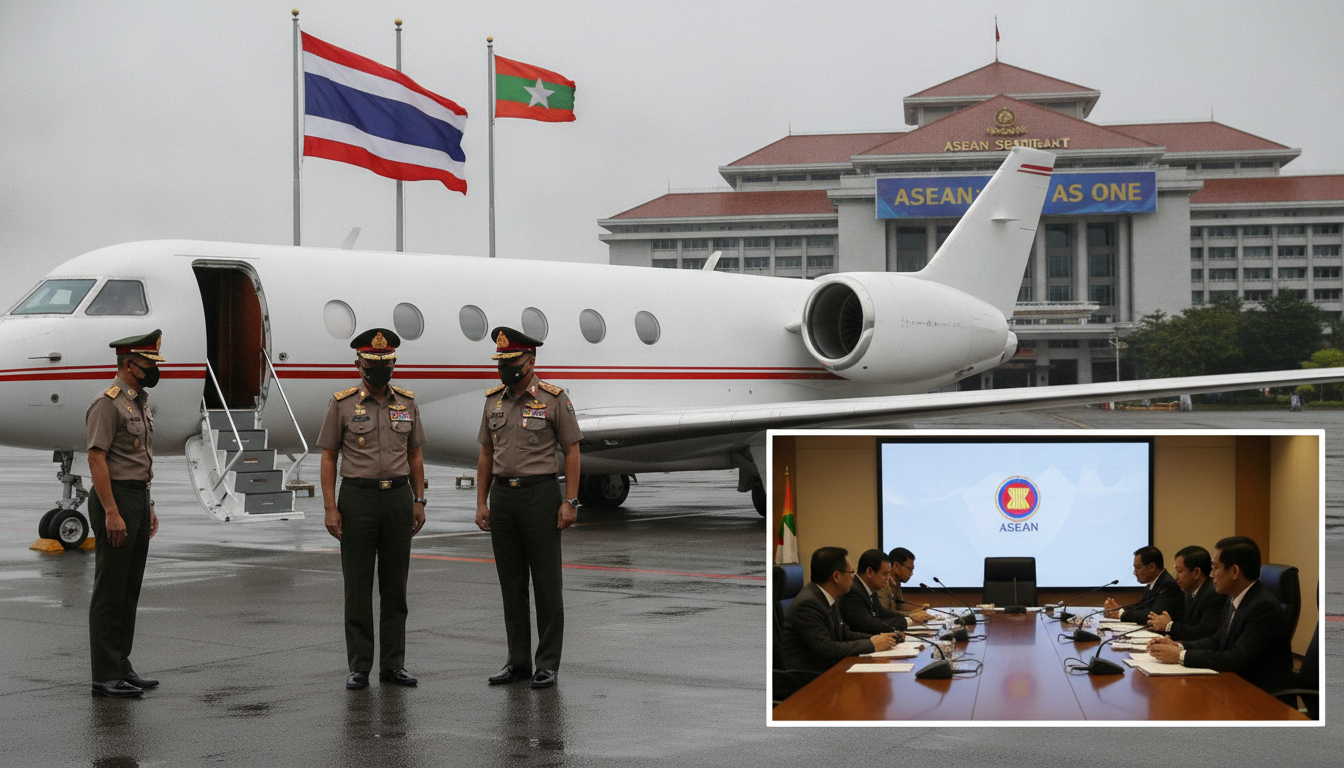
Min Aung Hlaing visit to Thailand raises regional legitimacy questions
Myanmar leader Min Aung Hlaing’s visit to Thailand on August 6, 2026, seeks regional recognition as the National Unity Government urges ASEAN to sustain pressure on the junta.
Myanmar’s military chief-turned-leader, Min Aung Hlaing, is scheduled to arrive in Bangkok on Thursday, August 6, 2026, in a move officials say aims to shore up international legitimacy. The Min Aung Hlaing visit to Thailand comes as the National Unity Government (NUG), the parallel anti-regime body, called on the Association of Southeast Asian Nations to keep diplomatic pressure on the former general. The visit marks one of the most high-profile foreign trips by Min Aung Hlaing since his meetings with world leaders earlier this year, including a June 16 meeting in Beijing.
Itinerary and official engagements
The Thai government has outlined a short program of talks and ceremonial events for the Min Aung Hlaing visit to Thailand. Officials said meetings will focus on bilateral trade, border management and cooperation on transnational issues, with talks scheduled at both the foreign ministry and government offices. Thai authorities have emphasized the visit’s practical agenda while downplaying any formal recognition beyond standard diplomatic courtesies.
Diplomatic objectives behind the trip
Analysts say the Min Aung Hlaing visit to Thailand is aimed at strengthening regional ties and reducing the junta’s international isolation. For the military leadership in Naypyidaw, engagement with a major neighbor offers opportunities to secure economic and logistical cooperation. Observers note that such visits also carry symbolic weight, signaling to other capitals a degree of acceptance that could complicate coordinated international pressure.
NUG appeal to ASEAN for continued pressure
The National Unity Government publicly urged ASEAN to maintain and intensify pressure on the Myanmar regime in response to the scheduled visit. NUG officials argue that engagements that confer diplomatic space should be coupled with clear demands on accountability, humanitarian access and the restoration of democratic institutions. The appeal underscores the deep divisions between the parallel administrations and highlights competing narratives about legitimacy in Myanmar.
ASEAN’s balancing act and past approaches
ASEAN continues to navigate a fraught balance between non-interference and addressing a crisis that has regional repercussions. Since the 2021 coup, the bloc has experimented with a mix of dialogue, special envoys and limited measures aimed at mediation, yet member states remain divided on punitive steps. Thailand, which shares a long border with Myanmar and significant economic ties, has taken a pragmatic posture that critics say risks diluting a unified regional response.
Security and humanitarian implications for Thailand
Thai officials are expected to stress border security and humanitarian coordination during talks, reflecting immediate, practical concerns. Cross-border displacement, illicit trafficking and ceasefire breakdowns have posed ongoing challenges for northern Thailand and border provinces. Bangkok faces domestic pressure to manage these issues while engaging with Naypyidaw, creating a constrained policy environment for its leaders.
International context and sanctions landscape
The Min Aung Hlaing visit to Thailand unfolds against a backdrop of sanctions and limited international recognition from Western governments and rights groups. Several countries have maintained restrictive measures aimed at penalizing the junta and its leaders for human rights abuses and the curtailment of democratic processes. Meanwhile, other regional powers have pursued engagement strategies, complicating efforts to present a unified global posture toward Myanmar.
Myanmar’s crisis remains a central security and humanitarian concern for Southeast Asia, with ramifications for migration, trafficking and transnational militancy. The Min Aung Hlaing visit to Thailand will test ASEAN’s capacity to reconcile competing interests among member states and to articulate a coherent regional stance. As the visit proceeds, diplomatic sources say close monitoring of joint statements and any agreements will be crucial to assessing whether the trip alters the diplomatic calculus or simply reinforces existing divisions.
The coming days will show whether the visit produces concrete cooperation on border management and commerce, or mainly symbolic signs of thawing ties that fall short of resolving deeper political conflicts. Observers from regional capitals and international organizations will be watching for signals on humanitarian access, accountability measures and any language that could be interpreted as normalizing the junta’s rule.

