
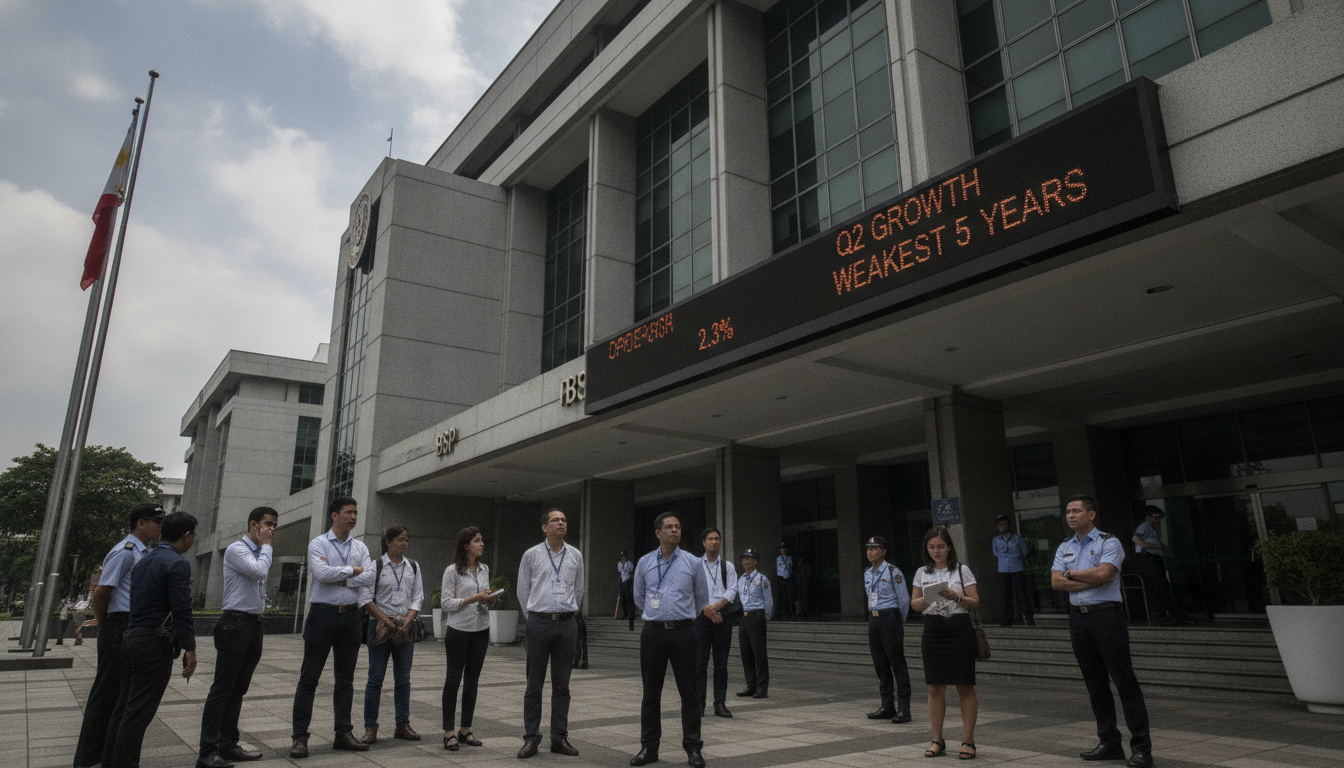
Philippine economy growth slows to 2.3% in Q2 amid energy shock and corruption scandal
Philippine economy expanded just 2.3% year-on-year in Q2 2026, its weakest pace in over five years, as energy shocks, a weak peso and reduced public spending weigh on demand.
The Philippines reported a 2.3% year-on-year expansion in the second quarter of 2026, marking the slowest growth rate in more than five years for the Philippine economy. Rising energy costs linked to geopolitical tensions, a depreciation of the peso and a contraction in government outlays after a high-profile corruption scandal combined to curb household spending and public investment. The result underscored mounting headwinds to the country’s consumption-driven recovery as policymakers confront a difficult trade-off between inflation control and growth support.
Q2 growth details and immediate drivers
The headline 2.3% GDP figure reflects a clear pullback from the stronger readings seen over the past several years. Consumer spending — a long-standing engine of the Philippine economy — showed notable weakness as households contended with higher prices for fuel and basic goods. Government expenditures, often a key stabilizer during slower private-sector demand, also declined after public projects were delayed or scaled back.
Analysts say the slowdown is broad-based rather than confined to a single sector, with both services and investment growth easing. The pace of expansion places fresh emphasis on near-term data releases that will signal whether the second-quarter result represents a temporary blip or the start of a more prolonged deceleration. Policymakers and markets will be watching labour, retail and manufacturing indicators for clearer signs of momentum.
Energy shock tied to Middle East tensions
An energy shock originating from the Iran war has been a major external factor hitting the Philippine economy in recent months. Higher international oil prices translated into elevated domestic fuel and power costs, squeezing household budgets and increasing operating expenses for businesses. The energy squeeze has also raised production costs for energy-intensive industries, dampening investment appetite in affected sectors.
Power supply concerns in some regions added to the disruption, prompting firms to reassess production schedules and contingency plans. The combined effect of elevated energy bills and supply worries has compressed margins for both small enterprises and larger manufacturers, which in turn has limited employment and wage growth in the short term.
Public spending cutbacks after corruption scandal
A domestic corruption scandal that came to light earlier in the year precipitated tighter scrutiny of public contracts and spending. Authorities paused or slowed disbursements for several government projects while investigations proceeded, reducing a fiscal cushion that often supports growth during cyclical downturns. The pullback in public works and procurement translated directly into lower demand for construction materials and services.
Local governments, which account for a sizeable share of infrastructure and social spending, also showed greater caution in releasing funds, further weighing on activity. The contraction in public spending amplified the impact of weaker household consumption, leaving fewer offsetting forces to sustain headline GDP growth.
Peso weakness, inflation and household pressure
The peso’s depreciation versus major currencies has added another layer of pressure on the Philippine economy by raising the local-currency cost of imported fuel, food items and industrial inputs. For many households, that has meant a tangible erosion of purchasing power at a time when wages have not kept pace with inflation. Higher living costs were singled out by survey data as a primary reason for reduced discretionary spending among urban consumers.
Inflationary pressures complicate the policy response, as central bank officials face the dual mandate of price stability and supporting growth. A weaker currency has also increased the burden on firms servicing foreign-currency debt and raised import bills for businesses reliant on overseas inputs, contributing to tighter profit margins.
Policy choices and the outlook for monetary and fiscal action
Policymakers are now confronted with a difficult balancing act between containing inflation born of energy and currency shocks and providing enough support to revive growth. Monetary authorities could opt for a cautious posture to anchor inflation expectations, while fiscal officials may consider more targeted relief measures to protect vulnerable households and sustain critical infrastructure projects. Any coordinated stimulus would need to be narrowly tailored to avoid reigniting inflation.
Market participants and business leaders have called for clearer signals on both monetary and fiscal plans to restore confidence. Structural reforms that improve energy resilience, strengthen procurement transparency and diversify supply chains are increasingly being discussed as medium-term priorities to reduce susceptibility to external shocks.
Business response and investor sentiment
Corporate leaders and investors reacted to the slower growth with a mix of caution and calls for pragmatic policy responses. Companies reported delaying expansion plans and focusing on cost control, with particular attention to managing fuel expenditures and exchange-rate exposures. Some sectors, including export-oriented industries, have shown more resilience thanks to demand from trading partners, but domestic-oriented services and retail have been more directly affected.
Investor sentiment has been sensitive to news on public spending and corruption investigations, with capital flows and equity valuations reflecting heightened risk aversion. Restoring predictability in public procurement and ensuring timely implementation of priority projects are likely to be central to rebuilding confidence among foreign and domestic investors.
The coming quarters will be critical for the Philippine economy as authorities and businesses navigate the combined effects of external energy disruptions, currency fluctuations and tighter public finances. Close monitoring of inflation, labour markets and investment flows will be necessary to judge whether growth rebounds or remains subdued heading into the year-end.

