
Ariake High School Brings Rebuilt Brass Band and Large Kumamoto Support to Koshien Debut
Ariake High School, making its first Koshien appearance, brought a community-assembled brass band and hundreds of supporters from Kumamoto after the July 28, 2026 earthquake.
Ariake High School made its debut at the 108th National High School Baseball Championship on August 7, 2026, carrying with it the hopes of earthquake-affected communities in Kumamoto. The team arrived in Nishinomiya determined to show “all-out” baseball while a newly formed brass ensemble, drawn from alumni and local musicians, prepared to provide spirit from the stands. The scene at Koshien mixed competitive intensity with a visible thread of regional solidarity.
School Buildings Unharmed, Training Continued
Ariake, located in the northern part of Kumamoto Prefecture, reported no structural damage to school facilities after the July 28 earthquake. Because classrooms and practice spaces remained usable, the baseball team was able to keep training through the summer break.
Coaches and school staff said maintaining regular practice routines helped focus players and preserve morale in the days following the quake. That continuity also allowed the squad to travel to Koshien with a clear plan for the tournament’s first-round game.
Alumni and Community Form 30-Person Brass Band
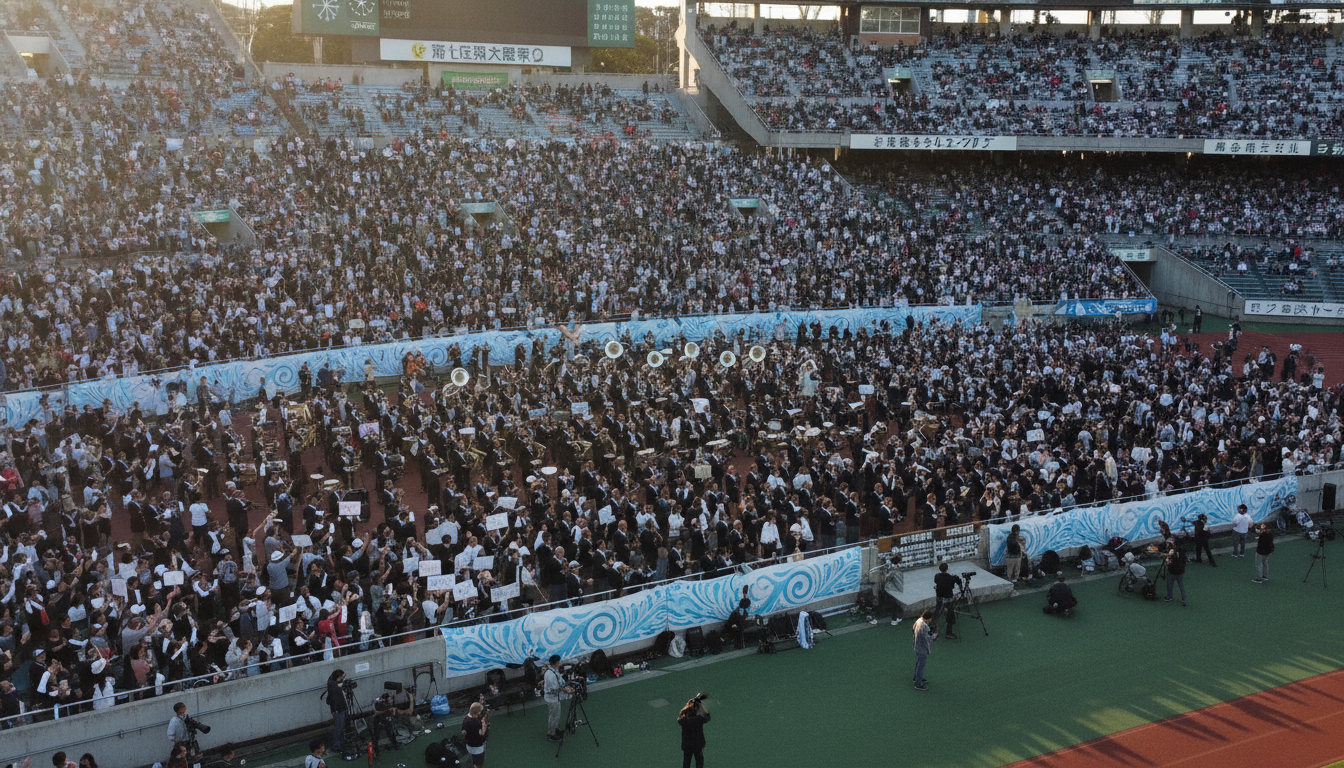
Facing a practical challenge—Ariake’s official brass band counts only four active members—the school and local community rapidly mobilized to assemble a support ensemble for Koshien. Some 30 alumni and members of the Arao City Civic Orchestra joined to create a full-bodied brass band for the occasion.
The newly formed group rehearsed together for the first and only time the night before departure, working through pieces such as “African Symphony” and “Speed Star” before boarding buses to Nishinomiya. Band leaders said the single joint rehearsal carried emotional weight and urgency, and participants concentrated on delivering a confident performance despite limited preparation.
Students and Fans Travel in Force from Kumamoto
A large contingent of supporters accompanied the team to Koshien. Current students—around 250—were expected to pack the third-base Alps stand, while baseball club members and other backers traveled as part of an even larger cheering group from Kumamoto. The sight of blue megaphones and coordinated chants underscored the scale of regional support.
Many supporters said they came not only to cheer the players but to offer a visible message of encouragement to those affected by the earthquake. For a first-time Koshien entrant, the presence of such a crowd was described by school officials as both uplifting and humbling.
On-Field Support: Drums, Megaphones and First-Time Performances
When Ariake took its first at-bat, the makeshift brass band signaled the moment with drum beats and upbeat tunes, marking the sound of a community rallying behind its team. The four-member core of the school’s brass section had not performed in a cheering stand during the regional tournament, making this appearance their first at a high-profile national game.
The marching of rhythms and synchronized chants—led by student leaders and club members—helped create a charged atmosphere in the stadium. Observers noted that the combination of live music and organized cheering gave Ariake a strong presence on an otherwise unfamiliar stage.
Players’ Resolve Tied to Earthquake Recovery
Players said their preparation over recent weeks took on new meaning after the July 28 quake, as they sought to perform not just for themselves but for local residents coping with disruption. Team members described practicing with a determination to deliver “full-power” play as a form of encouragement to affected communities.
Vice-principal Fumiko Ota urged the brass band to convey both sound and spirit to those who had been impacted by the disaster. Her remarks framed the team’s Koshien outing as part of a broader recovery narrative, where sportsmanship and community solidarity intersect during acute local hardship.
Student Leader Recalls Quake and Seeks to Convey Courage
The brass band’s captain, a third-year student who experienced the July 28 quake while at home in Arao City, described the return of strong shaking as a reminder of another major Kumamoto tremor a decade earlier. She said the experience made the group’s mission more personal and motivated her to use music to reach listeners beyond the stadium.
She acknowledged nerves ahead of the national stage but emphasized a simple goal: to support the baseball team and to send a message of courage to those still dealing with the quake’s aftermath. That sense of purpose was echoed by alumni and residents who joined the ensemble.
Ariake’s Koshien debut therefore combined sporting aspiration with a deliberate show of community resilience, as players, students and civic musicians converged to represent Kumamoto on a national platform. The team’s performance and the supporters’ music were intended not only to contend in a championship but to carry an audible message of solidarity back to towns shaken by the July 28 earthquake.

