
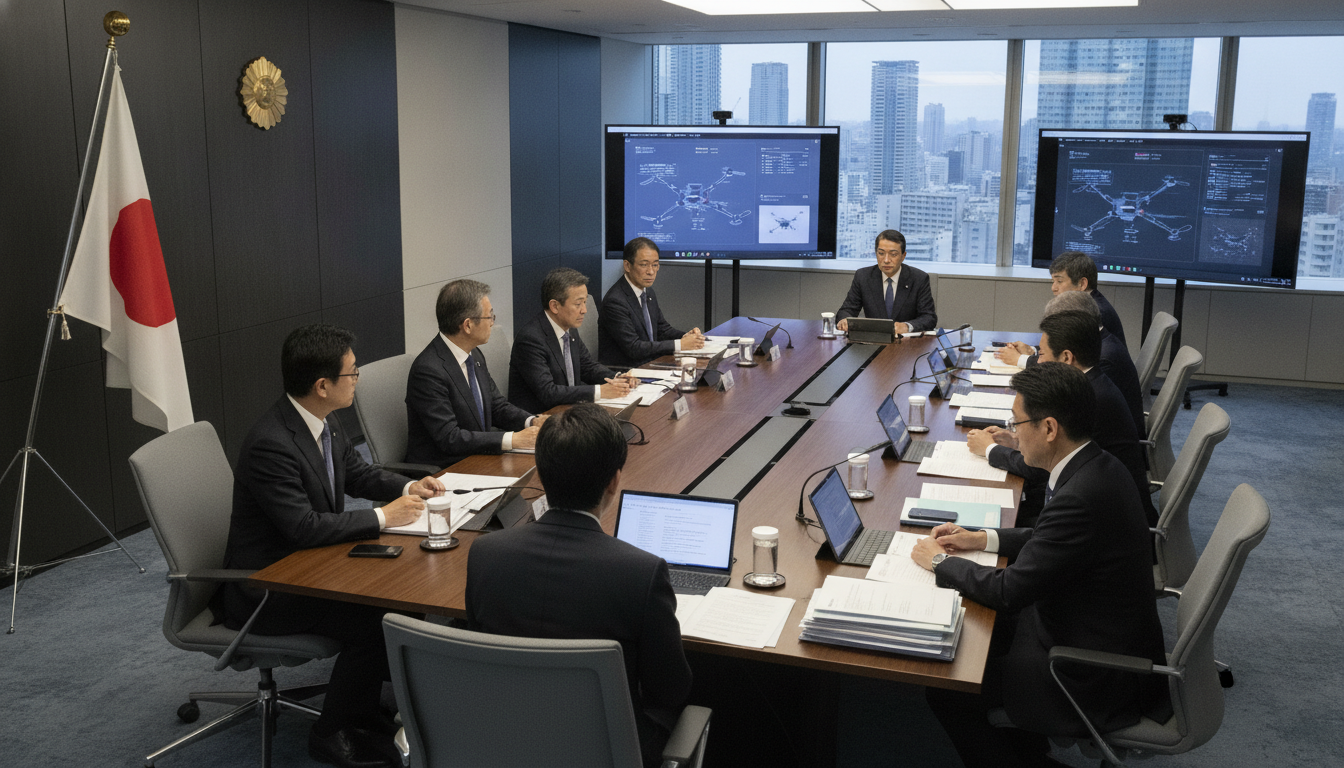
Cabinet adopts "new way of defense" phrase as Japan prepares security document revisions
Japan promotes a "new way of defense" to explain shifts in strategy responding to AI, drones and asymmetric warfare as three security documents are revised by year-end.
Government shifts to "new way of defense" wording
The Cabinet has begun using the phrase "new way of defense" in public briefings and meetings as it moves to revise three core security documents by the end of the year. Officials say the change is intended to make policy responses to developments such as artificial intelligence and unmanned systems easier for the public to understand.
The phrase replaces repeated references to a "new way of warfare" that officials and experts say provoked misunderstanding about Japan’s defensive posture. The government hopes the wording will clarify that changes are aimed at strengthening homeland defense rather than expanding offensive capabilities.
Minister Koizumi frames rationale for the change
Defence Minister Shinjiro Koizumi has been a visible proponent of the new phrasing, saying Japan must build strategies suited to its circumstances rather than simply importing global combat concepts. He has described the shift as part of an effort to communicate complex technical and operational changes in plain language to the public.
Koizumi told reporters in June that the government will not copy foreign models wholesale but will craft a Japanese approach that remains consistent with constitutional constraints. Officials have reiterated that the aim is to secure public understanding ahead of the planned revisions to the National Security Strategy and related documents.
Operational shifts driving policy — AI, drones, space and cyber
Policy makers point to recent conflicts, notably Russia’s invasion of Ukraine and fights in the Middle East, where inexpensive unmanned aerial systems and autonomous technologies have altered the character of combat. Mass deployment of low-cost drones has been used to target expensive platforms, while combined drone-missile attacks have complicated traditional air defenses.
Beyond unmanned systems, officials cite growing relevance of the space, cyber and electromagnetic domains as well as advances in artificial intelligence that enable new tactics and faster decision cycles. The 2022 National Defense Strategy already recognized these shifts, and the current drafting process aims to translate technological change into concrete defensive measures.
Experts and scholars voice concern over public perception
Academic and civilian experts have warned that the phrase "new way of warfare" often triggered online and public anxieties that Japan was preparing for offensive operations. Atsuko Higashino, a professor of international politics at the University of Tsukuba, has argued that while the technical term captures real changes in operational methods, it has been widely misunderstood by the public.
Some experts say "new way of defense" may reduce confusion, but they caution that language alone will not resolve deeper concerns about intent and legal limits. They urge transparent explanation of concrete capabilities and defensive scenarios so citizens can evaluate whether policy changes remain within the bounds of Japan’s pacifist constitution.
Political debate and criticism inside the ruling party
The verbal shift has not silenced political debate. Some ruling party members and opposition figures have criticized the change as a cosmetic "relabeling" intended to soften public reaction. Critics argue that switching terminology risks appearing to downplay substantive shifts in force posture and acquisition priorities.
Defence Ministry officials have acknowledged the debate but say technical and doctrinal details still need to be finalized. They indicate the ministry will continue consultations with experts and lawmakers as it prepares draft revisions for public and parliamentary review later in the year.
Timeline and next steps for the security documents
The government aims to complete revisions to three major security documents by the end of the calendar year, a process that will involve expert panels, interagency coordination and political debate. Drafting teams are expected to translate assessments of emerging threats into procurement plans, operational concepts and rules of engagement that align with constitutional limits.
Public outreach is also planned as part of the effort to build understanding, including briefings to the Diet and explanatory materials for citizens. Officials say clear communication will be central to securing legitimacy for measures that involve new technologies and blended-domain responses.
As revision work proceeds, officials and experts agree that precise language and transparent disclosure of how capabilities will be used are essential to maintaining public trust. The choice to promote a "new way of defense" reflects a broader effort to reconcile rapidly evolving military technologies with Japan’s legal commitments and public expectations.

