
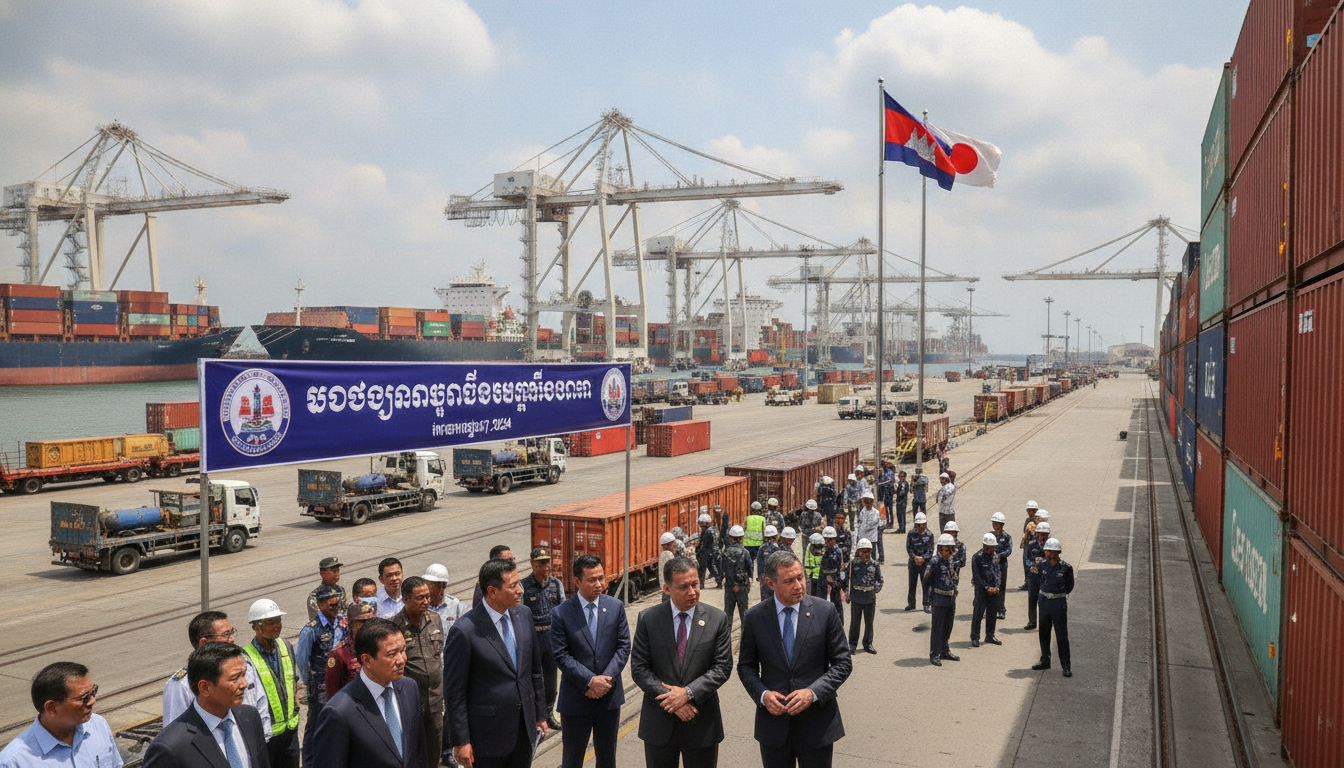
Sihanoukville port becomes lifeline for Japanese firms as border closures push up cargo fees
Cambodia’s Sihanoukville port has taken on vital trade flows for Japanese multinationals cut off by land border closures, but rising maritime fees are squeezing supply chains.
Cambodia’s Sihanoukville port has emerged as a critical gateway for Japanese multinationals after overland routes into Thailand were disrupted, yet companies are pressing for relief from sharply higher cargo charges. The shift to maritime transit followed sustained closures of border checkpoints after armed clashes last year, forcing firms to reroute freight to the deep‑water facility on the Gulf of Thailand. Japanese manufacturers and logistics operators say the redirected trade has raised transport costs, extended delivery times and placed new burdens on regional supply chains. (asiapacificexpress.com)
Surge in container throughput and handling capacity
Sihanoukville Autonomous Port has rapidly increased its container handling capacity, with Cambodian and Japanese sources noting significant year‑on‑year growth as shipments were diverted from land corridors. Port authorities and development partners report throughput rising into the low millions of twenty‑foot equivalent units, reflecting accelerated demand for maritime transits. These capacity gains have been supported by technical cooperation and investment designed to turn Sihanoukville into a regional logistics hub. (ocdi.or.jp)
Companies cite higher drayage and tariff burdens
Japanese logistics firms and manufacturers cite higher drayage, terminal handling and inland transport fees at Sihanoukville compared with previous overland routes, creating pressure on margins and inventory planning. A Japanese development review and industry surveys have highlighted that extra drayage costs and longer lead times are key reasons some exporters and importers remain reluctant to fully shift to the port. Firms have asked for targeted measures to reduce those costs so trade can flow without eroding competitiveness. (openjicareport.jica.go.jp)
Border shutdowns and supply‑chain disruption
The abrupt reduction in cross‑border land traffic followed clashes and security concerns in 2025, prompting authorities to keep several checkpoints closed and prompting businesses to activate contingency plans. The disruption cut into established truck routes linking factories and distribution centres in Thailand and Cambodia, forcing companies to seek alternative corridors and to rely on Sihanoukville for international transshipments. The result has been a re‑routing of goods that previously moved by road, with knock‑on effects on inventory cycles and production scheduling. (fnn.jp)
Calls for fee relief and targeted support
Several Japanese multinationals and logistics providers have publicly and privately urged Cambodian authorities and port operators to consider fee reductions, streamlined customs procedures and subsidies for drayage to ease the transition. Industry groups argue that temporary tariff adjustments or incentives for larger carriers could lower per‑unit costs and stabilize supply chains while new infrastructure is completed. Local business associations say a mix of fee relief and process improvements would be the most effective short‑term response. (openjicareport.jica.go.jp)
Japan steps up financing and technical cooperation
Tokyo has moved to bolster the port’s capacity and customs functions, providing grant aid and loan support for terminal expansion and operational upgrades aimed at handling the surge in container traffic. Japanese diplomatic and development agencies have signed agreements to reinforce customs, expand terminal infrastructure and finance phased upgrades to deepen berths and increase crane capacity. Officials say these investments are intended to improve efficiency and reduce costs for users over the medium term. (mofa.go.jp)
Sihanoukville’s rapid rise underlines both the resilience and the fragility of regional supply chains when geopolitical and security shocks close traditional routes. Port expansion and Japanese support will likely relieve some pressure over time, but industry representatives warn that fee levels, procedural bottlenecks and inland logistics must be addressed now to prevent longer‑term diversion of trade to other regional hubs. (phnompenhpost.com)
The coming months will test whether policy adjustments and infrastructure investment can translate the port’s growth into sustainable, lower‑cost trade flows for Japanese firms relying on consistent, predictable routes.

