
Yen Intervention Falls Short as Markets Question Tokyo’s Economic Agenda
Japan-U.S. yen intervention failed to halt declines as investors lose faith in Tokyo’s fiscal and monetary plans, keeping the currency under pressure.
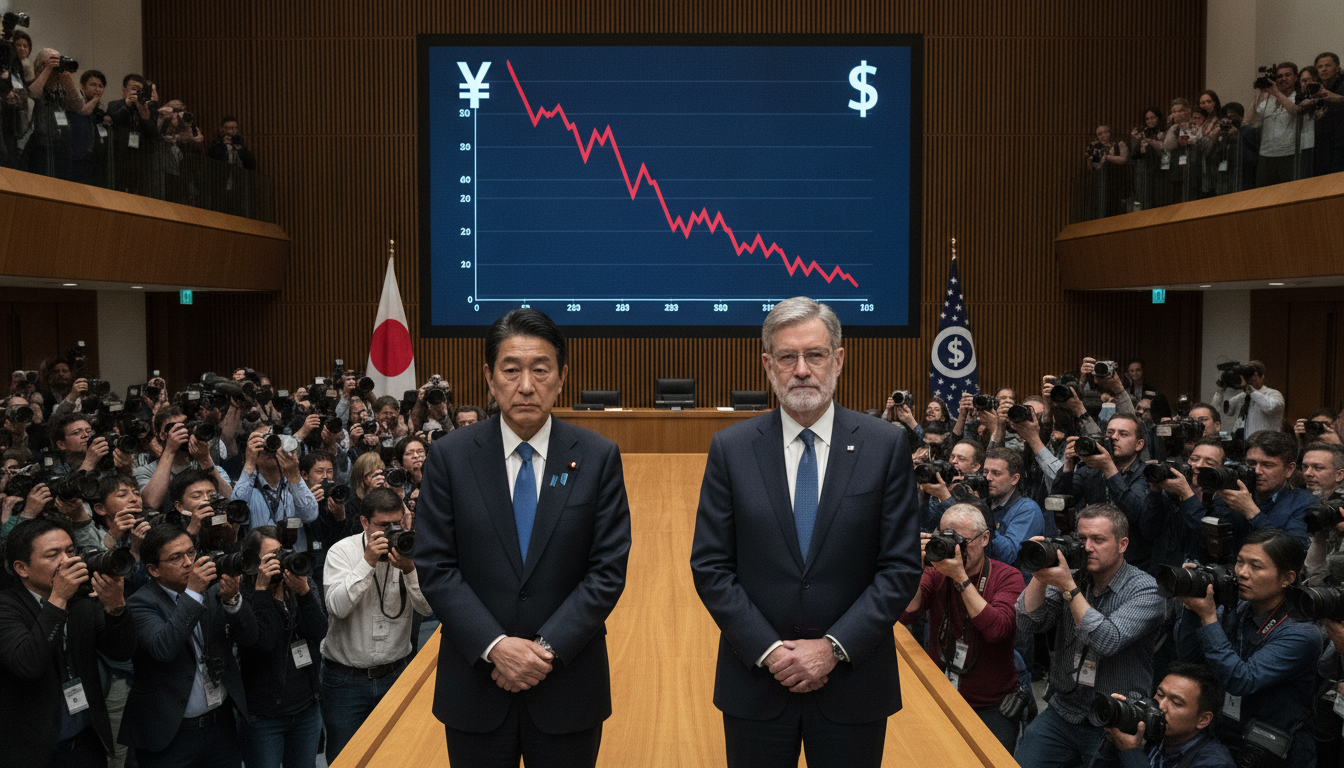
Last week’s coordinated yen intervention by Japan and the U.S. central banks did little to reverse the currency’s downward trend, underscoring weakening confidence in Tokyo’s economic agenda. Market participants said the joint action provided only a temporary reprieve as broader doubts about fiscal policy and monetary strategy persisted. The yen remains vulnerable to renewed selling unless Tokyo can restore credibility with clear policy signals.
Markets React to Coordinated Intervention
Currency traders initially pared back positions after the intervention, but aggressive selling resumed within days as momentum shifted back to the U.S. dollar. Spot trading showed only a transient dip in volatility, and liquidity conditions quickly returned to the pre-intervention pattern in offshore markets. Market strategists noted that when policy credibility is in question, even coordinated central-bank actions can struggle to change a dominant market narrative.
Major institutional investors cited the intervention as short lived, pointing to structural drivers such as divergent interest-rate expectations and persistent fiscal concerns. These forces, they argued, have larger influence over medium-term currency direction than episodic central-bank measures. The intervention’s limited duration has prompted traders to reassess how much weight to give official actions versus macro fundamentals.
Tokyo’s Policy Credibility Under Scrutiny
Observers say the core issue is confidence in Tokyo’s fiscal and monetary management rather than technical market dynamics alone. Investors have grown increasingly skeptical about the government’s ability to reconcile stimulus plans with medium-term fiscal sustainability. At the same time, mixed signals from monetary authorities have left markets uncertain about the future path of interest-rate policy and yield curve management.
This credibility gap, analysts say, makes the yen particularly sensitive to headlines and intermittent interventions. Restoring confidence, they add, will require a clearer, coordinated narrative from both the Ministry of Finance and the central bank on how they intend to address inflation, debt dynamics, and exchange-rate volatility. Without that, officials risk repeating short-term fixes that fail to shift market expectations.
Limited Impact on Market Mechanics and Volatility
Currency-market microstructure helped blunt the intervention’s effect, with derivatives and offshore liquidity enabling traders to reestablish positions quickly. Large institutional desks used futures and options to hedge against transient price moves, which diluted the intervention’s intended scarcity effect. As a result, realized volatility fell only briefly before resuming its upward trajectory in response to macroeconomic signals.
The intervention also highlighted the constraints of using foreign-exchange operations when interest-rate differentials and sovereign debt perceptions point in the opposite direction. Dealers reported that the scale of intervention needed to produce lasting appreciation would have to be substantially larger or accompanied by clear shifts in policy conditions. That raises political and operational questions about how far authorities are willing to go.
Effects on Corporates, Importers and Exporters
A weaker yen has mixed consequences for Japan’s economy, benefiting exporters while increasing costs for importers and households reliant on energy and other commodity imports. Export-oriented firms may see improved competitiveness and near-term profit boosts, but companies with large foreign-currency liabilities face increased hedging costs. Import-dependent sectors warned of margin pressure that could translate into higher consumer prices.
Household inflation dynamics could complicate the central bank’s mandate as energy and import-driven price rises filter through. Policymakers must weigh the trade-offs between supporting growth through a competitive currency and protecting real incomes from imported inflation. The policy balancing act leaves little room for unilateral measures without broader economic adjustments.
Analysts’ Forecasts and Market Expectations
Market strategists have pushed out scenarios ranging from short-lived stabilization to prolonged depreciation of the yen, depending largely on fiscal reform signals and global interest-rate trends. Some forecasting models suggest the yen could remain under pressure if U.S. yields stay elevated relative to Japan and if Tokyo’s fiscal outlook does not improve. Others note that a clear tightening bias from the Bank of Japan or decisive fiscal consolidation could quickly alter expectations.
Risk managers emphasize that volatility is likely to persist in the near term as markets test the credibility of official statements and any future interventions. Investors will closely watch macro releases, policy minutes, and public comments from financial authorities for signs of a strategic shift. The consensus view is that absent a sustained change in fundamentals, episodic intervention will be insufficient.
Policy Options and Next Steps for Tokyo and Washington
Officials face limited tactical choices: repeat interventions, pursue coordinated policy shifts, or rely on communication to rebuild credibility. Repeated market interventions risk diminishing returns and political costs, while coordinated monetary tightening would require alignment on inflation and growth outlooks. Communication strategies that clearly tie exchange-rate goals to broader fiscal and monetary plans could prove more effective than stand-alone market operations.
Tokyo and Washington can also use dialogue to manage market expectations, but analysts caution that talk must be followed by credible action. The effectiveness of any future intervention will hinge on whether authorities can demonstrate a consistent, long-term approach to fiscal discipline and monetary normalization. Without those elements, currency moves are likely to reflect investor skepticism rather than official intent.
As markets reopen after the recent intervention, traders and policymakers alike will be watching for any sign that Tokyo is ready to recalibrate its economic strategy. The yen’s trajectory over coming weeks will serve as a barometer of whether confidence can be restored, or whether currency weakness becomes an entrenched feature of the current cycle.

