
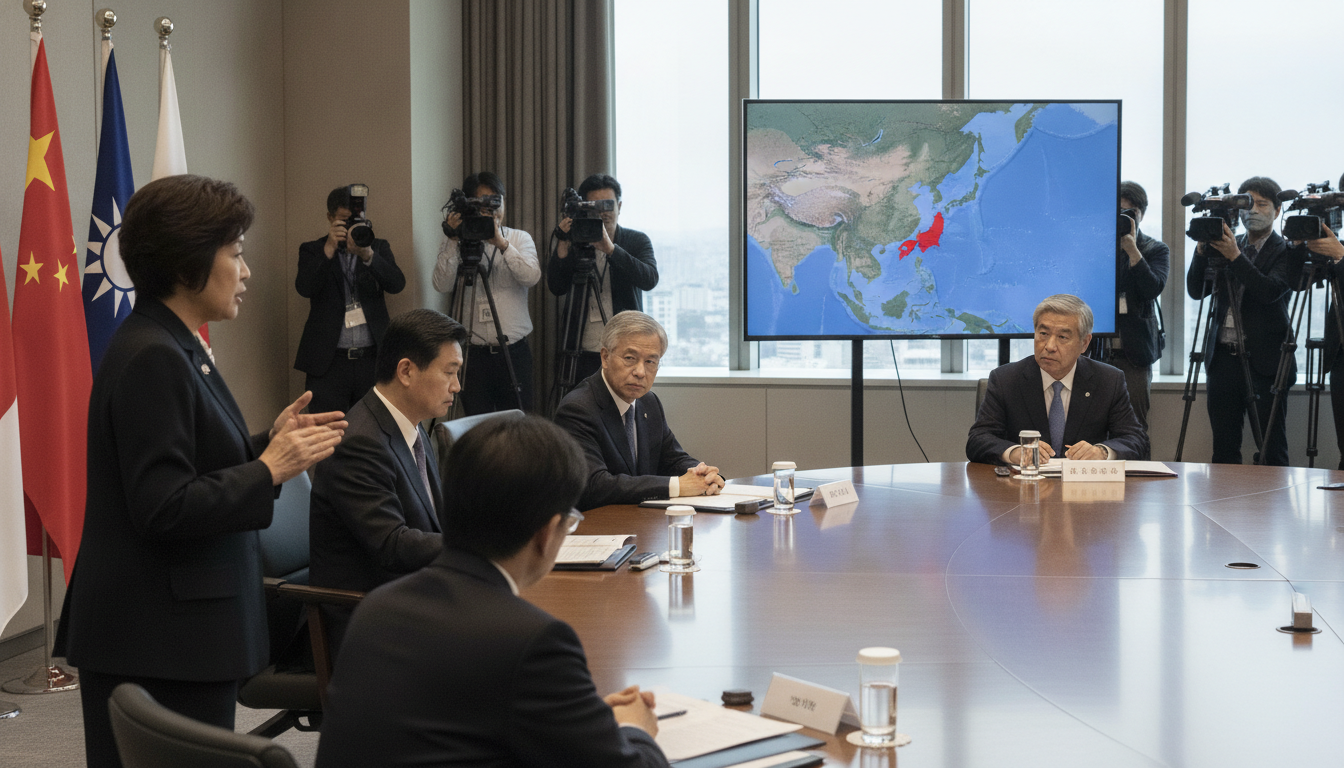
China-Japan tensions escalate after Sanae Takaichi’s Taiwan remarks provoke Beijing rebuke
China-Japan tensions deepen as Tokyo’s remarks on Taiwan by Prime Minister Sanae Takaichi draw sharp criticism from Beijing, heightening diplomatic, security and trade risks.
Opening: Takaichi’s Taiwan comments prompt immediate Beijing response
Japanese Prime Minister Sanae Takaichi’s public remarks on Taiwan have sparked an unusually forceful diplomatic response from Beijing, officials said. The exchange has intensified China-Japan tensions and signaled a widening rift that goes beyond a single set of comments.
Both governments have escalated rhetoric in recent days, with Tokyo defending its statements as aligned with regional stability and Beijing characterizing them as interference in China’s internal affairs. Observers say the dispute is feeding into a broader Chinese strategy to pressure Tokyo on security and foreign policy choices.
Beijing’s pattern of pressure on Tokyo
Analysts note that Beijing’s rebuke is consistent with a sustained campaign of criticism aimed at Japan’s political leadership. Beijing appears to be targeting not only specific remarks but also broader shifts in Tokyo’s posture toward regional security and U.S. alliances.
This pattern of pressure has included diplomatic summons, media commentary, and public warnings that together create a steady political strain. The sustained nature of the campaign suggests Beijing is signaling to both domestic and international audiences its displeasure with Tokyo’s trajectory.
Security implications around Taiwan and territorial flashpoints
The exchange has sharpened concerns about security dynamics in East Asia, particularly over Taiwan and the Senkaku Islands. Tokyo has increasingly linked its security calculations to developments across the Taiwan Strait, prompting alarm in Beijing about potential shifts in Japanese commitments.
Military observers warn that heightened rhetoric can increase the risk of miscalculation at sea or in the air, where both Chinese and Japanese forces regularly operate. Officials in Tokyo and allied capitals are now reassessing contingency planning as tensions ripple through defense circles.
Diplomatic fallout and strained bilateral channels
Diplomatic channels between Tokyo and Beijing have shown signs of stress, with routine cooperation at risk of being sidelined. Officials in both capitals say communication remains open, but the relationship is likely to face more frequent, high-stakes confrontations.
Practical cooperation on issues such as consular services, cultural exchanges, and regional forums could suffer if the dispute deepens. Several diplomats caution that prolonged estrangement would complicate efforts to manage crises and reduce opportunities for quiet, stabilizing dialogue.
Economic and trade risks for both countries
Trade and investment ties between Japan and China are extensive, and rising tensions carry clear economic risks. Businesses from both countries now face greater uncertainty over supply chains, market access and the regulatory environment.
While economic interdependence makes a full rupture unlikely, companies are already signaling contingency plans to mitigate exposure. Market watchers say even short-term political frictions can translate into slower deal flow, heightened compliance scrutiny, and reduced investor confidence.
Beijing’s broader aim to challenge the U.S.-led regional order
Several foreign policy experts interpret Beijing’s reaction as part of a broader strategy to weaken the U.S.-led security architecture in Asia. By targeting Tokyo’s statements and its alignment with Washington, Beijing may be attempting to pressure middle powers into recalculating their partnerships.
This tactic is seen as an effort to alter regional norms and signal that challenges to Chinese positions will incur costs. Allies in the region are watching closely to see whether Japan’s response will reinforce existing security ties or encourage hedging behavior among other states.
What Tokyo and its allies are likely to do next
Tokyo is expected to maintain a balancing act between asserting its policy positions and avoiding steps that would directly provoke confrontation. Japanese officials have signalled they will continue to consult with allied partners while seeking to keep diplomatic lines with Beijing intact.
Allies, particularly the United States, are likely to increase quiet coordination and public reassurance to Tokyo while urging restraint on both sides. Regional governments may also intensify calls for de-escalation to protect economic stability and prevent accidental clashes.
Japan faces immediate choices about whether to double down on messages of deterrence or to pursue more conciliatory diplomacy to reduce near-term risk. Either path will carry trade-offs for security, economic ties, and domestic politics.
Takaichi’s comments and Beijing’s forceful reply have underscored how fragile bilateral ties have become and how quickly a single exchange can reverberate across diplomacy, security, and trade.

