
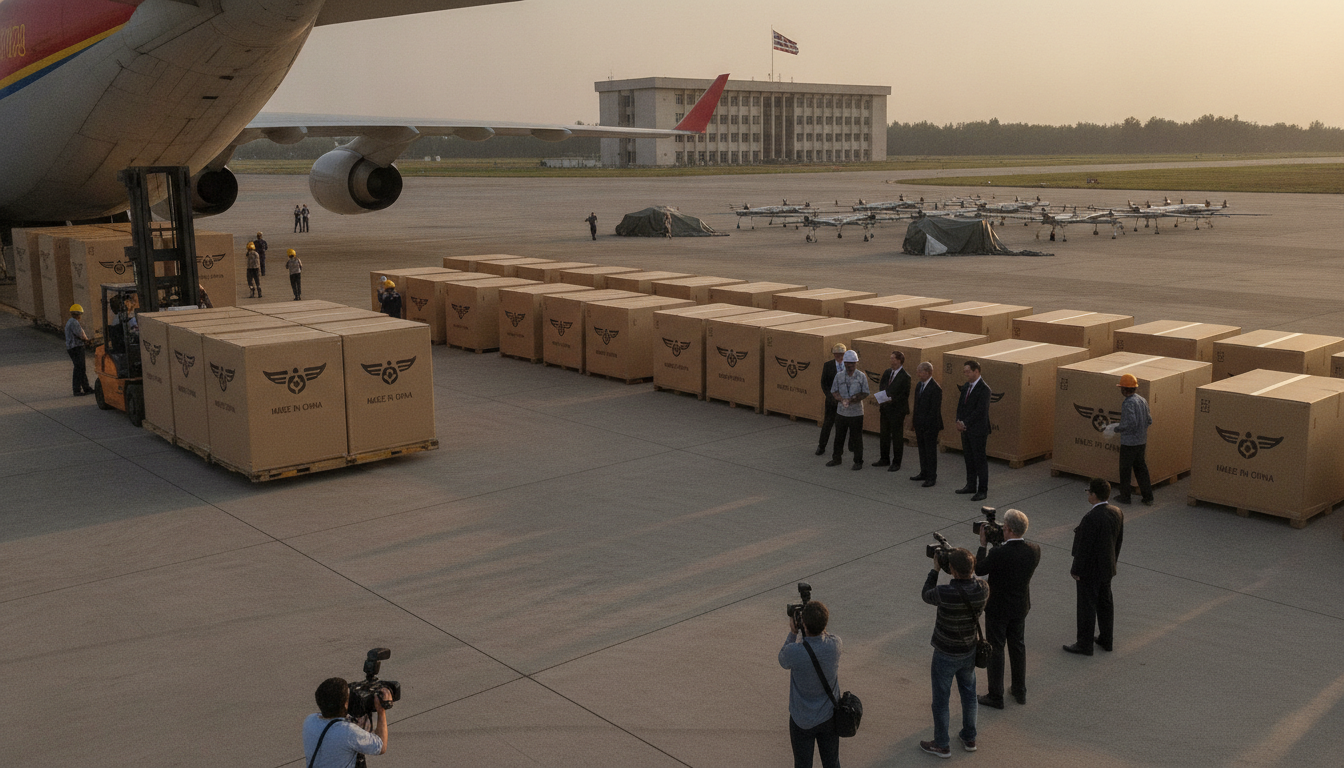
Chinese drone exports surge to emerging economies as civilian demand offsets U.S. slump
Chinese drone exports to the Global South have surged this year, driven by civilian uses such as farming and surveying that are helping compensate for a decline in U.S. sales.
Surge in exports to emerging economies
A pronounced rise in Chinese drone exports to emerging markets has been reported across recent trade corridors, with shipments increasingly destined for countries in Africa, Southeast Asia and Latin America. Buyers in these regions are prioritizing affordable platforms for agriculture, mapping and infrastructure monitoring, prompting higher volumes from Chinese manufacturers.
Traders and industry observers in Guangzhou and other southern Chinese hubs say the shift reflects a recalibration of sales strategies amid tightening restrictions and waning demand in Western defence and commercial channels. The new orders are often smaller in unit price but broader in geographic reach than previous export patterns.
Civilian applications driving demand
Farmers and agribusinesses in the Global South are adopting unmanned aerial systems for crop spraying, precision spraying and yield monitoring, boosting demand for light and medium-weight models. Surveyors and construction firms also seek drones for topographic mapping and site inspections, which increases after-sales service and software sales tied to those platforms.
Manufacturers have responded with versions configured for civilian tasks, bundling payloads, sensors and software tools that do not require military-grade capabilities. This product repositioning has helped sustain production lines and preserve employment in regions such as Guangdong province where drone clusters are concentrated.
U.S. market decline and export headwinds
At the same time, sales to the United States and several Western countries have declined from earlier peaks amid heightened regulatory scrutiny and restrictions on certain vendors. The drop in U.S. purchases has created pressure on Chinese firms to find alternative markets and diversify revenue streams beyond traditional North American buyers.
Industry participants say the reduced U.S. business has accelerated partnerships with distributors and integrators in emerging economies, where procurement rules are often less restrictive. That pivot is not without challenges, as companies must adapt to varied certification regimes, logistics hurdles and local customer support demands.
Manufacturers shift focus and product strategies
Many Chinese drone companies are emphasizing civilian and dual-use models with simplified regulatory footprints to capture demand in developing markets. Product road maps now commonly prioritize modular payloads, ease of maintenance and software features for agriculture and surveying tasks, which appeal to cost-conscious buyers.
Some firms are also expanding training and service networks abroad to provide local maintenance and operating support, recognizing that long-term sales depend on after-sales reliability. This strategy mirrors moves in other tech sectors where manufacturers pair hardware with training and software-as-a-service to lock in customers.
Trade shows and industry visibility
Drones were prominently displayed at recent trade events in Shanghai and Guangzhou, where manufacturers showcased civilian-configured aircraft and sensor packages. A Chinese drone exhibited at a Shanghai trade show in late July drew attention from regional buyers seeking practical solutions for farming and land management.
These fairs have become important venues for direct sales, demonstrations and contract negotiations as manufacturers cultivate relationships with distributors and government procurement offices in emerging markets. Live demonstrations of spraying systems and mapping workflows have helped translate interest into purchase commitments.
Regulatory and security concerns abroad
While demand in developing markets is rising, governments and analysts caution about regulatory, safety and security implications of rapidly expanding drone fleets. Authorities in several recipient countries are tightening rules on airspace management, operator licensing and data handling to address privacy and safety risks.
Security concerns persist in some capitals about the potential dual-use nature of certain platforms, prompting procurement vetting and, in some cases, restrictions on specific models. Vendors and buyers alike must navigate a complex patchwork of regulations that can affect delivery timelines and long-term operational viability.
Chinese drone manufacturers face a balancing act as they pursue growth in the Global South while managing export controls and reputational risks. The shift toward civilian applications and service-oriented business models reflects a broader industry attempt to adapt to changing geopolitical and market conditions.
The current expansion into agriculture, surveying and infrastructure work suggests Chinese drone exports will remain a significant force in global drone markets, even as their footprint in the United States continues to contract. The coming months will test whether manufacturers can sustain this momentum while meeting regulatory, logistical and after-sales challenges in diverse emerging economies.

