
Iran Announces Six Conditions to Lift Strait of Hormuz Blockade
Iran issues six conditions, including U.S. compensation, sanctions relief and troop withdrawal, for reopening the Strait of Hormuz, raising regional risks.
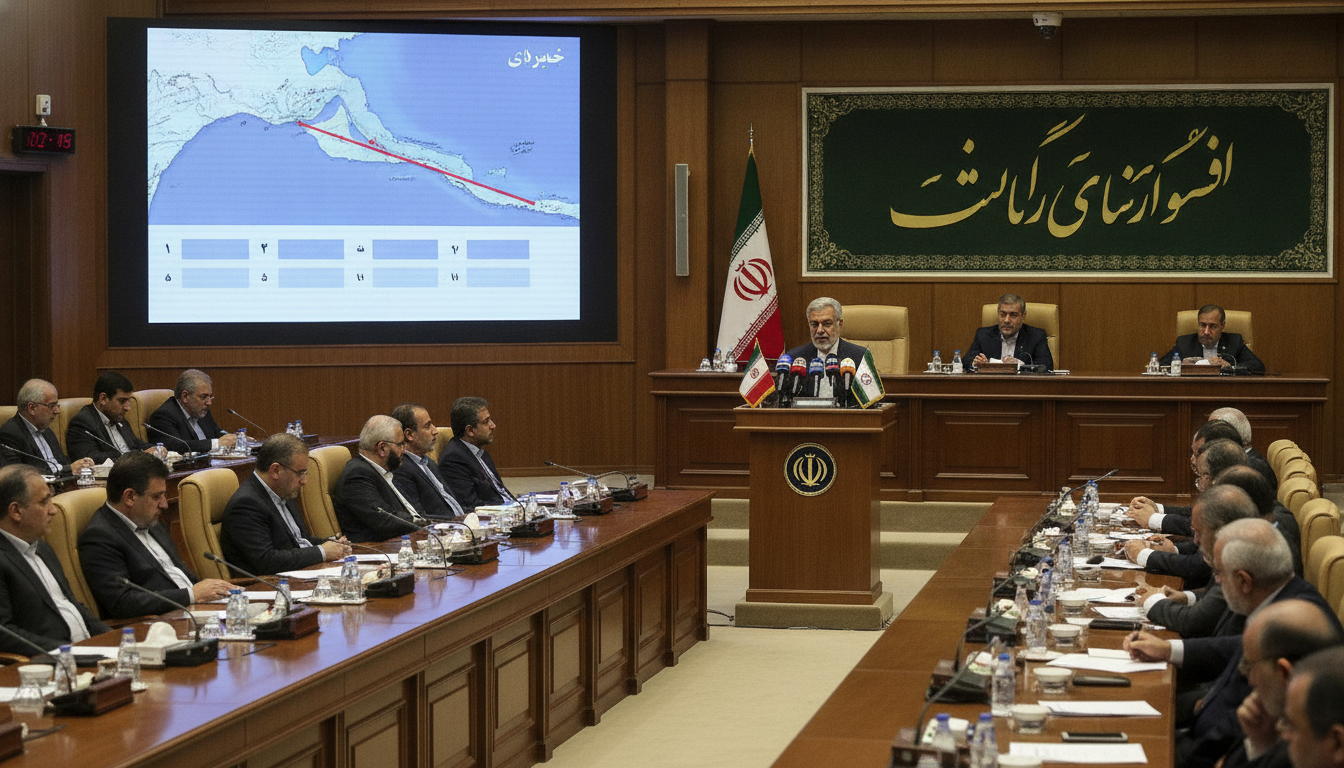
Iran’s Supreme National Security Council announced on August 8 that six conditions must be met before it will lift a blockade of the Strait of Hormuz, the strategic Gulf waterway crucial to global oil shipments. The announcement, carried by state-affiliated media, named compensation for combat-related damages, sanctions relief and withdrawal of U.S. forces from areas near Iran among the demands. Tehran framed the terms as non-negotiable, saying the channel would remain closed until the conditions are satisfied.
Iran’s Six Conditions for Reopening the Strait of Hormuz
The council detailed a set of requirements aimed at reversing what Tehran describes as hostile U.S. actions in the region. Officials explicitly called for payment of damages from recent fighting, an end to economic penalties targeting Iranian entities, and removal of American military assets positioned around Iranian waters.
Several other items were cited without full public disclosure, indicating a mix of political, military and financial demands that Tehran says are necessary before normal maritime access is restored. The formulation of six concrete conditions signals an attempt to convert a tactical blockade into a diplomatic bargaining position.
Security Council Chief: ‘No Reopening Until U.S. Changes Course’
Secretary-General Zolghadr of the Supreme National Security Council warned that the Strait of Hormuz will not be reopened “until the United States corrects its behavior.” He emphasized on August 8 that the council would not make concessions, framing the blockade as a response to what Iran sees as ongoing U.S. aggression. The blunt rhetoric underlines Tehran’s intent to link maritime freedom directly to broad strategic and economic grievances.
Islamic Revolutionary Guard Corps Confirms Continued Closure
State-run Press TV on August 9 quoted a spokesperson for the Islamic Revolutionary Guard Corps (IRGC) saying the closure will remain in place until “all conditions” are accepted by the adversary. The IRGC’s reinforcement of the council’s stance ties Iran’s military posture to the political timetable, signaling that operational control of the choke point rests with armed services as well as civilian decision-makers. Such military-public alignment raises the stakes for any diplomatic initiative.
U.S. Demands and Diplomatic Obstacles
The core conditions—compensation, sanctions relief and a U.S. military pullback—present significant hurdles for Washington, which has historically tied sanction relief to verifiable changes in Iranian behavior. U.S. officials are likely to push back on demands that could be construed as a surrender of broader policy objectives or as setting a precedent for paying war-related damages to an adversary.
Any U.S. response would need to navigate domestic political constraints and allied concerns in the Gulf, making immediate accommodation unlikely. Diplomatic channels could still open with third-party mediation, but the current stance from Tehran suggests it is seeking a comprehensive package rather than incremental confidence-building steps.
Regional Security and Military Risks
A prolonged closure of the Strait of Hormuz carries intensifying security risks across the Persian Gulf and beyond. The waterway handles a substantial share of the world’s oil shipments, and sustained disruption could prompt greater naval deployments by regional powers and international navies seeking to protect commercial traffic.
Escalation scenarios include interdiction of vessels, maritime convoying under armed escort, and localized clashes that could draw in outside forces. Neighboring Gulf states and global consumer markets will watch for signs of de-escalation, but military posturing on all sides makes a rapid resolution uncertain.
Economic Impact on Shipping and Energy Markets
Markets typically respond swiftly to threats against the Strait of Hormuz, with oil prices sensitive to any prospect of constrained supply. A blockade, or even credible threats of one, tends to increase insurance premiums for shipping, encourage rerouting around longer passages and impose higher logistical costs that ripple through global supply chains.
Energy-dependent economies and shipping companies may preemptively adjust schedules or seek alternative sources, but such shifts are costly and time-consuming. The immediate economic effect will be magnified if the closure persists or expands to include attacks on commercial vessels.
Diplomatic Pathways and Possible Mediation
International actors, including regional powers and multilateral institutions, could serve as intermediaries to translate Tehran’s conditions into a negotiable framework. Confidence-building steps—such as phased sanctions relief tied to verifiable de-escalation measures—would require careful sequencing and robust monitoring mechanisms to satisfy all parties.
Neutral third parties might broker initial technical talks focused on maritime safety and humanitarian concerns as a pathway toward broader negotiations. However, Tehran’s insistence on a comprehensive settlement means mediators will face a complex mix of security, legal and economic issues.
The announcement marks a pivotal moment in a widening dispute over freedom of navigation in one of the world’s most critical maritime corridors. How Washington, Gulf partners and international institutions respond in the coming days will determine whether the crisis is contained by diplomacy or deepens into a prolonged regional confrontation.

