
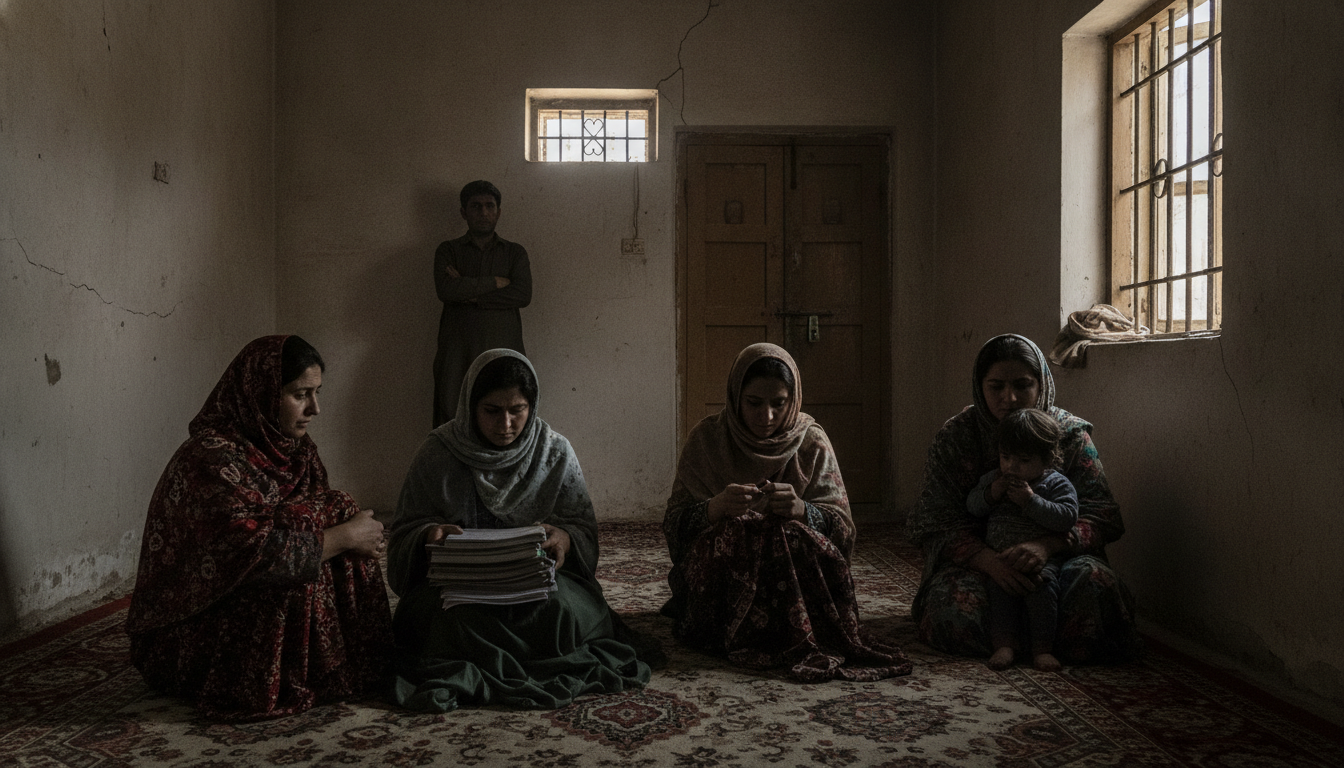
Afghan girls face mounting loss of freedoms as education and work are curtailed
Afghan girls face urgent erosion of rights as bans on education, work and free movement push many into forced marriages and women’s shelters, humanitarians warn.
Widening restrictions on education and employment
For the past five years, Afghan girls have been barred from secondary schools and many universities, shrinking long-held hopes of formal education. The removal of women from most public-sector jobs has compounded the setback, eliminating economic independence for millions of families. These combined policies have closed clear pathways to professional careers and reduced household incomes where women once contributed significantly.
Limits on movement and male guardianship rules
New rules that restrict travel without a male guardian have further narrowed daily life for girls and women across cities and provinces. Travel bans and curfews limit access to healthcare, legal services and safe relocation options, making it harder for those fleeing abuse to seek help. Observers say mobility constraints also isolate families socially and economically, deepening dependence on male relatives.
Rise in forced marriages and shelter demand
Aid workers report a rise in child and forced marriages as families cope with economic pressure and social constraints that leave girls with few alternatives. Many families describe marriage as a perceived protection or a means of reducing household burden, even when that puts underage girls at risk. Women’s shelters in Kabul and other urban centers are reporting increased intake, with young women seeking refuge from coerced unions and domestic violence.
Humanitarian organizations sound alarms
International and local humanitarian groups have documented growing needs for shelter, medical care and legal assistance for girls and women affected by the restrictions. Service providers say funding shortfalls and operational obstacles are limiting their capacity to respond, particularly in areas where local authorities impose additional constraints. Experts warn that unless aid access expands, the most vulnerable will increasingly be left without safe options.
Enforcement and local administration of policies
Implementation of restrictions varies regionally, with some provincial authorities enforcing rules more strictly than others. Reports from civil society groups suggest that informal practices and community pressure often amplify formal edicts, producing a patchwork of enforcement that can be unpredictable and severe. The uneven application of rules also complicates efforts by NGOs to identify needs and provide consistent protection.
International reaction and diplomatic pressure
Governments and multilateral bodies have repeatedly expressed concern about the rollback of women’s and girls’ rights, urging concrete policy changes and unimpeded humanitarian access. Diplomatic measures and discussions at regional forums have underscored the broader implications for education, health and stability. Still, progress has been limited, and some foreign actors stress that engagement must balance humanitarian delivery with clear rights-based conditions.
Afghan families and activists describe the growing restrictions as a generational rupture that risks erasing decades of social and educational progress. Community leaders and former educators emphasize that the longer a cohort of girls is denied schooling and work experience, the more difficult it will be to rebuild civic and economic life in the future. Local women’s groups continue to document cases and provide covert support where possible, but they face legal and safety barriers that limit outreach.
Legal specialists say that the absence of clear, consistent safeguards for women’s rights increases vulnerability to exploitation, including early marriage and economic coercion. They note that access to legal recourse is often hindered by mobility limits, lack of female legal professionals and social stigma. These structural impediments make it harder for survivors to report abuse and secure protection.
Despite the constraints, a number of Afghan women and girls continue to pursue education and income through informal networks, remote learning where available, and small-scale home-based enterprises. These efforts provide crucial lifelines for some families and preserve skills that could be essential if restrictions are eased in the future. International partners and diaspora organizations have supported distance education initiatives, though scale and reach remain limited.
The cumulative effect of education bans, employment exclusions and strict movement controls is reshaping everyday life for Afghan girls and their families. Humanitarian and rights organizations call for immediate steps to restore access to schooling and safe employment, expand shelter capacity and ensure unimpeded humanitarian operations. Without such measures, advocates warn, an entire generation risks losing the basic freedoms and opportunities that underpin social and economic recovery.

