
AirAsia to restore most flight capacity within three months as fuel costs ease
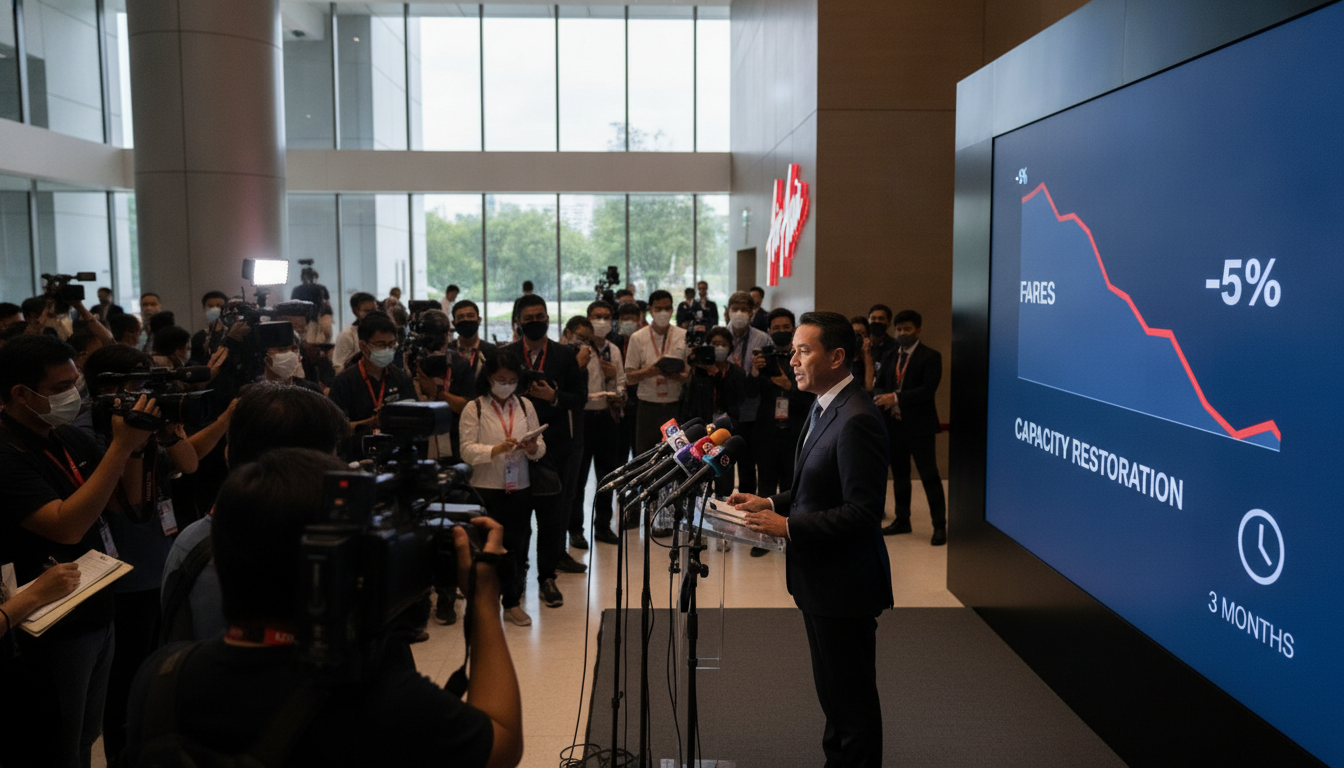
AirAsia plans to restore most of the AirAsia flight capacity it cut during this year’s oil-price spike within three months, and has trimmed fares by about 5% as fuel costs moderate.
AirAsia will move to reinstate schedules and frequencies reduced earlier in the year after a period of elevated oil prices forced the low-cost carrier to pare capacity. The airline’s leadership said the decision reflects falling jet-fuel costs and improving demand across Southeast Asia. Management expects the bulk of the withdrawn seat capacity to return by late September 2026, resuming a growth posture after a conservative first half of the year.
Restoring capacity over the summer
AirAsia’s plan focuses on a phased restoration of flights, with capacity returns prioritized on routes showing the strongest leisure and business rebound. The airline indicated it will ramp frequencies where load factors and yields support profitable operations. Reinstatement will be incremental, allowing the carrier to monitor fuel price trajectories and passenger demand before committing to full schedules.
The restoration is intended to strike a balance between meeting market demand and preserving margin resilience while fuel markets remain volatile. Executives emphasized flexibility, saying capacity can be dialed up further if favourable conditions persist. This approach aims to avoid the disruptive thrash of repeated cuts and rapid expansions seen during prior fuel shocks.
Fuel costs and operational calculus
The carrier attributed earlier capacity reductions directly to a spike in oil prices that compressed margins across the industry. As jet-fuel benchmarks have softened from their seasonal highs, the economics of operating shorter, higher-frequency flights have improved. AirAsia’s operational teams have used the breathing space to refine fuel hedging, route profitability assessments and crew rostering.
AirAsia said it will continue to monitor fuel markets closely and retain a cautious hedging stance to limit exposure to renewed price volatility. The firm highlighted that even modest reductions in fuel costs translate quickly into room for promotional fares and incremental capacity. That sensitivity explains the timing of capacity restoration now that market conditions appear more favorable.
5% fare cut and revenue strategy
The airline announced a roughly 5% reduction in base fares as part of its relaunch strategy, a move intended to stimulate demand and capture budget-conscious travellers. Management framed the cut as temporary and targeted, designed to reoccupy cabins and drive ancillary sales that support unit revenue. Executives made clear that fare adjustments will be dynamic and tied closely to route-level performance.
Analysts expect the fare reduction to intensify competition on popular regional routes, particularly where multiple low-cost carriers operate. AirAsia will likely lean on non-ticket revenue streams such as baggage, seat selection and onboard sales to protect overall yields. The carrier’s emphasis on ancillary income aligns with a broader industry trend among low-cost operators.
Network priorities and fleet use
AirAsia plans to prioritize short- and medium-haul routes within Southeast Asia for the initial capacity returns, where demand recovery has been more robust. Frequencies on leisure-heavy corridors and key hub connections out of Kuala Lumpur are expected to be the first to see restoration. The airline will also evaluate secondary city links that showed strong point-to-point demand during peak travel windows.
Fleet utilization will increase gradually as maintenance schedules and crew availability permit, avoiding sudden spikes that could strain operations. AirAsia’s wet-lease and charter options remain on standby to plug short-term gaps should demand surge unexpectedly. The phased fleet approach aims to preserve punctuality and operational reliability as schedules expand.
Competitive and market implications
A broadened AirAsia schedule with slightly lower fares is likely to pressure rivals on overlapping routes, particularly full-service carriers that have higher cost bases. The move may accelerate a short-term price war on certain regional sectors, benefiting consumers while compressing yields industry-wide. Airports in Malaysia and neighbouring markets could see higher slot usage as carriers chase recovering travel demand.
The restoration also signals growing confidence in Southeast Asia’s travel rebound, which is increasingly supported by tourism reopenings and rising corporate travel. That said, industry watchers caution that lingering macroeconomic risks and potential geopolitical disruptions could still cloud near-term prospects. Carriers that maintain operational discipline while capturing demand are expected to fare better.
Financial discipline and strategic outlook
AirAsia stressed that capacity restoration will be pursued without sacrificing the group’s efforts to strengthen its balance sheet. Cost-control measures implemented during the price spike remain in place, with continued scrutiny of route profitability and overheads. The airline signalled that any further expansion will be funded through operating cash flow and selective capital deployment.
Strategic partnerships, loyalty programmes, and digital channels are expected to play a larger role in sustaining revenue growth as schedules broaden. AirAsia’s focus on low fares plus ancillary revenue aims to rebuild market share quickly while preserving flexibility to adapt to renewed pressure on input costs. Investors and stakeholders will watch whether the carrier can convert restored capacity into durable profitability.
Overall, AirAsia’s announcement marks a cautious but clear pivot from contraction to expansion, with the carrier aiming to reclaim capacity while managing cost risk and competitive dynamics.

