
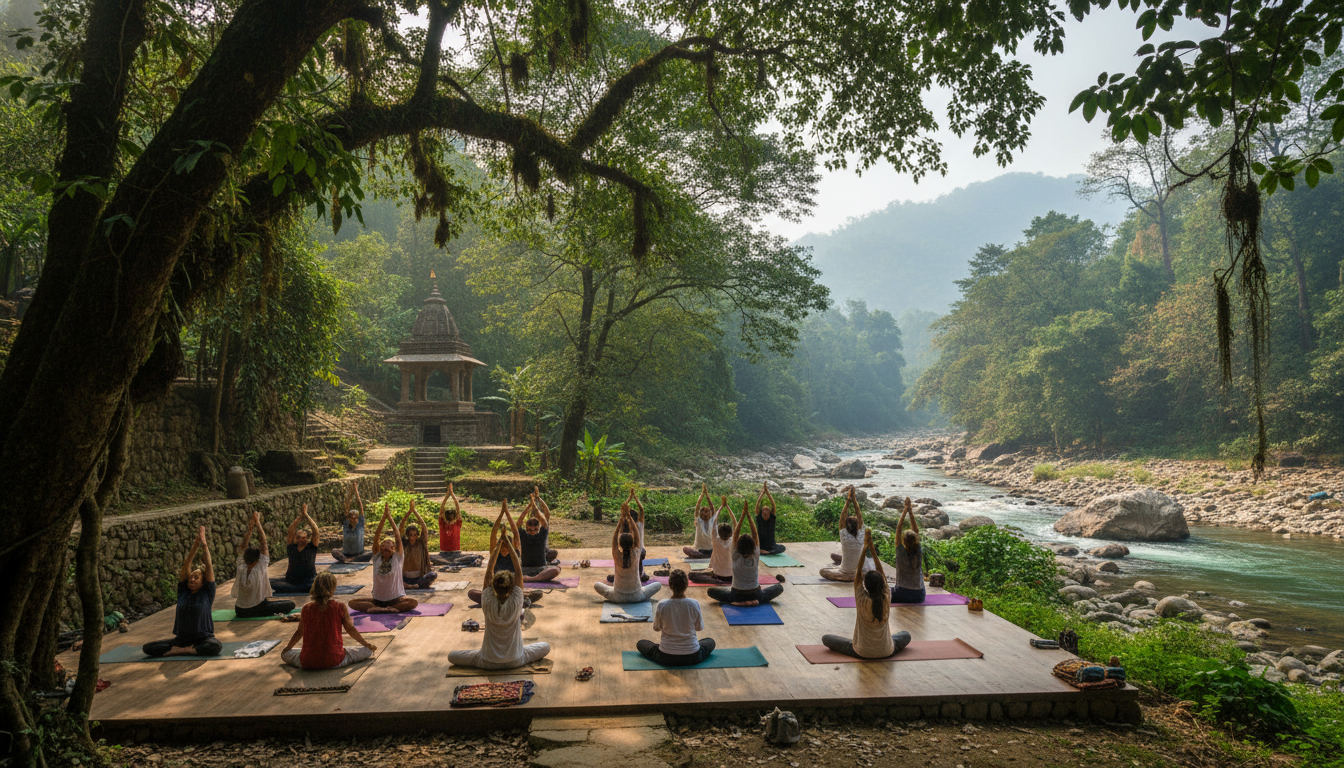
Rishikesh yoga retreat finds quieter alternative at Akhanda Sri Jungle Ashram
Discover a quieter Rishikesh yoga retreat at Akhanda Sri Jungle Ashram in Pauri Garhwal – mountain access, asana classes, Ayurvedic meals and riverside calm.
Akhanda Sri Jungle Ashram, a remote retreat in Pauri Garhwal, is attracting travellers seeking a quieter Rishikesh yoga retreat away from the town’s busy banks and tourist circuits. Nestled in the foothills of the Himalayas, the ashram markets a program of daily yoga, meditation and nature immersion that appeals to visitors wanting both practice and solitude. The shift reflects increasing interest in small-group, rural retreats that trade crowded streets for forest trails and terrace classes.
Akhanda Sri Jungle Ashram draws visitors away from central Rishikesh
The ashram has positioned itself as an alternative to the more crowded parts of Rishikesh, where festival seasons and tourist flows can overwhelm small streets and riverside cafés. Visitors report finding a calmer pace at the retreat, which emphasizes extended practice sessions and quiet time for reflection. For many international and domestic travellers, the appeal lies in swapping the bustle of the “yoga capital” for a program that prioritizes nature and rest.
Attendance at the retreat tends to be cyclical, peaking during mild weather months when mountain roads are most accessible. The appeal is not only about fewer people, but also about continuity of practice; groups follow structured schedules that integrate asana, pranayama and guided meditation. That structure, combined with natural surroundings, is cited by guests as a major draw.
Location and access on the Himalayan foothills
The ashram sits in rural Pauri Garhwal, reached by a winding mountain road that climbs from the plains toward the lower Himalayas. Travel typically involves a road transfer from the nearest rail or air hubs, followed by a scenic drive through forested valleys and small villages. The setting places the retreat within striking distance of Rishikesh while retaining a distinctly rural character.
Geography plays a practical role in the retreat experience: higher elevation brings cooler air, and the ashram’s terraces offer open views used for morning practice. The access route can be narrow and steep in places, so visitors are advised to check seasonal road conditions and travel times when planning their stay.
Daily schedule and yoga tradition practiced
The program at Akhanda Sri Jungle Ashram centers on daily morning and evening practice sessions, combining classical asana with breathwork and meditation. Teachers offer classes suited to varying levels, and many guests appreciate the continuity of instruction across several days. The schedule typically balances active physical practice with quieter restorative sessions and guided relaxation.
Beyond formal classes, the retreat encourages time outdoors with walks, silent periods and opportunities for personal reflection. This blended approach aims to deepen practice while minimizing the external distractions common in busier urban retreats.
Accommodations, dining and guest facilities
Guest accommodations at the ashram are modest and oriented toward simplicity rather than luxury, reflecting the retreat’s emphasis on contemplative practice. Rooms and shared spaces are designed to be functional and to keep visitors close to nature, with terraces and open-air common areas highlighted in guest accounts. The overall aesthetic supports a stripped-back experience focused on wellness.
Dining at the ashram emphasizes vegetarian dishes and Ayurvedic principles, with meals prepared to complement the program of practice and rest. Many guests note the seasonal, locally sourced elements on the menu, while communal meal times also serve as social anchors for small groups. Basic wellness services and a small library or resource center are often part of the guest offering.
Sustainability measures and community links
Akhanda Sri Jungle Ashram highlights low-impact practices and local engagement as part of its operating model. Use of local produce, waste reduction measures and employment of nearby residents are commonly mentioned in promotional materials and guest reports. These initiatives aim to support nearby villages and limit the ecological footprint of visitors.
The ashram also runs occasional community activities, such as workshops or cultural exchanges, which help connect guests with local traditions. Such programs are positioned as mutually beneficial, offering guests a deeper view of regional life while providing economic and cultural support to host communities.
Bookings, visitor tips and ideal time to visit
Prospective visitors are advised to book in advance, especially for stays during popular travel months and festival periods in Rishikesh. Group sizes at the ashram tend to be limited to preserve a quiet atmosphere, so availability can be constrained for longer retreats. Travelers should confirm transfer arrangements and road conditions before departure to avoid unexpected delays.
Pack for variable mountain weather and bring suitable footwear for uneven trails and terraces where classes may be held. Visitors seeking a Rishikesh yoga retreat with minimal crowds should consider stays of several days to fully settle into practice and benefit from the quieter environment.
The Ashram’s model—combining consistent instruction, simple lodging and a forested setting—illustrates a wider move by some travellers away from busy pilgrimage towns toward rural wellness stays that foreground nature and sustained practice.

