
ANA profit falls as jet fuel surge and Middle East conflict squeeze Q1 earnings
ANA profit dips to ¥19.4 billion in April–June as jet fuel costs rise amid Middle East tensions, prompting surcharges and caution from management.
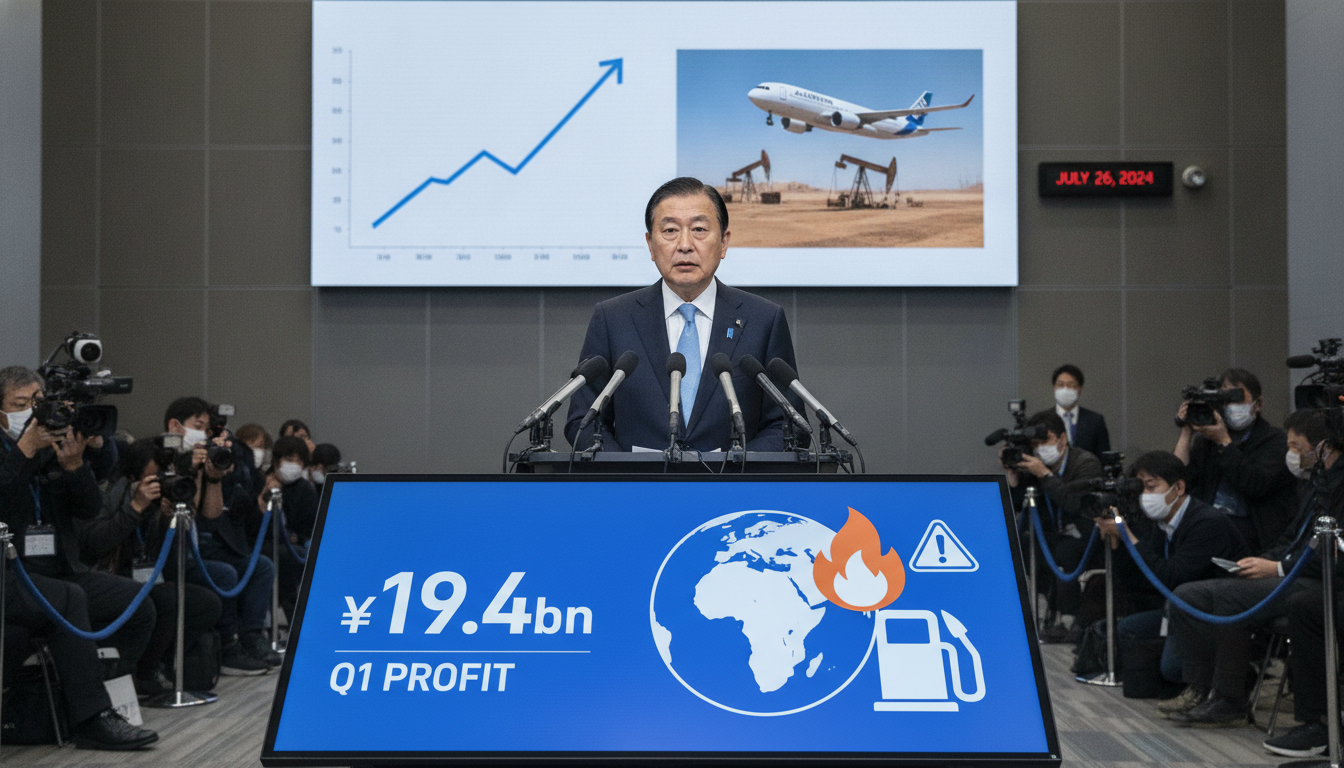
All Nippon Airways’ parent ANA Holdings reported a net profit of ¥19.4 billion ($118.6 million) for the April–June quarter on July 29, 2026, a 15.4% decline from the same period a year earlier, as soaring jet fuel prices weighed on results. The drop in ANA profit came despite ongoing demand recovery for international travel, with the company citing higher fuel costs linked to the war in Iran and broader Middle East unrest. Management said it has taken steps such as raising fuel surcharges on international routes and is monitoring further risks to its business.
Quarterly results and revenue drivers
ANA Holdings recorded the ¥19.4 billion net profit for the first quarter of its fiscal year, a marked reduction from the prior year as operating costs rose. Passenger volumes have broadly recovered since the pandemic, but the improvement in demand was not enough to offset a sharp increase in fuel expenses.
The company’s operating income and revenue mix showed pressure from international operations where fuel consumption per flight is higher. ANA’s results reflect a global spike in jet fuel prices that has hit full-service carriers with large long-haul networks.
Impact of rising jet fuel prices on margins
Jet fuel costs surged in the quarter, squeezing margins across ANA’s passenger and cargo divisions. Fuel remains one of the largest variable costs for airlines, and the recent price spike cut into profitability despite steady load factors.
ANA has sought to mitigate the hit through fuel hedging where possible and by adjusting capacity on certain routes, but management warned these measures only partially blunt the immediate cost shock. The company’s cost-per-available-seat-kilometre (CASK) was elevated relative to the same quarter last year due to fuel-driven expenditures.
Fuel surcharges and passenger pricing adjustments
In response to higher jet fuel prices, ANA has raised fuel surcharges on many international routes, a move intended to pass some of the cost to customers. The airline said the adjustments are targeted and regularly reviewed as fuel markets evolve.
Fares are being tweaked to balance competitiveness with revenue protection, but ANA acknowledged that aggressive price increases could damp domestic and inbound demand. The company is therefore calibrating surcharges to minimize customer attrition while safeguarding margins.
Middle East conflict and commercial risk assessment
Executives linked the recent fuel-price volatility directly to the Iran war and instability in the broader Middle East, which disrupted crude and refined fuel markets. ANA’s finance team described the geopolitical situation as a key downside risk for the coming quarters.
The carrier is monitoring developments closely and assessing potential impacts on flight routes, supply chains and hedging effectiveness. Management emphasized contingency planning for scenarios in which elevated fuel prices persist or escalate.
CFO remarks and forward-looking caution
ANA’s chief financial officer signalled continued caution, saying the company remains wary of the business impact from ongoing Middle East uncertainty. The CFO highlighted that while demand trends are constructive, profit recovery will depend on stabilizing fuel prices and successful cost management.
The company reiterated guidance that remains conditional on market conditions and noted it will adjust capital allocation and discretionary spending if adverse fuel trends continue. Shareholders were told management is prioritizing liquidity and operational resilience.
Network and operational adjustments
To limit exposure and protect margins, ANA is fine-tuning its network and capacity plans, including timetable and aircraft-rotation changes on certain international sectors. The airline is also optimizing cargo deployments to capture higher yields where demand remains robust.
Operational measures include fuel-efficiency initiatives and accelerated adoption of newer, more efficient aircraft on long-haul services. ANA said it will continue balancing short-term tactical changes with long-term fleet and sustainability goals.
The company’s outlook will hinge on several moving parts, including oil market dynamics, the trajectory of international travel demand, and the effectiveness of commercial measures such as surcharges. Management has underscored that while demand recovery is under way, the path to restored profitability is still subject to external shocks and policy decisions.
Analysts and investors will watch subsequent quarters for signs that ANA can stabilize margins and translate traffic recovery into sustained earnings growth. The carrier’s next scheduled financial update will provide further detail on how fuel costs and geopolitical risks are affecting its broader strategy and financial targets.

