
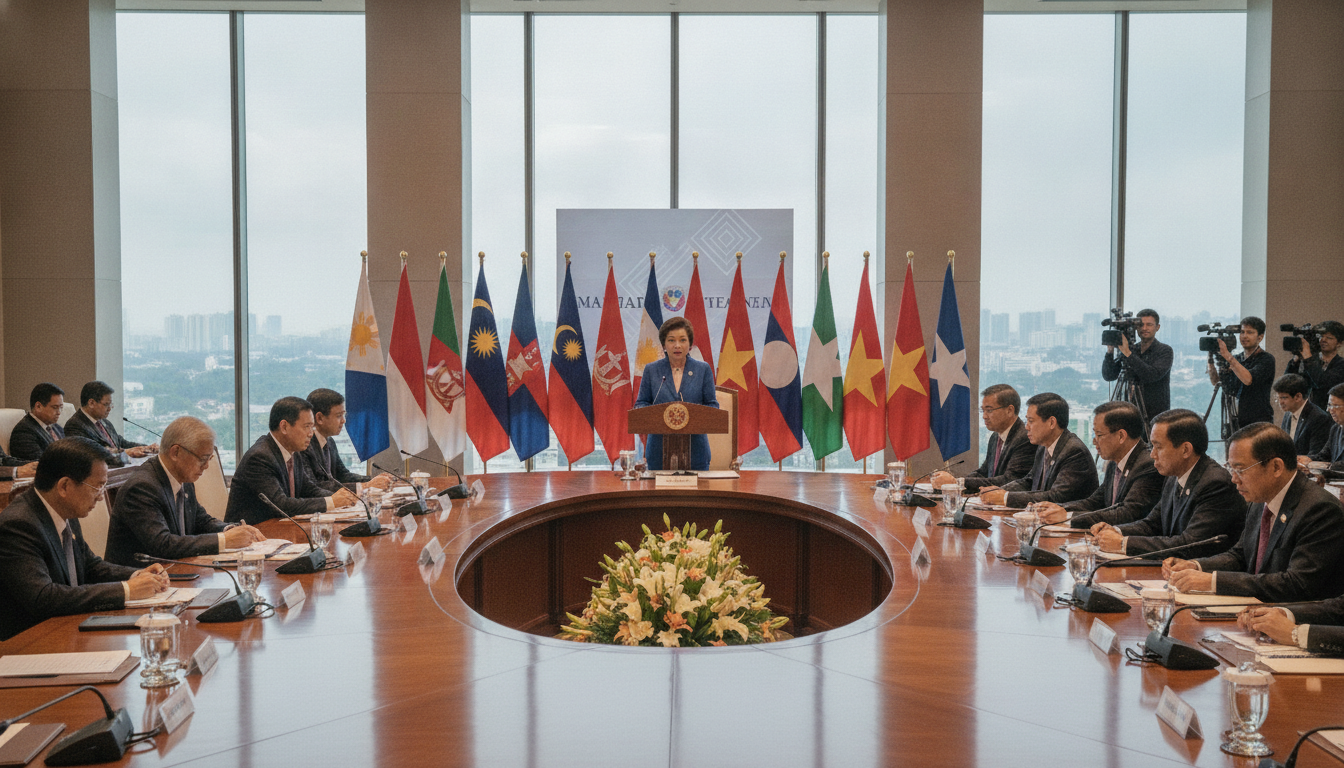
ASEAN foreign ministers meeting in Manila stresses unity as major-power tensions rise
ASEAN foreign ministers meeting in Manila on July 21, 2026 called for regional unity as diplomats sought common ground amid rising major-power pressure and territorial disputes.
Southeast Asian foreign ministers convened in Metro Manila on July 21 for a high-stakes ASEAN foreign ministers meeting that emphasized unity in the face of intensifying geopolitical strains. Philippine Foreign Secretary and ASEAN chair Maria Theresa Lazaro opened the talks, urging member states to resist external pressure that could fracture regional cooperation. Delegations moved quickly into discussions focused on security flashpoints, economic ties and the bloc’s role between larger powers. The gathering underscored ASEAN’s push to preserve its centrality in regional diplomacy.
ASEAN Chair’s Opening Appeal for Cohesion
Maria Theresa Lazaro used her opening remarks to press for a collective response to mounting external influences and regional conflicts. She framed unity as essential to safeguard ASEAN’s diplomatic autonomy and to keep the region’s agenda set by Southeast Asian capitals. Lazaro’s remarks set the tone for the day, signaling that avoiding fragmentation was a top priority for the chair nation. Delegates responded with careful language, reflecting differing national interests and threat perceptions.
Security Concerns Dominate Agenda
Ministers focused on a cluster of security issues that have heightened tensions across the region. The South China Sea disputes, cross-border maritime incidents and concerns over freedom of navigation were discussed repeatedly, with several members calling for de-escalation. Delegates also reviewed emerging non-traditional threats such as cyber intrusions and transnational crime that complicate diplomatic trust. The tenor of the conversations reflected both immediate anxieties and longer-term strategic calculations.
Myanmar and Regional Stability
The situation in Myanmar remained an urgent item for ministers, with calls for intensified humanitarian support and renewed diplomatic engagement. Several ASEAN members emphasized the need to implement existing diplomatic mechanisms to alleviate civilian suffering and to revive political dialogue. Others urged a cautious approach to avoid exacerbating tensions with local authorities while ensuring humanitarian channels remain open. The topic illustrated ASEAN’s persistent struggle to reconcile principle with pragmatism in intrabloc affairs.
Managing Major-Power Rivalry
A recurring theme at the meeting was how ASEAN should position itself amid intensifying competition between major powers. Ministers debated ways to maintain open economic ties while reducing the risk of being drawn into broader geopolitical contests. Several delegations advocated strengthening ASEAN-led institutions and reinforcing rules-based frameworks as buffers against unilateral coercion. There was palpable interest in expanding diplomatic outreach to extra-regional partners without surrendering decision-making to outside capitals.
Economic Cooperation and Resilience Measures
Beyond security, the ministers addressed economic resilience in an uncertain global environment. They discussed supply-chain diversification, food security measures and infrastructure financing that can reduce vulnerability to external shocks. Statements reflected a pragmatic desire to balance growth with safeguards that protect national interests. Trade ministers and economic advisers are expected to follow up with targeted proposals aimed at bolstering regional self-reliance.
ASEAN Centrality and Next Steps
Ministers agreed on the importance of preserving ASEAN centrality as a platform for dialogue among regional and external actors. Plans were outlined to pursue follow-up meetings with dialogue partners and to seek consensus language for a joint communique reflecting shared concerns. Observers noted that producing a strong, unified statement would be challenging given divergent national priorities, but many delegations expressed willingness to pursue practical cooperation where possible. The chair indicated that additional working groups could be established to translate broad commitments into concrete actions.
The meeting concluded with a moderated tone but without dramatic breakthroughs, reflecting the complexity of reconciling security, economic and political interests across the bloc. Diplomats left Manila with a renewed commitment to keep ASEAN’s diplomatic channels open and to pursue pragmatic steps that can sustain regional stability. Continued engagement will be critical as the region navigates an increasingly contested strategic landscape.

