
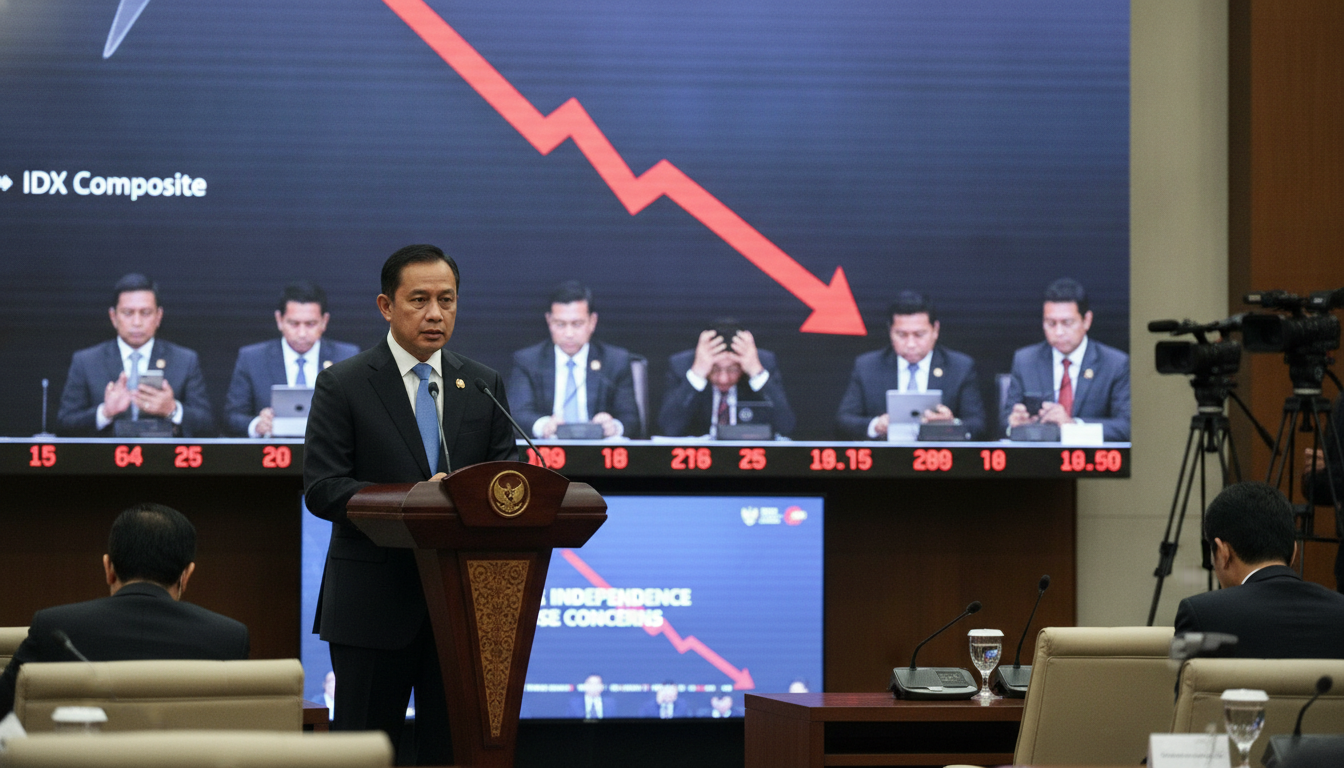
Bank Indonesia governor Perry Warjiyo resigns, sparking market jitters and questions over central bank independence
Bank Indonesia governor Perry Warjiyo resigned on July 27, prompting stocks and the rupiah to fall as markets weighed the implications for the central bank’s independence.
Bank Indonesia Governor Perry Warjiyo unexpectedly tendered his resignation on July 27, triggering immediate market volatility and renewed scrutiny of political influence over monetary policy. The announcement sent Indonesian equities lower and weakened the rupiah as investors rushed to reassess monetary credibility in Southeast Asia’s largest economy. Senior Deputy Governor Destry Damayanti has been named acting governor, while debate grows over whether a politically connected successor could alter the central bank’s course.
Market reaction to resignation
The market reaction to Warjiyo’s resignation was swift, reflecting investor unease about policy continuity at Bank Indonesia. Local stock indices slipped and the rupiah depreciated as traders adjusted positions amid uncertainty over leadership and policy direction. Economists said the moves reflected not only short-term repositioning but also longer-term fears about the central bank’s ability to act without political pressure.
Appointment of acting governor
President’s office and central bank officials confirmed that Senior Deputy Governor Destry Damayanti will assume the role of acting governor pending a permanent replacement. Damayanti, a career central banker with experience in monetary operations, will oversee daily policy functions and coordinate with the finance ministry. Officials emphasized continuity of monetary policy while formal procedures for naming a full-term governor proceed.
Potential successor draws scrutiny
Attention has focused on Deputy Governor Thomas Djiwandono, a relative of President Prabowo Subianto, who is widely viewed as a possible candidate for the permanent governorship. Thomas Djiwandono’s family ties have raised alarms among analysts and investors who fear that a politically linked appointment could undermine Bank Indonesia’s autonomy. Government spokespeople have not confirmed a shortlist or timeline for a permanent nomination, leaving markets to speculate on the administration’s next steps.
Analysts warn on central bank independence
Independent analysts cautioned that the resignation represents a critical test for institutional safeguards protecting Bank Indonesia’s independence. Commentators said maintaining policy credibility depends on transparent selection processes and clear commitments to the central bank’s legal mandate. Some analysts argued that even the perception of political interference could increase inflation and exchange-rate volatility by forcing markets to price in greater policy risk.
Policy implications for inflation and rates
Economists said the immediate threat is not an abrupt policy shift but a rise in uncertainty that could complicate inflation management and monetary planning. Bank Indonesia has been balancing headline inflation pressures with growth-supporting measures in recent quarters, and an unsettled leadership transition could constrain its ability to act decisively. Market participants noted that a credible, technocratic appointment would be essential to preserve the central bank’s ability to anchor inflation expectations and stabilize the currency.
Political context and legal framework
Indonesia’s legal framework grants Bank Indonesia operational independence, but practical tensions between monetary authorities and the executive branch have occasionally surfaced. Political analysts pointed out that appointments to key economic posts often reflect broader strategic considerations within the administration. Observers urged a clear timeline and public criteria for the governor selection to reassure domestic and international investors that institutional norms will be respected.
The coming days will be closely watched for signs of how Jakarta plans to fill the vacancy and for any formal statements clarifying the selection process. Markets are likely to remain sensitive to news about potential candidates and official reassurances on the central bank’s mandate. Preserving Bank Indonesia’s perceived independence will be crucial to restoring investor confidence and ensuring monetary stability in the months ahead.

