
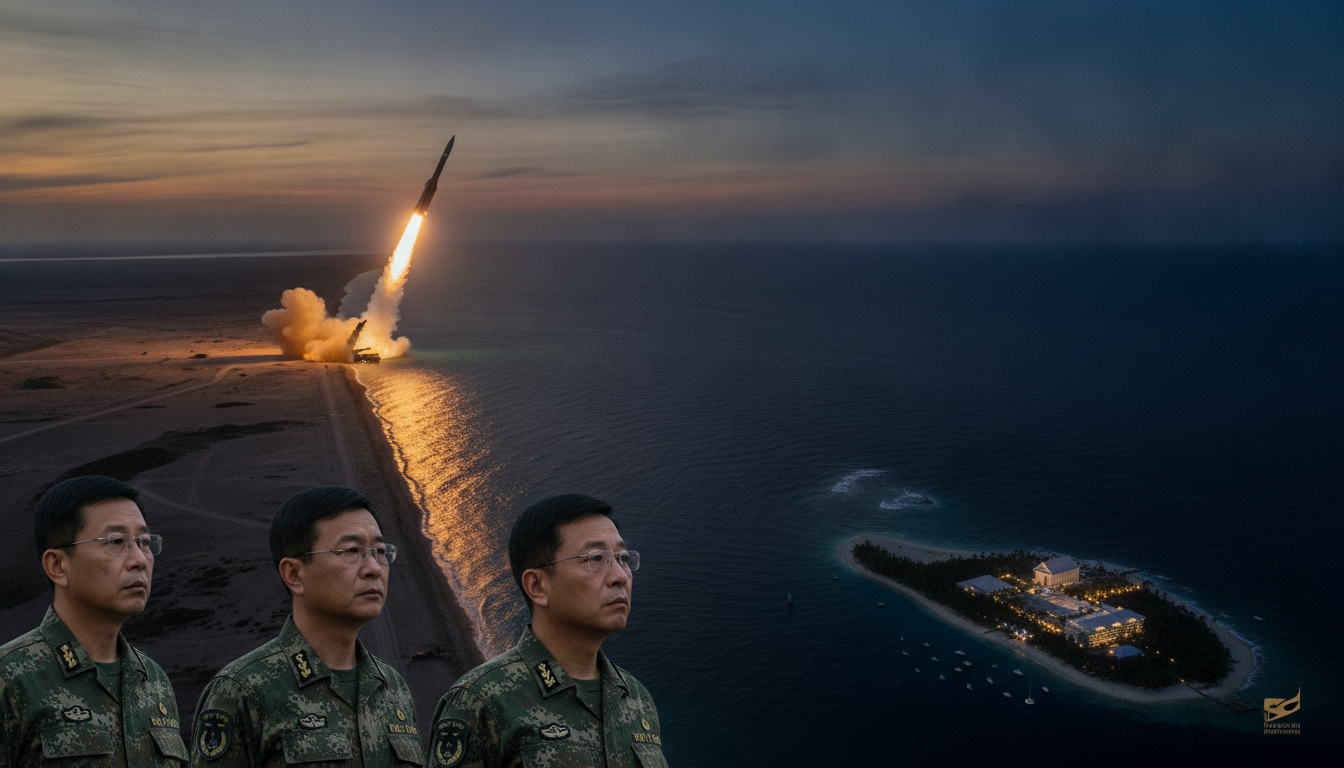
China missile test across Pacific raises alarm ahead of Pacific Island Forum meeting
China missile test that crossed 7,000 km of the Pacific and landed near Kiribati has intensified security concerns as island leaders prepare to meet in Palau.
China missile test that sent a long-range, submarine-launched weapon across the Pacific on July 6, 2026, has sharpened attention on regional security as Pacific Island leaders prepare to convene in Palau. The test, which Western news agencies reported traveled more than 7,000 kilometres and landed south of Kiribati, was described by state outlets as a demonstration of strategic capability. Pacific governments and external partners said the launch underlined growing anxiety in the region over military activity and the implications for island states’ security and sovereignty.
Details of the July 6 launch
The missile was launched from a submarine and followed a trans-Pacific trajectory, according to international reporting. It covered a distance in excess of 7,000 kilometres before impact was reported in waters south of Kiribati. Chinese state media framed the firing as routine strategic testing, while independent outlets highlighted its scale and the platform used.
Analysts note the weapon’s range and launch method are consistent with systems that can be configured to carry strategic payloads. Pacific island governments, many of which face direct geographic exposure, responded with unusually pointed statements questioning the timing and transparency of the exercise. The episode has become a focal point for the diplomatic and security discussions that will take place when leaders meet in Palau.
Pacific Island Forum agenda and security concerns
The Pacific Island Forum, which brings together leaders from across the region, will face security questions high on its agenda when delegations gather in Palau. Forum members have steadily elevated discussions of external military activity and its impact on small island states’ security, maritime zones and climate-vulnerable populations. The July test is likely to reinforce calls among member states for clearer consultation mechanisms and rules of engagement by distant powers operating in the Pacific.
Island governments have repeatedly sought stronger recognition of their sovereign rights and greater transparency from outside military actors. Several Pacific leaders are expected to press for commitments on non-escalation, environmental safeguards for at-sea operations, and assurances that testing will not compromise search-and-rescue or fishing activities in their waters.
Reactions from Pacific nations and regional partners
Responses from Pacific governments ranged from cautious demands for information to public expressions of alarm. Kiribati and neighbouring island states stressed concern about impacts on marine ecosystems and navigation safety, while other members of the Forum highlighted the political and security implications. Some leaders have called for independent investigations or international monitoring of tests that intersect with Pacific maritime zones.
External partners with security interests in the region, including countries with defence ties to Pacific states, signalled heightened diplomatic engagement. Statements from these partners reiterated commitments to regional stability and the protection of sovereign maritime rights, and they said they would raise the matter with Beijing through diplomatic channels.
Strategic implications for regional security
Strategists warn that the exercise exposes a widening gap between the strategic imperatives of major powers and the security priorities of Pacific island states. The deployment of long-range, submarine-launched systems in or near the Pacific theatre increases the complexity of maritime risk management and could complicate crisis communications. For small island states, the main concern is less about direct confrontation than about becoming arenas where great-power competition plays out.
The test also underscores the growing importance of maritime domain awareness and search-and-rescue coordination for island nations. Enhanced surveillance, better information sharing and clearer incident protocols are likely to be proposed at the Forum as practical measures to reduce accidental escalation and safeguard commercial and subsistence activities.
Diplomatic channels and calls for transparency
Pacific leaders and partner countries have urged Beijing to provide full details of the launch, including trajectory, intended impact area and environmental assessments. Transparency, officials argue, is essential to preventing misunderstandings and preserving regional stability. Chinese officials have defended the test as a legitimate activity within their sovereign defence programme, while offering limited technical details beyond official statements.
Diplomatic engagement is expected to intensify in the coming weeks, with delegations using bilateral meetings and multilateral forums to press for information. Some island states are likely to seek third-party verification mechanisms or observer arrangements for future exercises, aiming to balance respect for sovereign defence needs with local safety and environmental concerns.
Impacts on forum unity and future cooperation
The incident presents a test of cohesion for the Pacific Island Forum as members navigate competing pressures from major powers while advancing shared economic and environmental priorities. Forum leaders traditionally strive for consensus, but differing threat perceptions and external relationships could produce sharp debates. Some members, reliant on security partnerships, may emphasise measured diplomacy, while others could press for stronger collective language and safeguards.
Beyond immediate security discussions, the episode may accelerate Forum deliberations on maritime governance, disaster preparedness and economic resilience. Leaders may also seek strengthened technical cooperation on monitoring and response capabilities that can help mitigate the risks posed by military activities in adjacent waters.
As Pacific leaders prepare to meet, the fallout from the July test will shape both the tone and substance of regional diplomacy, challenging policymakers to reconcile strategic realities with the imperative to protect islanders’ security, livelihoods and maritime environments.
The coming days will show whether the Forum can convert concerns into concrete measures that reduce risk and enhance transparency, while preserving the island states’ ability to chart their own diplomatic and security courses.

