
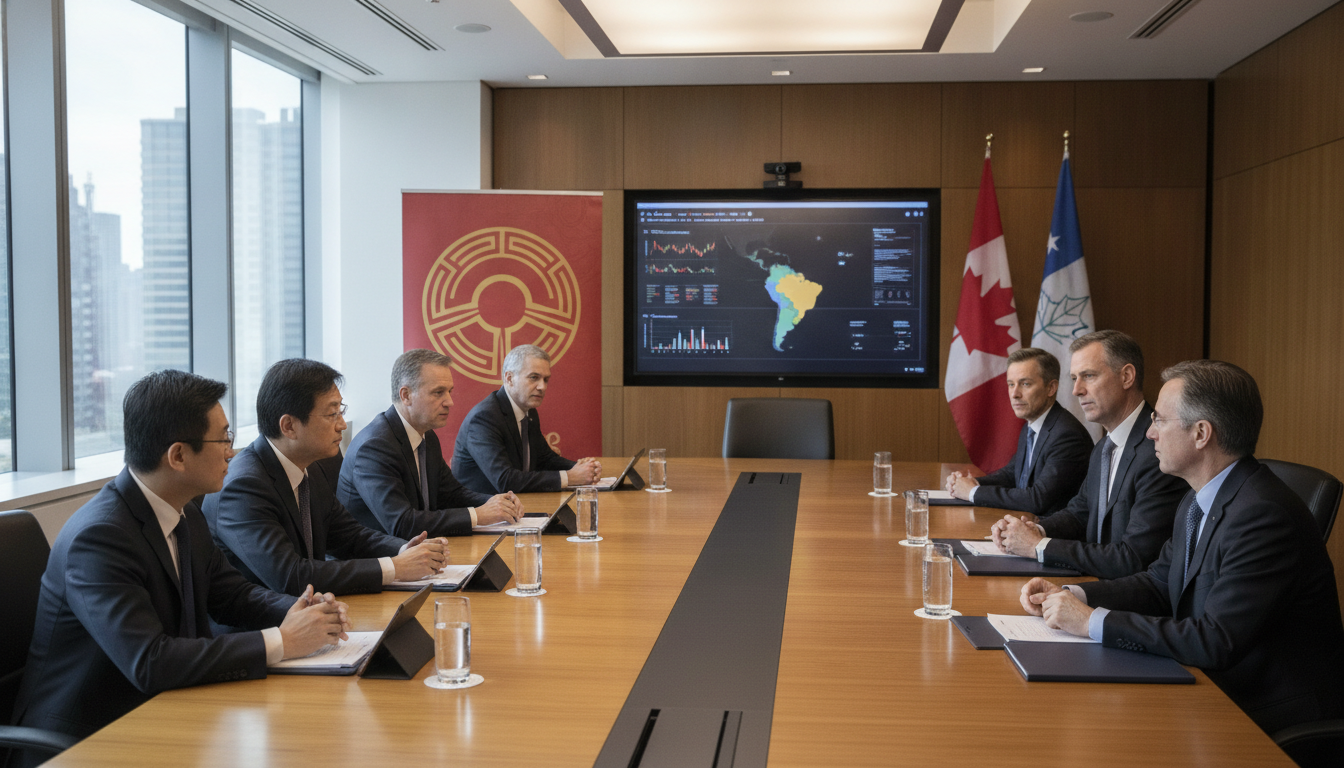
China Union lithium deal worth $175m faces Canadian national security review
Canada is reviewing China Union’s $175m purchase of Lithium Chile, raising national security concerns and questions about control of critical lithium resources.
Opening summary
A proposed $175 million acquisition of Canadian-listed Lithium Chile by China Union has prompted Canadian authorities to consider a national security review, casting uncertainty over the transaction and highlighting the strategic value of lithium.
The China Union lithium deal has become a flashpoint in Ottawa as officials weigh potential risks against commercial and diplomatic ties with Beijing.
The purchase involves a lithium brine project in Argentina and has drawn attention from investors and policymakers focused on battery minerals for electric vehicles and energy storage.
Deal terms and parties
China Union announced an agreement to buy Lithium Chile from its Canadian shareholders in a transaction valued at approximately $175 million.
Lithium Chile controls exploration rights to brine-based lithium deposits in Argentina, a country with some of the world’s largest lithium reserves.
The buyer is a Chinese company seeking to expand its footprint in South American lithium production, while the seller is a Canada-listed firm focused on developing resources for global battery supply chains.
Ottawa’s potential probe
Canadian officials signaled that the deal could be subjected to a national security assessment, a process that can delay or block foreign acquisitions.
The review reflects Ottawa’s broader effort to scrutinize foreign investments in sectors deemed sensitive to national security, especially those tied to critical minerals.
Sources close to the matter say the government is balancing economic openness with strategic safeguards, though no final decision has been announced.
Strategic concerns and supply implications
Lithium is central to electric vehicle batteries and grid-scale energy storage, elevating its strategic importance for industrial policy and national security.
Control over lithium projects influences not only future supply but also the configuration of processing and manufacturing chains that underpin clean-energy technologies.
Analysts warn that foreign ownership of upstream resources can complicate efforts by consuming countries to secure resilient, diversified supplies for decarbonization goals.
Reactions from industry and markets
The prospect of a security review has already affected investor sentiment, with market observers noting increased volatility for junior mining stocks and project developers.
Industry groups have urged transparent, timely review processes to avoid unnecessary disruption to capital flows and project development timelines.
At the same time, some stakeholders argue governments must ensure that strategic minerals are developed under terms that protect critical industrial capabilities.
Diplomatic context and Beijing’s role
The transaction lands amid a gradual thaw in bilateral economic relations between Canada and China, even as strategic mistrust persists in certain policy circles.
Beijing has encouraged overseas investment in battery supply chains, while Ottawa faces domestic pressure to safeguard infrastructure and resources seen as essential to national interests.
Diplomatic channels are likely to play a role as both governments and companies seek to minimize fallout and clarify regulatory expectations.
Possible outcomes and timeline
If Ottawa launches a formal national security review it could extend several months, depending on the complexity of the project and the information provided by the parties.
Outcomes range from unconditional approval to remedies such as divestment requirements, or in rare cases a prohibition of the transaction.
Companies involved typically engage in negotiations with regulators and may agree to mitigation measures to address specific security concerns.
The unfolding scrutiny of the China Union lithium deal underscores how critical minerals transactions are increasingly evaluated through geopolitical as well as commercial lenses.

