
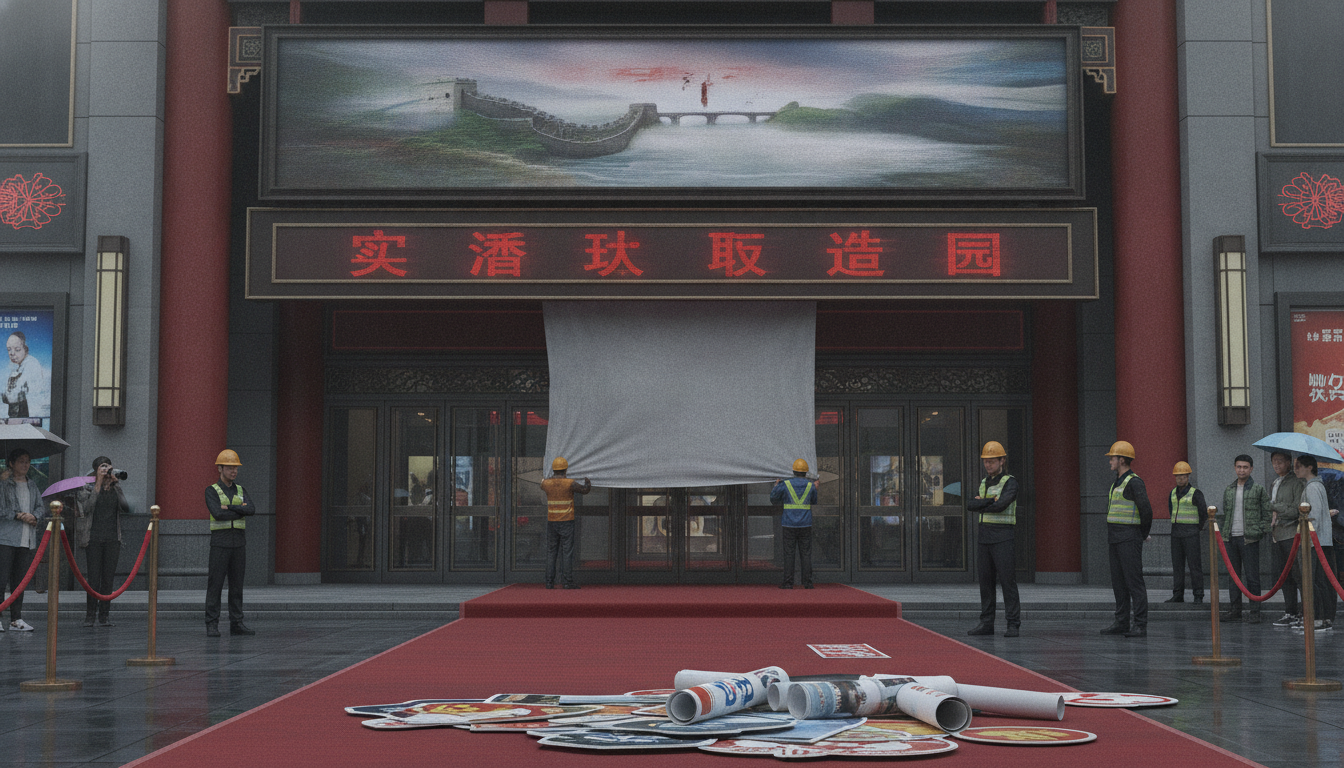
Chinese film promoting unification with Taiwan shelved after failing to secure final approval
A Chinese film promoting unification with Taiwan was shelved after failing to secure final approval from regulators, a move that underscores Beijing’s caution over cross‑strait messaging amid heightened tensions.
A Hong Kong‑based historic epic billed as a Chinese film promoting unification with Taiwan has been pulled from planned screenings in mainland China after authorities did not grant final clearance. The film, which had carried promotional material on its official Weibo account, was slated for release in mainland cinemas on July 25, 2026 but was removed from public schedules. The decision highlights how politically sensitive narratives about Taiwan remain for regulators and distributors in the world’s second‑largest economy.
Planned release and abrupt cancellation
The film’s distributors had announced a mainland release date of July 25, 2026 and circulated promotional stills and a trailer through social media channels. Promotional material appearing on the production’s official Weibo account was later taken down or disabled as exhibitors removed the title from booking systems. Local cinema listings and industry notices show that the planned screenings were quietly cancelled rather than postponed with a new date.
The abrupt shelve came without a formal public statement from the production company or a named regulator, leaving exhibitors and audiences with little official explanation about the reasons. Industry sources said the lack of a final regulatory green light was the immediate cause cited by several downstream partners when they pulled the title from schedules.
Regulatory clearance and approval procedures
Films in mainland China must complete several rounds of review before a theatrical release, including content assessments by national and provincial agencies. The final sign‑off typically involves scrutiny of political sensitivity, historical portrayal and adherence to guidelines on national unity. In this case, officials are reported to have withheld the last stage of approval, a move that effectively prevents commercial screenings.
Producers commonly respond by editing disputed scenes or seeking further consultations with regulators, but approval is not guaranteed even after changes. The uncertainty surrounding this title underscores the opaque nature of late‑stage approval decisions, which can be influenced by shifting policy priorities or broader political considerations.
Cross‑strait tensions and the political backdrop
The subject matter — a historic epic with a unification theme — sits at the intersection of culture and politics, making it particularly vulnerable to scrutiny. Beijing’s messaging on Taiwan is highly controlled; cultural works that touch on sovereignty or national reunification are assessed for tone and timing. Against a backdrop of heightened cross‑strait tensions, authorities appear to be exercising additional caution about large‑scale cultural projects that could be seen as instrumentalising history for contemporary political messaging.
Analysts say the reaction to the film reflects a broader pattern in which the state balances promotion of national narratives with the need to avoid inflaming international or regional sensitivities. The decision to shelve the title likely reflects that balancing act, particularly when distribution encompasses mainland markets with stringent regulatory gatekeeping.
Industry consequences and distribution fallout
For cinemas and distributors, a last‑minute shelving produces immediate commercial and scheduling headaches. Exhibition groups had allocated screens and marketing budgets ahead of the July 25 release, and the cancellations leave temporary gaps in cinema programmes during a busy summer window. Smaller distributors and independent vendors are often most exposed to lost ticket sales and sunk promotional costs in such scenarios.
The film’s production company faces choices including re‑editing the film, reapplying for approval, or shelving the project indefinitely for the mainland market. Each option carries legal and commercial trade‑offs, and the decision will depend on whether regulators will permit modifications or whether broader political considerations make a future mainland release unviable.
Reactions in Hong Kong, Taiwan and media circles
News of the shelving circulated quickly in regional media and on social platforms, where users debated the likely reasons and implications. In Hong Kong, which has historically been a regional film hub, the incident prompted commentary about creative freedom and the influence of mainland regulatory standards on regional releases. In Taiwan, observers noted the sensitivity of any cultural product that presents unification as a central theme.
No official responses from mainland regulators were available at the time of reporting, and neither the production company nor the named cast issued public statements explaining the status of the film. The apparent removal of promotional materials from the title’s official social account added to uncertainty over whether the project will be revised and resubmitted or shelved permanently.
Wider implications for politically themed films
The shelving is a reminder to filmmakers and producers that subject matter touching on territorial or sovereignty issues can face heightened review and potential blockage. Cultural producers working on historical epics or politically charged narratives must weigh creative aims against regulatory risk, especially for projects intended primarily for mainland distribution. The incident may also prompt studios to adopt more cautious approaches to scripts or marketing, especially when a project deals with contemporary political flashpoints.
For audiences and cultural commentators, the case raises questions about how governments manage historical narratives and the extent to which cinema can serve as a forum for contested memories. The immediate future of this particular historic epic remains unclear, but its removal from the mainland release schedule on July 25, 2026 marks a notable instance of how film approval processes intersect with geopolitics.
The film’s fate now hinges on whether the producers will seek further dialogue with regulators, alter the production to meet requirements, or withdraw the title from mainland consideration altogether.

