
Japan Cabinet Office March Coincident Index Rises to 116.5, Baseline Assessment Upgraded
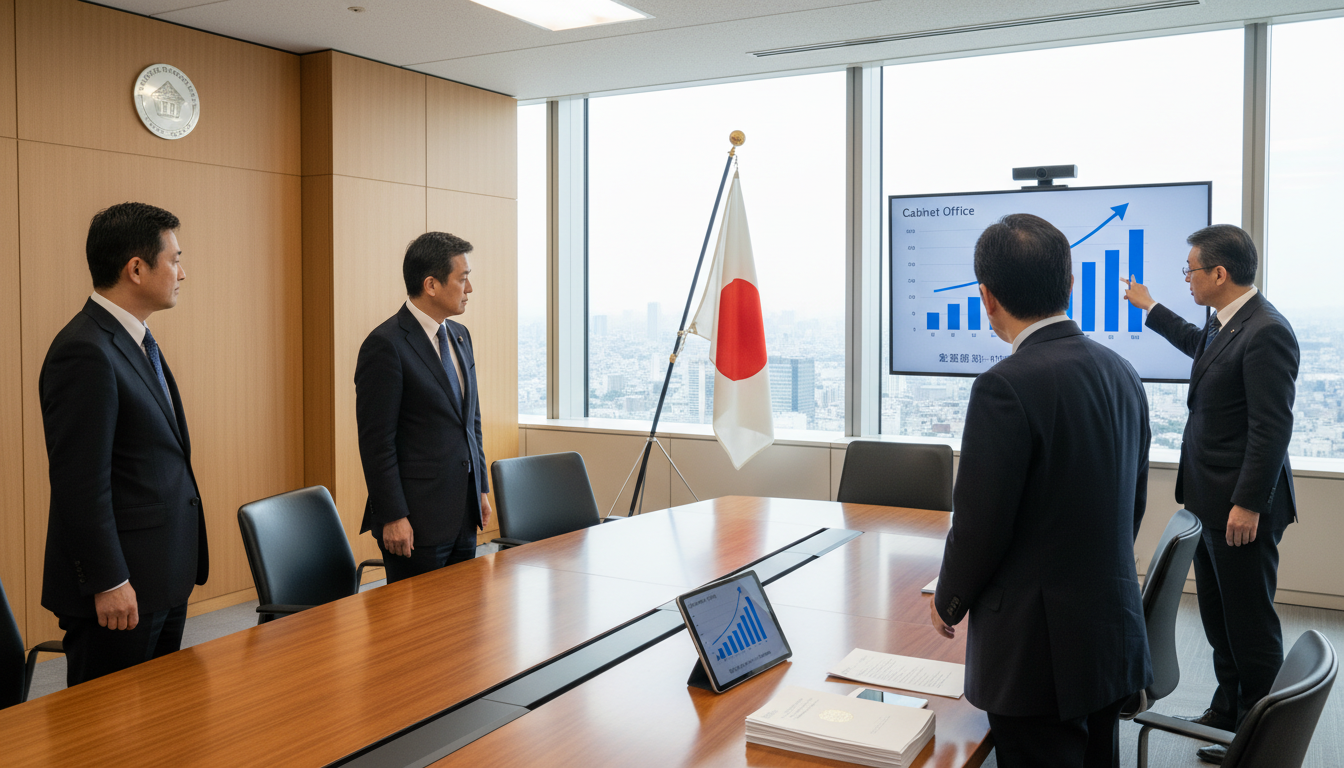
Japan’s Cabinet Office: March coincident index 116.5 (2020=100), up 0.3 points; baseline assessment raised to ‘upward phase’ after 1 year 10 months nationwide.
Japan’s Cabinet Office reported that the nation’s coincident index for March 2026 rose to 116.5 on a 2020=100 base, an increase of 0.3 points from February. The rise, the first in two months, prompted officials to upgrade the government’s baseline assessment of the economy. The coincident index, which tracks current economic conditions, was cited by the Cabinet Office as signaling a shift toward an upward phase.
Monthly Movement and Index Context
The coincident index figure of 116.5 reflects a modest month-on-month gain but remains situated within a broader recovery narrative since the pandemic years. Cabinet Office statisticians present the index as a composite of indicators that together portray the present state of economic activity. Analysts often treat small monthly moves as meaningful when they coincide with revisions to official judgments.
The Cabinet Office noted that the March increase followed a period of stagnation, and it framed the uptick as evidence that several domestic and external demand components had strengthened. The agency emphasized that the data are preliminary and subject to later revision when more detailed source statistics become available.
Contributors to the March Increase
Officials attributed the rise in part to robust domestic automobile sales, which supported factory output and dealer inventories in March. Automotive demand in Japan has shown resilience as manufacturers expanded production to meet both home-market and overseas orders. The Cabinet Office also highlighted growth in exports of electronic components bound for China as a key driver of headline gains in the index.
Together, stronger vehicle sales and an uptick in electronics shipments helped offset weaknesses in other sectors and pushed the composite reading higher. The Cabinet Office’s breakdown suggested that goods-producing sectors and trade-related components contributed disproportionately to the month’s improvement.
Impact of Iran Tensions on Petroleum Products
The report also flagged downward pressure from geopolitics, noting that tightened conditions related to the Iran situation reduced production of petroleum-derived products. Lower output in oil-refining and related industries trimmed manufacturing contributions to the index in March. Cabinet Office analysts said the fall in those specific components was significant enough to have dampened what might otherwise have been a larger monthly gain.
Economists cautioned that disruptions in energy-related production can have asymmetric effects, raising costs and disrupting supply chains even when other sectors expand. The Cabinet Office’s decision to highlight the oil-related decline underscores how external shocks continue to influence Japan’s near-term economic momentum.
Upgrade of Baseline Assessment After 22 Months
As a result of the March readings, the Cabinet Office revised its economic baseline from “showing signs of bottoming out” to “showing a shift to an upward phase.” That upward revision marks the first time the government has raised its baseline assessment in 1 year and 10 months. Officials framed the change as reflecting a broadening of positive signals across consumption, production and trade components.
The agency stressed caution, however, noting that revisions were based on preliminary data and that ongoing geopolitical risks and global demand fluctuations could alter the trajectory. Still, the formal upgrade will carry weight in how policy makers, investors and businesses interpret the near-term health of the economy.
Implications for Markets and Policy Makers
The Cabinet Office’s upward revision is likely to inform deliberations at finance and economic policy meetings and will be watched by market participants for signs of a sustained recovery. An improving coincident index can bolster confidence among firms considering capital expenditure or hiring, while also shaping expectations for fiscal and monetary policy. Policymakers will weigh the index alongside inflation, employment and external demand trends in setting near-term strategy.
Market analysts said the report may temper calls for emergency stimulus measures but will not eliminate scrutiny of downside risks. Investors are expected to monitor subsequent releases for confirmation that the March gain represents a durable trend rather than a temporary rebound driven by sector-specific factors.
Short-term risks to the outlook remain significant, including renewed geopolitical tensions and variability in global semiconductor demand. The Cabinet Office’s upgrade underscores a cautious optimism but also signals that authorities will remain vigilant in tracking incoming data and potential contagion from international developments.
The Cabinet Office’s March coincident index provides a snapshot of economic activity that suggests a fragile but improving domestic outlook, driven by stronger auto sales and a recovery in parts exports even as energy-related production wanes. Future monthly releases will be closely watched for confirmation that the shift to an upward phase endures amid persistent external uncertainties.

