
Japan constitutional amendment push stalls as LDP drops drafting committee demand
LDP backs away from creating a constitutional amendment drafting committee in the Upper House on April 15, 2026, exposing divisions after PM Takaichi’s party remarks.
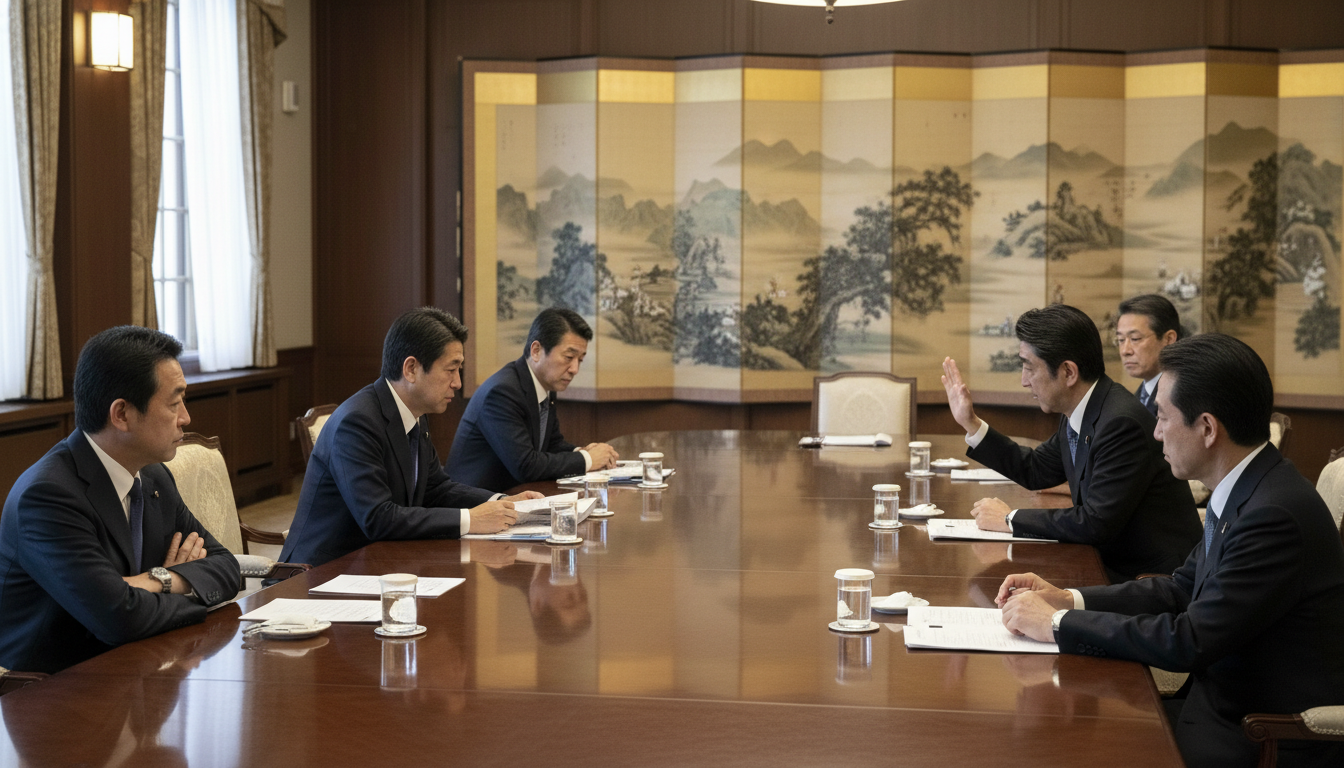
The ruling Liberal Democratic Party on April 15, 2026 declined to press for the establishment of a permanent “条文起草委員会” — a drafting committee to prepare constitutional amendment text — at the first House of Councillors constitutional review session of the Diet. The move left the issue of a constitutional amendment at the center of a widening gap between the LDP’s assertive posture in the House of Representatives and its more cautious stance in the Upper House. The decision came after Prime Minister Sanae Takaichi’s April 12 party convention remarks, which called for advancing amendment work and drew sharp criticism from opposition parties.
LDP retreats at House of Councillors session
The LDP’s delegation chose not to pursue a formal request to set up the drafting committee during the April 15 session of the Upper House constitutional review panel. Party lawmakers had earlier argued for a permanent drafting body, reflecting a strategy to move beyond abstract debate and begin wording concrete amendment proposals. The withdrawal underscored the LDP’s limited leverage in the Upper House, where it lacks the supermajority it holds in the Lower House.
This restraint contrasted with the party’s posture in the House of Representatives, where the LDP has the numbers to push forward without coalition support. The split has prompted lawmakers and analysts to note that tactical caution in the Upper House reflects both arithmetic realities and a desire to avoid escalating partisan confrontation that could further erode public consensus.
Prime Minister’s party remarks inflame opposition
Prime Minister Takaichi’s April 12 address to the LDP convention — in which she said “the time has come” and expressed a desire to reach a point where a proposal could be presented by the next party convention — intensified opposition scrutiny. Opposition parties responded sharply, accusing the government of seeking to rush a constitutional amendment and of misleading the public about the level of consensus. Those reactions helped harden positions in the Upper House review session and complicated prospects for cross-party compromise.
Opposition criticism centered on both process and substance, with leaders warning that premature pushes for amendment drafting would alienate undecided voters and stall deliberative debate. The intensity of the responses suggests that any future effort to revive the drafting committee proposal will require careful outreach and clearer signals about timing and content.
Numerical hurdle in both chambers
Under Japan’s constitutional amendment procedure, a proposed revision must be approved by two-thirds of both the House of Representatives and the House of Councillors before going to a national referendum. The LDP currently maintains a two-thirds backing in the Lower House, enabling it to initiate proposals there without coalition partners. In the Upper House, however, the party falls short and cannot secure the necessary margin without cooperation from opposition or smaller parties.
The chairmanship of the Upper House constitutional review panel is held by a member of the Constitutional Democratic Party, further complicating agenda control for the LDP. That organizational reality means the ruling party must negotiate committee schedules and procedural moves with an opposition-controlled leadership, reducing the chance of unilateral advances on the constitutional amendment front.
Policy themes advanced by LDP lawmakers
During the April 15 session, LDP member Yusuke Nakanishi set out a list of priority topics for revision, including the explicit recognition of the Self-Defense Forces in Article 9 of the Constitution. He framed the items as four principal themes that the party wishes to pursue and said the intent was to "advance the debate." Yet the party did not reiterate calls for a permanent drafting committee during the Upper House meeting, signaling a tactical recalibration.
The presentation of specific themes demonstrates the LDP’s continued policy focus and keeps the substantive contours of any constitutional amendment under public scrutiny. At the same time, the absence of a formal drafting mechanism makes it unclear when or how those themes would be translated into actual constitutional text ready for a vote.
Coalition dynamics and the Ishin agreement
The LDP’s coalition dynamics also play a role in the unfolding drama. The party’s coalition partner, Nippon Ishin no Kai (Japan Innovation Party), has in its own agreement called for the permanent establishment of a drafting committee. That item appears in the two parties’ joint policy accord, but LDP representatives refrained from invoking it explicitly at the Upper House session. The omission indicates either an internal calculation to avoid exposing coalition tensions or a strategic decision to manage optics while pursuing the issue in other forums.
Observers say the divergence between the LDP and Ishin on visible tactics will require careful coordination should the parties seek a renewed push. Without a unified front and broader cross-party buy-in, prospects for securing the two-thirds approval in the Upper House remain limited.
Outlook for the constitutional amendment effort
With the LDP pausing on the drafting committee demand, the path to a constitutional amendment is likely to remain contentious and slow in the near term. The party’s stronger position in the Lower House permits continued agenda-setting, but without tangible progress in the Upper House, any move toward a formal proposal risks being premature. Key next steps include renewed consultations with coalition partner Ishin, outreach to centrist and undecided opposition members, and public engagement to rebuild consent.
How the government responds to the opposition’s criticisms and whether it adopts more conciliatory procedural measures will determine whether the issue proceeds to concrete text drafting. For now, the April 15 decision highlights the structural and political barriers that shape Japan’s constitutional amendment debate and shows that achieving a workable majority in both chambers remains the pivotal challenge.
Public debate is expected to intensify as parties test possible compromises, but the arithmetic in the Upper House and deep partisan distrust mean any meaningful progress will demand time, careful negotiation, and clearer signals about both timing and the substance of proposed changes.

