
CXMT Posts Record Q1 Gains as DRAM Maker Eyes STAR Market Listing
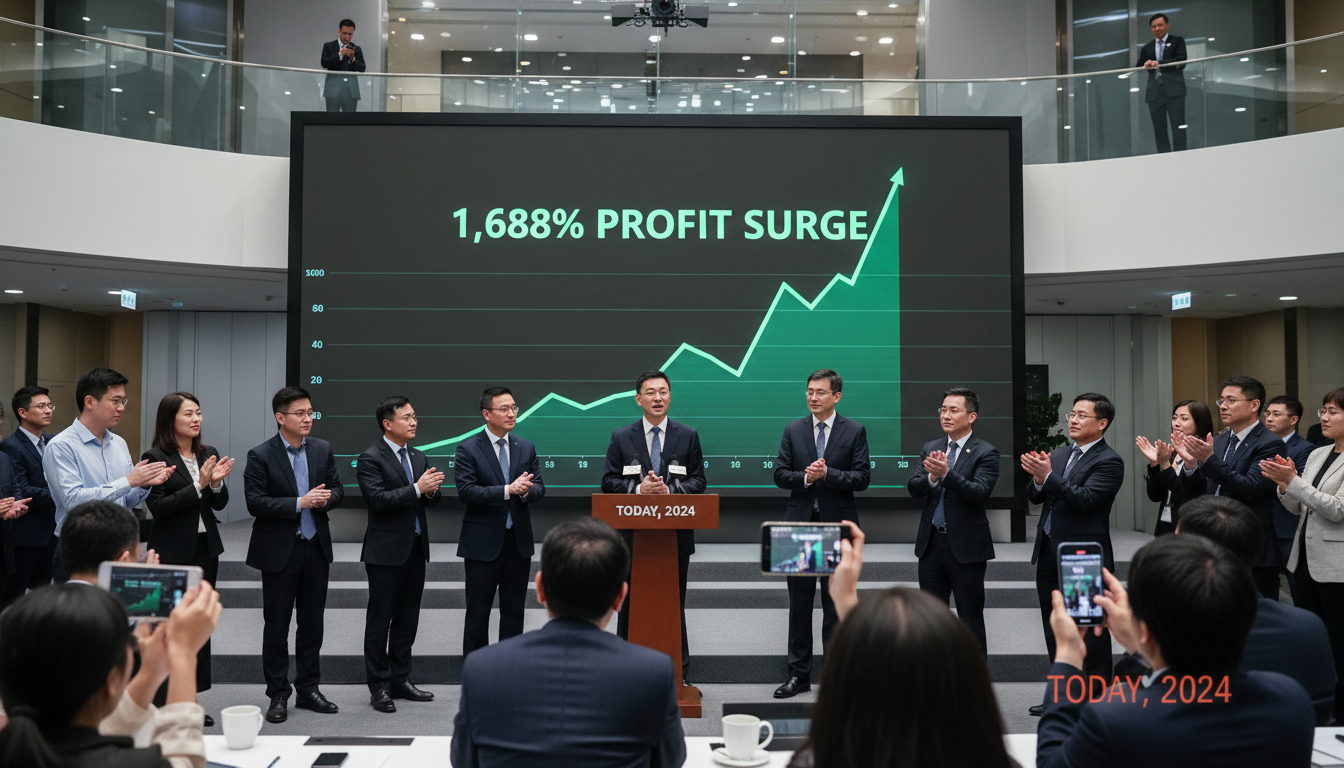
CXMT’s Q1 net profit jumped 1,688% and revenue climbed 719% in the January–March 2026 quarter as AI-driven memory demand surged, and the DRAM maker said it plans a listing on Shanghai’s STAR Market. The results underscore a sharp shift in global memory markets and give Beijing a high-profile success in its chip localization push. Investors and policymakers are watching closely as CXMT moves to expand capacity and capitalise on elevated prices for memory chips.
CXMT posts blockbuster Q1 results
ChangXin Memory Technologies (CXMT) reported an extraordinary rise in earnings for the January–March 2026 quarter, with net profit increasing 1,688% year-on-year and revenue up 719%. The company attributed the gains to strong demand for DRAM products, particularly those used in data centres and AI applications. CXMT said the surge reflects both higher volumes and markedly improved selling prices across key memory categories.
The firm’s performance marks one of the most dramatic quarterly turnarounds seen among memory suppliers in recent years. Company statements point to expanding shipments and tighter market inventories as immediate drivers. CXMT’s scale-up comes amid a broader industry cycle that has pushed DRAM pricing to levels that underpin rapid margin expansion.
STAR Market listing advances domestic chip drive
CXMT confirmed plans to seek a listing on Shanghai’s STAR Market, a move that would align the company more closely with China’s strategic effort to build domestic semiconductor champions. Beijing has channelled policy and financial support to local memory production as part of a broader technology self-reliance agenda. A successful STAR Market listing would give CXMT access to domestic capital and raise its profile among institutional investors focused on strategic industries.
Regulators and state-affiliated financing vehicles have flagged support for firms that can reduce import dependence in critical chip segments. Listing on the STAR Market would not only provide CXMT with fresh funding for capacity expansion but also signal government confidence in the firm’s role in national industrial priorities. Market watchers say the timing coincides with Beijing’s renewed emphasis on semiconductor supply-chain resilience.
AI boom and global DRAM crunch push prices higher
Industry analysts point to explosive demand from generative AI models and hyperscale cloud services as a core reason for the recent upswing in DRAM demand. Large language models and AI training workloads consume vast quantities of memory, prompting cloud providers to increase purchases of high-bandwidth DRAM modules. That structural demand, combined with constrained output from several producers, has tightened supplies and lifted average selling prices.
Supply-side factors also played a role: capacity constraints and cautious capital spending following prior market downturns left inventories low when demand rebounded. CXMT, which produces a range of DRAM products, appears to have benefited both from higher utilization at its fabs and from the premium buyers are paying for high-performance modules. The company’s results demonstrate how memory producers geared to serve AI workloads can see rapid revenue expansion in a tight market.
Investor and market response
The disclosure of steep profit and revenue gains drew attention across regional capital markets, with analysts revising near-term forecasts for China’s memory industry. Institutional investors have increasingly factored in the possibility that domestic players like CXMT can capture a larger share of national demand for memory chips. Market commentary emphasised both the upside from persistent AI-led consumption and the risk that elevated prices could attract incremental capacity from global rivals.
Market participants cautioned that while the current cycle is favourable, memory markets are historically cyclical and sensitive to shifts in supply additions. Analysts stressed the importance of CXMT managing its capital expenditure carefully to avoid overbuilding in a market that can swing quickly. Nonetheless, the immediate reaction highlighted renewed investor interest in memory-related equities and financing for capacity expansion.
Implications for global memory supply chain
CXMT’s performance and STAR Market ambitions add a fresh dynamic to global competition in DRAM, where incumbents from South Korea, Taiwan and the United States have long dominated. Greater scale for Chinese makers could alter sourcing patterns for local cloud and consumer electronics firms, reducing reliance on foreign suppliers. That prospect reinforces policy debates about trade controls, export restrictions and the strategic allocation of investment in semiconductor ecosystems.
At the same time, international customers and partners will monitor product quality, yield stability and long-term supply guarantees as CXMT expands. Integration into global supply chains requires not only production capacity but also certifications, logistics capabilities and long-term commercial relationships. How quickly CXMT can translate its quarter-to-quarter momentum into sustained global competitiveness will shape industry dynamics in the year ahead.
China’s drive to localise key chip segments may accelerate technological partnerships and targeted investments across the value chain. The STAR Market listing, if completed, would be a milestone for a domestic DRAM supplier seeking to move from catch-up status to a more prominent market position.
Looking ahead, CXMT faces both opportunity and risk as it pursues growth and a public listing. Elevated DRAM prices and strong AI demand create a favourable revenue backdrop, but the company will need to balance capacity expansion, cost control and quality assurance to sustain gains. Observers say geopolitical tensions and the cyclical nature of memory markets make cautious capital planning and supply-chain diversification essential for CXMT to consolidate its recent success.

