
Dong Nai Ramps Up FDI Drive as Long Thanh Airport Advances
Dong Nai pushes FDI as Long Thanh Airport progresses; new city status, reforms and transport upgrades seek to draw foreign investors to southern Vietnam.
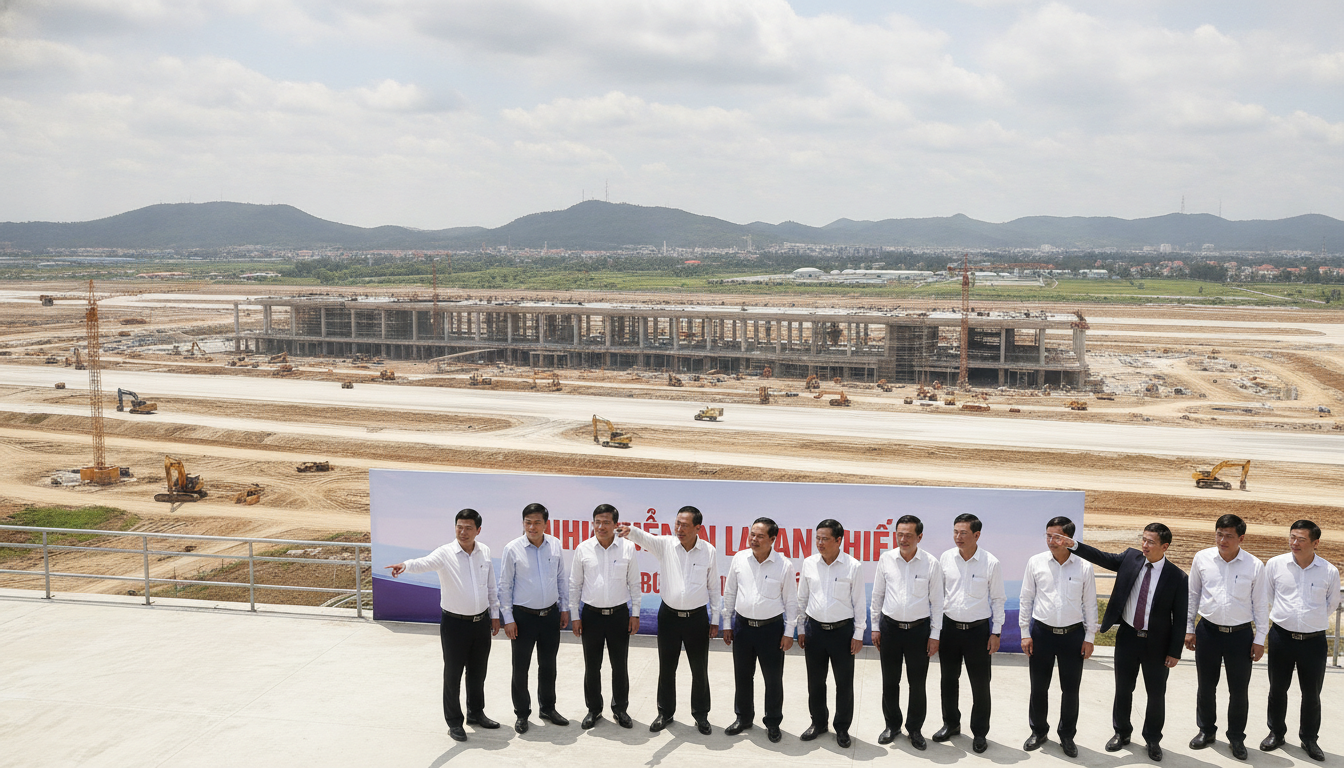
Dong Nai, the province adjacent to Ho Chi Minh City, has launched an intensified push to attract foreign direct investment (FDI) as Long Thanh International Airport moves forward in construction and the central government presses administrative reforms. Provincial leaders say the expanded status and strategic location give Dong Nai a unique opportunity to position itself as a logistics and manufacturing hub for southern Vietnam. The airport, whose main terminal was photographed during construction in June 2024, is being cited by officials as a catalyst for new industrial and urban development. Local authorities are targeting both traditional manufacturing investors and higher-value technology and logistics firms.
New administrative status and investment strategy
Provincial officials in Dong Nai have begun marketing the province’s recent elevation in administrative stature as a competitive advantage for investors. The move is intended to streamline permitting and local governance, making it easier for companies to set up operations and expand. Authorities emphasize coordinated planning between industrial zones, transport infrastructure and urban development to reduce bureaucratic friction and speed project delivery.
Long Thanh International Airport and transport connectivity
Construction of Long Thanh International Airport continues to shape Dong Nai’s long-term planning, with the airport pitched as a major southern transport hub. The main terminal, photographed in June 2024, underscores the scale of the project and its expected role in easing cargo and passenger flows in the region. Officials and planners are linking airport development to improvements in road and rail connections to Ho Chi Minh City and nearby industrial zones.
Infrastructure upgrades aimed at logistics and manufacturing
Dong Nai’s investment campaign highlights a package of infrastructure upgrades beyond the airport, including road widening, industrial park expansion and utility augmentation. The province is seeking targeted investment in logistics parks and cold-chain facilities to support export-oriented manufacturers. Upgraded power and water supplies, combined with planned transport links, are being promoted as key enablers for firms that require reliable, large-scale infrastructure.
Incentives, reforms and investor facilitation
The provincial push is timed with broader central-government reforms aimed at boosting administrative efficiency and cutting red tape. Dong Nai officials are advertising simplified land use procedures, faster licensing and dedicated investment support desks to prospective foreign investors. The package is designed to reduce time-to-market for new projects and to make the province more competitive against regional rivals in Southeast Asia.
Responses from foreign investors and industry groups
Industry participants and investor representatives have expressed cautious interest in Dong Nai’s pitch, saying the airport and improved infrastructure could tilt location decisions for regional operations. Logistics and manufacturing firms surveyed by local business groups note that transport access and predictable permitting are critical, and they welcome clearer commitments on delivery timelines. At the same time, some investors have urged transparency on costs, land availability and the sequencing of major works to ensure business cases remain viable.
Environmental and planning challenges
Despite the upbeat investment narrative, Dong Nai faces practical hurdles that could affect its FDI ambitions. Large-scale infrastructure projects require complex land acquisition and environmental clearance processes, and provincial planners must balance rapid development with sustainability considerations. Local authorities acknowledge the need for careful environmental impact mitigation, community engagement and phased project delivery to avoid delays that could deter investors.
The provincial strategy positions Dong Nai as a bridge between Ho Chi Minh City’s economic gravity and new transport infrastructure, particularly Long Thanh International Airport. By coupling the airport’s expected role as a cargo and passenger hub with administrative reforms and targeted infrastructure spending, Dong Nai aims to convert geographic advantage into tangible foreign direct investment inflows. Success will depend on timely completion of transport links, transparent land and permitting processes, and effective coordination with central government reforms that seek to make Vietnam more attractive to global capital.

