
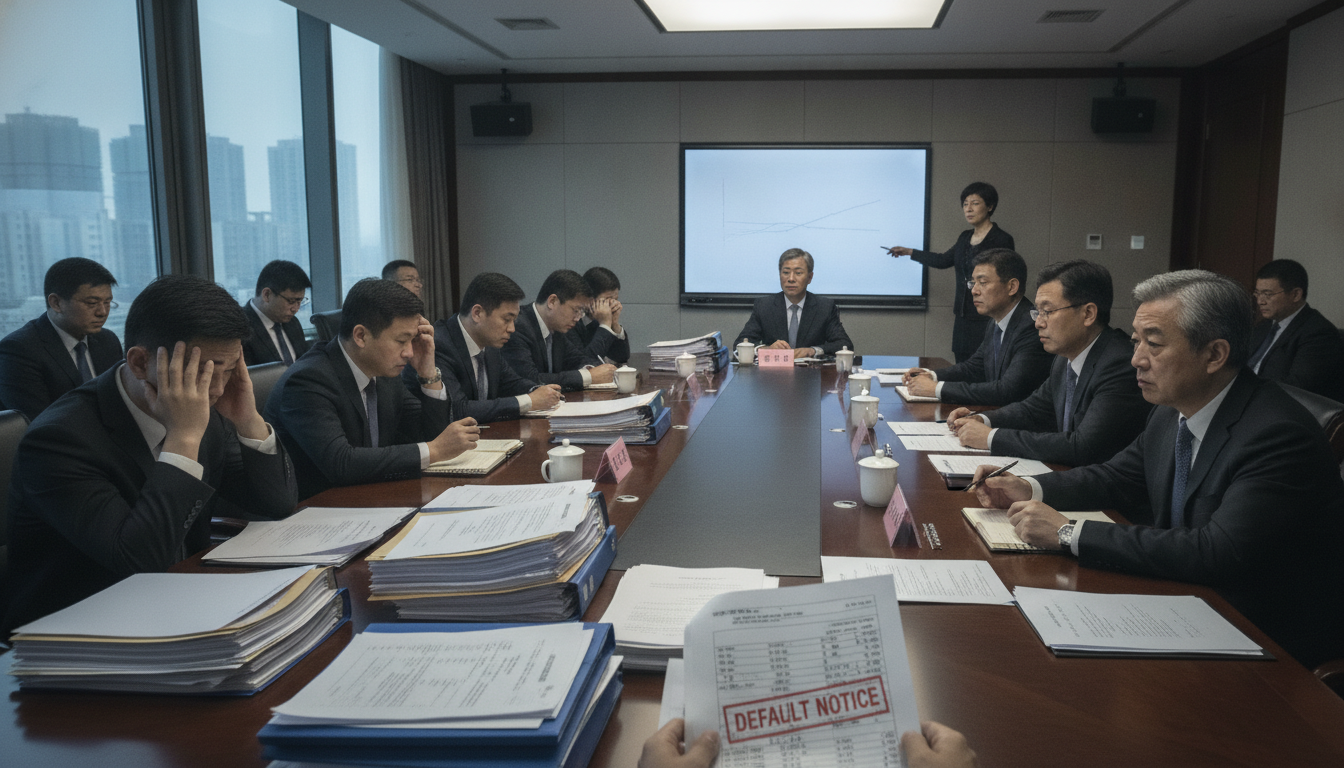
Chinese private property developers face fresh liquidity squeeze after debt restructuring
Chinese private property developers that restructured debt are encountering a renewed liquidity squeeze this year as sluggish sales, bond re‑defaults and limited new funding squeeze cash flows across the sector. (scmp.com)
Developers with restructured debt hit by renewed cash shortfalls
Several developers that completed debt workouts in recent years now report tighter cash access and mounting payment pressures as the property downturn deepens. Restructuring deals that extended maturities or swapped bonds for equity have eased immediate defaults but have not solved weak project sales or funding gaps. Analysts warn that a wave of re‑defaults is undermining confidence and making fresh financing harder to secure. (spglobal.com)
Falling sales and oversupply deepen funding gap
Contracted home sales remain subdued across many cities, leaving developers with large unsold inventories and constrained pre‑sales proceeds that traditionally fund construction and debt servicing. Recent industry analysis and international institutions point to continued demand weakness and an oversupplied market that will keep sales depressed through 2026. With operating cash flows reduced, even firms that negotiated earlier restructuring face renewed liquidity mismatches. (scmp.com)
Bond re‑defaults and offshore obligations strain balance sheets
A notable feature of the current stress is the rise in re‑defaults on previously restructured onshore and offshore debt, which erodes market differentiation and raises borrowing costs for all issuers. Rating agencies and market commentators say that debt extensions or exchanges can relieve near‑term pressure but often leave developers exposed to future payment shortfalls if sales do not rebound. The result is a bond market where investors increasingly demand higher yields or more stringent creditor protections. (scmp.com)
Case study: Aoyuan and Country Garden under renewed pressure
Individual company developments illustrate the wider trend. China Aoyuan has recently signalled comprehensive restructuring steps after missing offshore interest payments and engaging advisers to assess its capital structure and liquidity options. Country Garden, meanwhile, has begun executing one of the sector’s larger offshore workouts, making selective coupon payments even as it faces substantial principal repayments later this year. These episodes show how partial progress on restructurings can coexist with persistent cash‑flow and repayment challenges. (itiger.com)
Banks, trust products and the financing squeeze
Traditional bank lending, shadow financing and structured trust products have all tightened, reflecting lender caution about construction risk and collateral values. Public data and economic reviews indicate developers are relying more on internal cash generation and smaller, ad hoc extensions from onshore lenders. This compressed funding mix reduces flexibility to finish projects or service offshore obligations, pushing some firms toward judicial or extrajudicial restructuring processes. (thedocs.worldbank.org)
Policy shifts and limited relief from regulators
Beijing’s policy stance has oscillated between steps to stabilise housing demand and measures aimed at preventing a renewed credit boom by developers. Regulators have eased some borrowing constraints at times, but industry participants say the scale of targeted support has so far been insufficient to restore broad market confidence. Officials face a trade‑off between bolstering construction and guarding against moral hazard, leaving many market participants uncertain about the depth of future intervention. (asiafinancial.com)
Analysts and investors now watch a tight calendar of bond maturities, project delivery milestones and local government initiatives for signs of stabilisation. If sales do not pick up or banks remain cautious, the sector may see further rounds of debt renegotiation and selective creditor‑led workouts. The immediate outlook therefore centres on whether developers can convert contracted sales into cash quickly enough to meet a string of scheduled repayments without triggering broad re‑defaults. (spglobal.com)

