
Hitachi AI agents to power full systems development cycle
Hitachi will deploy AI agents across requirement definition, programming, maintenance and operations to boost productivity for client systems development.
Company Announcement and Strategic Aim
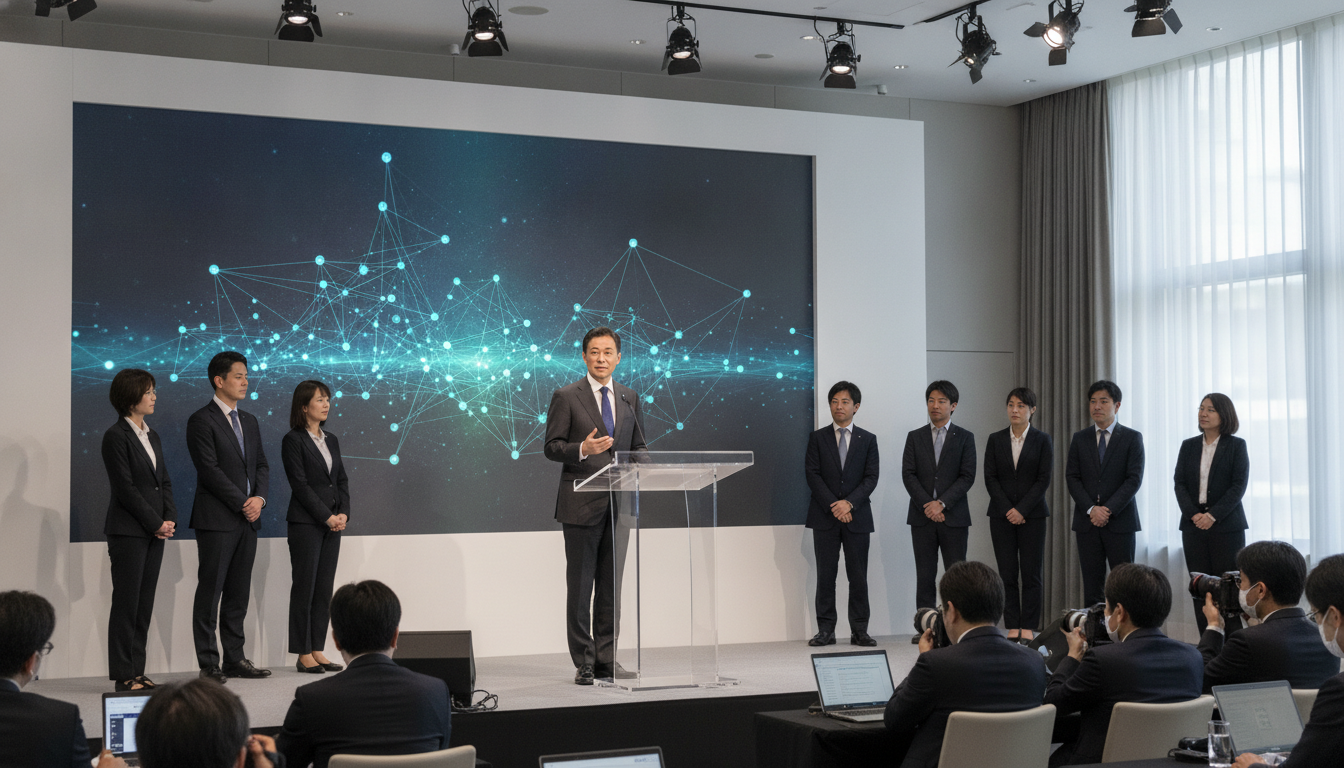
Hitachi said on Friday that it will adopt AI agents across the entire process of creating systems for client businesses. The move is intended to improve productivity by automating tasks from requirement definition through to programming, maintenance and operation. Company officials framed the initiative as a step to deliver faster, more consistent system delivery while responding to rising customer demand for adaptable technology solutions.
The announcement signals a formal shift in how Hitachi plans to design and deliver software and system integrations. Executives described the approach as embedding AI agents into workflows rather than using isolated tools, aiming to streamline handoffs between phases and reduce repetitive engineering work.
Integration Across the Development Lifecycle
Under the plan, Hitachi AI agents will assist at multiple stages of systems development including gathering and refining requirements, generating code, testing, and monitoring live systems. The company expects the agents to support engineers by producing drafts, suggesting improvements, and automating routine maintenance tasks. This continuous agent involvement is presented as a way to shorten development cycles and increase predictability for complex projects.
Hitachi emphasized that agents will work alongside human teams, handling structured and repeatable tasks while leaving higher-level design decisions to experienced engineers. The company said the approach will standardize documentation and traceability, which it views as critical for enterprise clients with strict compliance needs.
Productivity Targets and Business Rationale
The declared objective is a marked improvement in productivity across Hitachi’s services business, with efficiency gains driven by automation of manual steps. Management argues that reducing time spent on repetitive programming and testing will free specialists to focus on customization and innovation. For customers, the expected outcome is faster delivery, lower error rates, and clearer maintenance pathways.
Analysts note that such productivity claims are common with tool-led transformations, but outcomes depend on execution. Success will rely on clear metrics, integration with existing toolchains, and the ability to measure quality improvements as agents are rolled into production workflows.
Implications for Workforce and Client Services
Hitachi said the AI agent rollout will change how teams operate, with new roles emerging for engineers who supervise, validate and refine agent outputs. The company indicated that reskilling and role redesign will be priorities to ensure staff can manage agent-augmented development. Clients will likely see a mix of automated deliverables and human-reviewed artifacts, designed to maintain accountability and quality.
Industry observers caution that transitions of this scale can create short-term disruption as processes and responsibilities are redefined. Hitachi has signaled intentions to balance automation with human oversight, but the company will face pressure to demonstrate how quality control and governance are enforced as agents take on larger percentages of work.
Technical and Operational Challenges
Deploying AI agents across end-to-end development brings technical hurdles including integration with legacy systems, data privacy, and the need for robust validation frameworks. Agents must be trained or configured to align with client-specific standards, security policies and regulatory requirements. Hitachi will need to address these constraints to avoid introducing defects or compliance gaps.
Operationally, organizations must establish monitoring and auditing capabilities for agent outputs, and maintain version control over templates and models. Hitachi’s plan suggests a platform-style approach that centralizes control points, but implementation details such as model governance and incident response procedures will determine how reliably agents perform in enterprise settings.
Positioning within Industry Trends
Hitachi’s decision follows a broader industry shift where vendors and integrators are experimenting with AI to accelerate software lifecycles. By embedding AI agents into multiple development phases, the company seeks to differentiate its services and capture demand from customers seeking faster modernization. Competitors are pursuing similar strategies, focusing on automation, low-code generation and observability enhancements.
For enterprise clients, vendor choice will hinge on demonstrated reliability, data protection, and the ability to tailor agent behavior to business rules. Hitachi’s scale and existing client relationships give it an advantage, but the company must translate the pilot promise into consistent field results to maintain trust.
The rollout also raises questions about standards and interoperability, which could prompt industry collaboration or regulatory attention if agent-driven development becomes widespread.
Hitachi’s move to deploy AI agents across systems development marks a notable step in the company’s digital services strategy and reflects wider market momentum toward agent-assisted engineering. The coming months will be critical as Hitachi pilots the approach, reports measurable outcomes, and refines governance to balance automation gains with safety and client assurance.

