
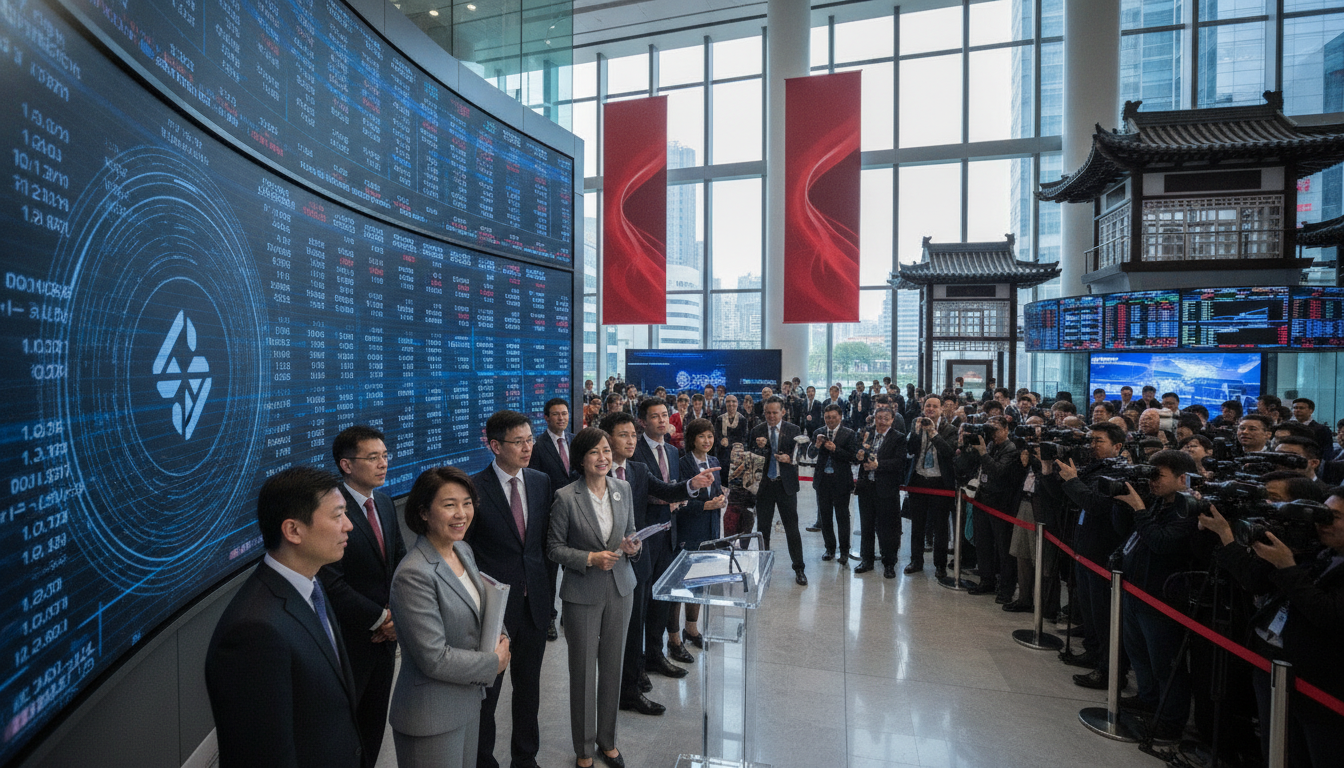
HKEX revenue jumps 17% in H1 2026 as listing surge cements Hong Kong’s gateway role
HKEX revenue climbed 17% in H1 2026 as mainland listings and trading booms bolstered fees, reinforcing Hong Kong Exchanges and Clearing’s role as China gateway.
Strong first-half results
Hong Kong Exchanges and Clearing (HKEX) reported a 17% year-on-year rise in revenue for the first half of 2026, driven by a sustained boom in listings and trading activity. The company’s performance underscores a renewed appetite among issuers and investors for Hong Kong’s capital markets. Market participants said the jump in revenue reflected higher fee income from both primary offerings and elevated turnover across equities and related products.
HKEX’s results arrived amid persistent macroeconomic and geopolitical uncertainty, yet the exchange continued to attract issuance from mainland Chinese companies. The surge in listings has reinforced Hong Kong’s positioning as the principal international venue for China-related capital raising. Analysts noted that the combination of new listings and stronger trading volumes helped offset pressure from global market volatility.
Mainland issuers dominate the listing pipeline
A notable feature of the first-half activity was the influx of mainland Chinese companies seeking market access in Hong Kong. Issuers used the exchange for initial public offerings, secondary listings and capital raises that tapped international investors. This trend has been attributed to China’s active corporate financing needs and companies’ desire for a dual or international listing presence.
HKEX’s role as a conduit for mainland capital has been reinforced by regulatory accommodations and cross-border financing mechanisms that lower frictions for China-based issuers. Investment bankers said that sectors tied to technology, consumer demand and state-backed infrastructure were among those most visible in the pipeline. The steady flow of mainland listings helped sustain underwriting fee income and broadened the exchange’s revenue base.
Trading surge lifts fee and transaction income
Beyond listing activity, HKEX benefited from heightened trading volumes that translated into stronger transaction fees. Both retail and institutional participation increased, supporting liquidity and generating recurring revenue for the exchange. Greater volatility and episodic market events also contributed to spikes in turnover, which boosted short-term fee income.
Derivatives and other ancillary markets further complemented cash equity activity, with market operators pointing to growing interest in hedging and risk-management products. The result was a more diversified trading mix than in quieter periods, helping to stabilize HKEX’s topline even as external headwinds persisted. Market makers and brokers reported robust flow, particularly around new listings and sector-specific news.
Management frames results as resilience, not complacency
HKEX’s leadership presented the half-year performance as evidence of the exchange’s enduring relevance despite macro and geopolitical headwinds. Company statements emphasized that Hong Kong remains the preferred international listing venue for many China-related firms and that the exchange’s product range continues to meet investor demand. Executives signalled they would keep investing in market infrastructure and cross-border connectivity.
At the same time, management acknowledged the cyclical nature of capital markets and the need to prepare for changing conditions. Plans to reinforce technological resilience, enhance listing services and expand investor access were highlighted as priorities. Observers said the exchange’s strategy aims to preserve its competitive advantage while remaining adaptable to regulatory and economic shifts.
Geopolitical and macro risks persist for market participants
Despite the upbeat revenue figures, HKEX and its stakeholders face persistent risks that could temper momentum. Geopolitical tensions, shifts in global monetary policy and intermittent capital controls in mainland markets all represent potential headwinds for cross-border capital flows. These factors could influence the timing and scale of future listings as well as investor sentiment.
Market strategists cautioned that sustained fee growth depends on continued issuance and active trading, which are sensitive to external shocks. Liquidity can evaporate quickly if global risk appetite wanes, and valuation gaps between onshore and offshore markets remain a source of investor uncertainty. Still, many participants maintained that Hong Kong’s regulatory framework and investor base give the exchange resilience relative to other regional venues.
Implications for investors and corporates
For issuers, the surge in listings reaffirms Hong Kong’s attractiveness as a place to raise international capital and enhance corporate profiles. Companies weighing listing venues will factor in Hong Kong’s deep investor pool, regulatory procedures and established linkage with mainland markets. For investors, the growth in product offerings and liquidity expands opportunities for exposure to China-related themes.
Institutional investors may increase allocations to Hong Kong-listed opportunities if the issuance pipeline remains active and secondary market liquidity holds. Retail investors, too, have shown renewed interest in newly listed stocks, contributing to turnover and broadening market participation. Market participants said they will be watching issuance trends, fee structures and regulatory signals for guidance on whether the momentum can be sustained.
The half-year report positions HKEX as a central node in global capital flows to and from China, but its future trajectory will depend on a balance between continued demand for listings and the macro-political environment that shapes investor confidence.

