
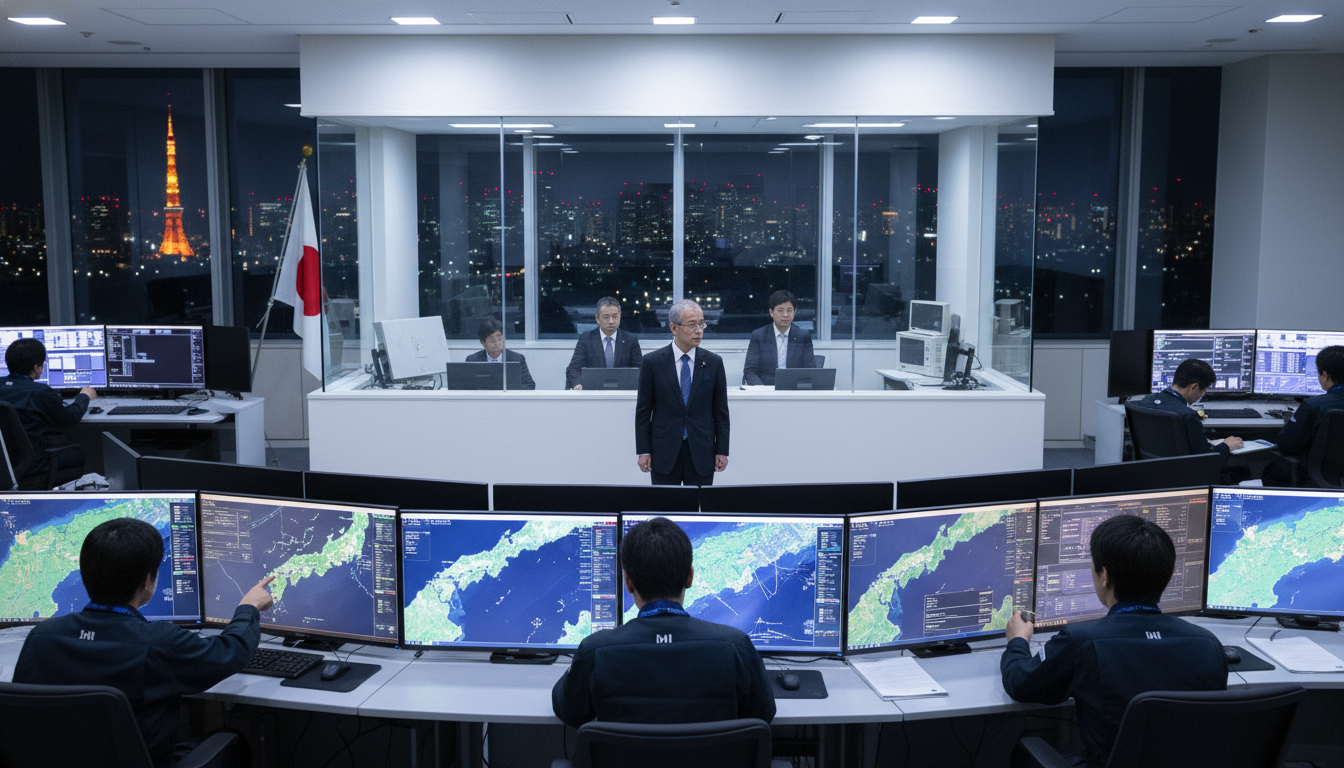
IHI observation satellites start delivering imagery, strengthening Japan’s defensive surveillance
IHI observation satellites begin delivering imagery, boosting Japan’s monitoring and defence capabilities as Tokyo integrates space-based reconnaissance now.
TOKYO — IHI observation satellites have begun delivering imagery to the Japanese defence sector, the company said, marking a new step in Tokyo’s efforts to strengthen monitoring and counterstrike capabilities. The initial flow of data is intended to feed defence planners and civilian agencies with higher-resolution situational awareness across maritime and territorial domains. Officials say the capability will be integrated into existing surveillance systems to improve response times and targeting accuracy.
IHI confirms reception of satellite imagery
IHI announced that its deployed observation satellites are transmitting imagery to ground stations and the company’s processing facilities. Company representatives described the handover of data as the start of an operational phase following launch and on-orbit checks.
The imagery reception completes a technical milestone for IHI and represents the company moving from satellite manufacturing and launch support to active operational services. Defence and industry officials see the development as an illustration of growing private-sector roles in national security space activities.
Intended capabilities and data uses
The imagery is expected to support maritime domain awareness, overflight monitoring and routine reconnaissance tasks that feed into Japan’s wider intelligence picture. Defence planners plan to use the data alongside radar, signals intelligence and airborne assets to reduce blind spots and better track activities in nearby seas.
Civilian agencies have also been cited as potential users for disaster response and search-and-rescue missions, where timely optical and multispectral images can guide emergency operations. Analysts note that integrating space-based imagery with ground systems will be key to turning raw data into actionable information.
Impact on Japan’s defence posture
The operationalisation of IHI observation satellites is part of a broader effort by Tokyo to increase the resilience and responsiveness of its defence architecture. Officials argue that improved surveillance capability strengthens deterrence by reducing ambiguity about movements near Japanese territory.
Military planners view space-based sensors as force multipliers that permit more precise situational assessment without immediate escalation. The added data stream could shorten decision cycles for both defensive measures and permitted countermeasures under Japan’s legal framework.
Regional security considerations
Observers say the development will be watched closely by neighbouring states amid heightened strategic competition in the region. Enhanced Japanese space-based reconnaissance contributes to a more comprehensive picture of maritime activity in the East China Sea, the Sea of Japan and surrounding areas.
While Tokyo frames the move as defensive and defensive-only, it also signals an investment in technologies that improve the country’s ability to respond to crises. Regional capitals routinely monitor such capabilities as part of their own strategic calculations.
Industry implications and technological trends
IHI’s operational satellite imagery service highlights a trend of Japanese industrial players expanding into space-enabled security services. Private-sector involvement accelerates capability deployment and introduces new commercial approaches to data processing and distribution.
The integration of imagery with machine learning and automated analysis tools is likely to follow, producing faster alerts and pattern recognition for analysts. Supply-chain and regulatory oversight will remain focus areas as defence-related space activities increase.
Next steps for operational integration
Officials say further testing and validation of imagery feeds will continue as systems are brought into regular service. The process will include calibrating sensors, refining data pipelines and establishing formal interfaces with defence command-and-control networks.
Authorities also note the need for clear protocols on data access, retention and sharing with allied partners to ensure legal compliance and operational security. Continued investment in ground infrastructure and human expertise will determine how rapidly the new imagery can be transformed into routine operational value.
Japan’s move to operationalise IHI observation satellites reflects a broader shift toward leveraging space assets for national security, balancing civilian uses with defence requirements while the government and industry work to embed these capabilities into everyday operational practice.

