
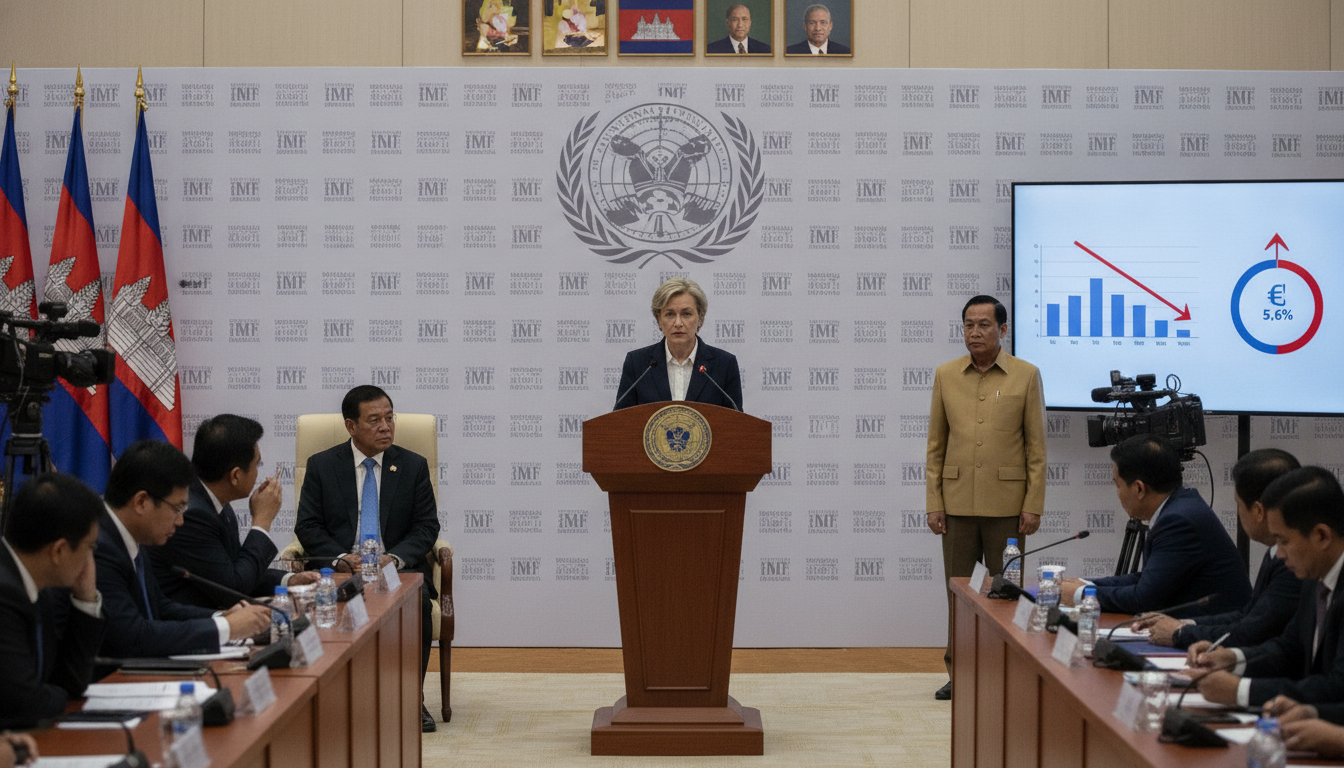
IMF Downgrades Cambodia Economic Outlook: Growth to Slow to 3% as Inflation Climbs to 5.6%
IMF warns Cambodia economic outlook will weaken as energy costs, border tensions and cybercrime weigh on expansion and push inflation higher.
The International Monetary Fund has sharply downgraded the Cambodia economic outlook, projecting growth to slow to roughly 3% while inflation accelerates toward about 5.6%. Rising global energy prices are cited as a key driver that will compound earlier shocks, including border tensions with Thailand and disruption tied to an entrenched cyber scam industry. The fund’s assessment signals a notable shift from earlier projections and raises fresh questions over policy responses and social impacts in Cambodia.
IMF Lowers Growth Forecast
The IMF’s reassessment marks a clear reduction in near-term expectations for Cambodia’s economy, which had been recovering from pandemic-era contractions. Slower growth reflects both external pressures and persistent domestic vulnerabilities that limit the economy’s ability to absorb shocks. Officials and analysts say the downgrade increases the urgency for measures that support demand without endangering fiscal stability.
Energy Price Shock and Inflation Dynamics
Higher global energy prices are the immediate factor driving the jump in consumer price inflation in the fund’s projection. Increased fuel and power costs ripple through production and transport, lifting import bills and squeezing household purchasing power. The IMF notes that a sustained period of elevated energy prices could entrench inflation expectations and complicate monetary policy aimed at anchoring prices.
Border Tensions and Cybercrime Hit Activity
Officials point to continuing tensions along the Thai border as another drag on trade and investment flows that matter for border provinces and national supply chains. Separately, the persistence of a cyber scam industry has undermined investor confidence and tarnished Cambodia’s business reputation in some markets. Together, these strains are cited by the IMF as factors that reduce competitiveness and depress both private-sector activity and tourism-linked services.
Garment Sector Faces Pressure Despite Central Role
Cambodia’s garment and textile industry, long a mainstay of export earnings and employment, faces increased cost pressures from energy and freight. Factory operators report tighter margins as input and logistics costs rise, potentially slowing hiring and investment in new capacity. While the sector remains a cornerstone of the economy, the IMF warns that weaker external demand and rising costs could curb growth and amplify social strains in manufacturing communities.
Policy Options and Fiscal Constraints
The IMF’s downgrade highlights a narrowing policy margin for Cambodia’s authorities, who must balance support for households and firms with the need to maintain fiscal prudence. Possible responses include targeted cash transfers, temporary subsidies for vulnerable groups, and carefully calibrated monetary measures to rein in inflation. The fund emphasizes that broad-based fiscal expansion could be risky if it undermines debt sustainability or foreign reserve buffers.
External Vulnerabilities and Financial Stability Risks
A slower growth trajectory combined with higher inflation raises concerns about external balances, capital flows and the banking sector’s resilience. Elevated import costs could widen the current account gap and pressure foreign exchange reserves if not offset by stronger exports or remittances. The IMF’s assessment underscores the importance of contingency planning and enhanced oversight to limit the risk of sudden shocks to financial markets.
Looking ahead, the trajectory of global energy prices, the resolution of regional tensions, and progress in curbing cyber-enabled criminal networks will be decisive for whether Cambodia’s economy regains momentum. Policymakers face the immediate task of protecting vulnerable households and critical industries while preserving macroeconomic stability. The path chosen in the coming months will shape the country’s recovery and the prospects for sustained, inclusive growth.

