
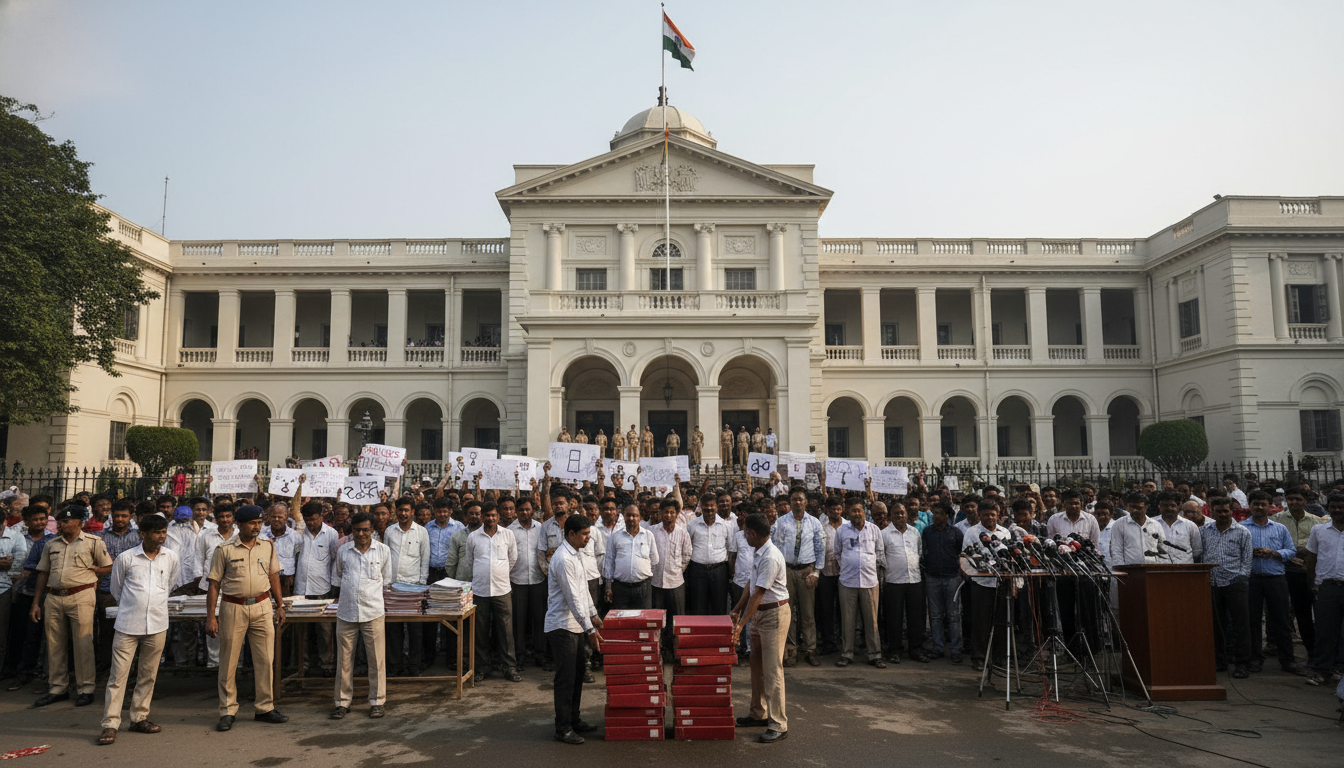
West Bengal Voter Deletion of About 9 Million Sparks Disenfranchisement and Data-Governance Concerns
About 9 million names removed from West Bengal electoral rolls ahead of assembly polls raise transparency, disenfranchisement and data-governance concerns.
NEW DELHI — The deletion of roughly 9 million voter names from West Bengal’s electoral rolls during the Election Commission of India’s Special Intensive Revision has provoked fresh scrutiny of transparency and data governance in the run-up to the state assembly elections.
The West Bengal voter deletion, which officials say reduced the electorate by about 11–12%, has prompted legal challenges, protests and calls for independent audits of the process. (business-standard.com)
Election Commission figures and scale of removals
Official tallies released as part of the Special Intensive Revision show that the number of registered voters in West Bengal fell by roughly 9.1 million compared with the rolls before the exercise.
Those figures, published by multiple national outlets and cited by the Election Commission, put the scale of the removals at nearly 12% of the state’s electorate and mark one of the largest single-state reductions in recent Indian electoral history. (business-standard.com)
How the deletions were categorized by officials
Election authorities have described the removals as part of standard housekeeping intended to expunge duplicate, deceased and otherwise ineligible names from the rolls.
According to the Commission’s breakdown, about 6.3 million names were classified as deceased or absent, while roughly 2.7 million were designated “doubtful” and flagged for adjudication, a classification that led to further removals in the final supplementary list. (apnews.com)
Voters’ accounts and street-level reaction
Those struck from the rolls include people who say they hold valid identification and who have voted in recent elections, sparking anger and confusion in affected communities.
Protests and petitions have followed, including demonstrations by voting-rights groups in Kolkata and individual appeals by residents who say they were removed without clear notice or opportunity to correct administrative errors. (apnews.com)
Adjudication process and tribunals handling appeals
The Election Commission opened adjudication windows and tribunals to hear claims from deleted electors, with some districts reporting hundreds of thousands of contested cases.
Judicial officers have been tasked with reviewing evidence and potentially reinstating names before the rolls are frozen for each phase of polling, but officials warn that the tight schedule limits the time available for comprehensive reviews. (indianexpress.com)
Political debate and potential effects on the polls
Political parties have sharply disagreed over the intent and impact of the revision, with opposition leaders accusing the Commission and central authorities of engineering deletions to alter vote composition.
Supporters of the exercise say it is a legitimate effort to “clean” voter lists, but analysts caution that large-scale removals so close to an election can distort turnout estimates and intensify communal and regional tensions. (theguardian.com)
Data governance, transparency demands and technological questions
Civil-society groups and some experts have urged independent audits of the SIR methodology and the datasets used to mark electors as ineligible, citing gaps in public explanation and access to verification records.
Concerns have also been raised about algorithmic or mapping tools used in the revision, with critics warning that opaque digital processes can compound human error and produce disproportionate impacts on vulnerable populations. (theguardian.com)
The deletions and the responses they have provoked are likely to shape public debate through the remainder of the campaign period, as parties, courts and voters seek clarity on who remains eligible to decide the state’s political course. (apnews.com)

