
Israeli occupation of southern Lebanon reported from Sour as residents face displacement, damage and surveillance
After the April 17 ceasefire, residents in Sour and nearby border villages report the Israeli occupation of southern Lebanon, citing new positions, surveillance and mass displacement.
Coastal towns under new Israeli positions
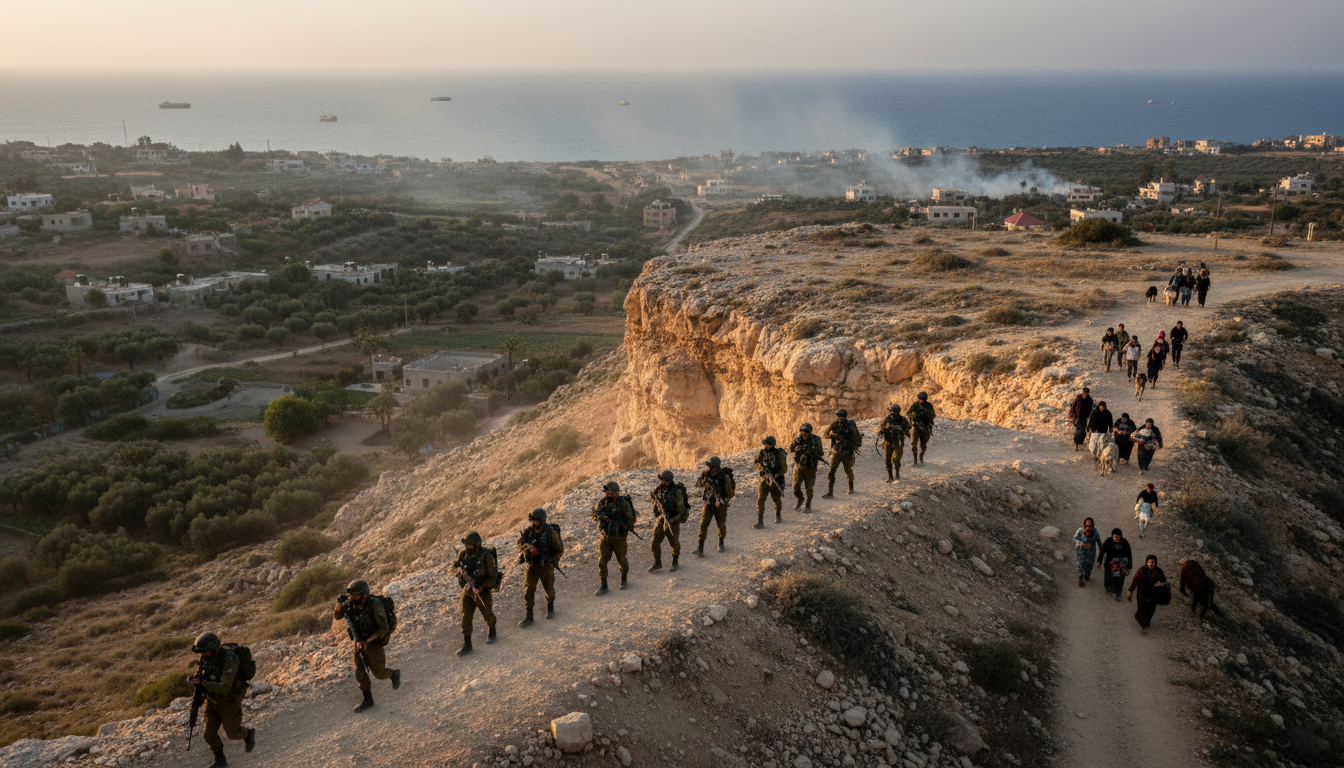
From the seafront in Sour, local residents say Israeli troops now occupy high ground at al-Bayada, visible along the shoreline toward Naqoura.
People watching from Nabih Berri Street describe anxiety and a sense of being continually observed as the newly reported positions provide clear views along the coast.
Witnesses and displaced families say the occupation has transformed once-familiar headlands into forward observation points, altering daily life and movement along the coastal route.
The presence of soldiers on nearby cliffs has intensified fears that surveillance and direct observation will limit civilians’ ability to return to their homes.
Displacement and daily life along the Blue Line
Dozens of internally displaced people from villages nearest the UN-drawn Blue Line have taken refuge in Sour despite severe destruction to housing and infrastructure.
Many say their land is either uninhabitable from bombardment or effectively under occupation, preventing normal resettlement.
Local streets that once bustled are now sparsely trafficked, and checkpoints manned by Lebanese forces and armed groups limit access further south.
Residents describe a cycle of short returns to check properties followed by rapid retreats when security conditions deteriorate.
Violence and the ceasefire aftermath
Although a ceasefire took effect on April 17, multiple residents report renewed gunfire and strikes in the days that followed, including an incident that left villagers trapped and unable to receive aid.
Those who tried to return immediately after the truce say they were fired upon from ground and air, and that Red Cross and security teams were barred from entering some communities.
One account describes a four-day siege during which trapped villagers survived on limited supplies, highlighting how fragile the ceasefire has been for civilians on the ground.
Authorities in the area report dozens of fatalities from strikes since early March, including women, children and medical personnel, compounding calls for humanitarian access.
Damage to villages and cultural heritage
Villages such as al-Mansouri and Majdal Zoun show extensive structural damage, with collapsed buildings, severed minarets and widespread debris marking the landscape.
Residents returning briefly find little left intact and significant shortages of water, power and shelter, making sustained returns impractical.
The shrine and fort in the occupied village of Shama, including the tomb of Shamoun al-Safa, have been damaged, prompting Lebanon’s culture ministry to lodge an urgent complaint with UNESCO.
Local people say visible flags and military emblems on nearby high ground underscore the contested nature of heritage sites and civilian spaces.
Local perspectives on resistance and security responsibility
Many residents express deep mistrust of state protection and say they rely on Hezbollah as a security guarantor, while others call for greater action from Lebanese institutions.
Voices in the communities point to repeated incursions and surveillance as evidence, they say, of broader territorial aims that exceed immediate military objectives.
Some residents invoke past political statements and regional dynamics in explaining their fears, and others emphasize the immediate need for water, medical aid and safe corridors.
A pattern of belief in resistance as the primary defense against further territorial losses is common among those who remain or return daily to check on family property.
Frontline clashes and continuing tensions
Hezbollah and Israeli forces continue to report engagements along northern coastal approaches and inland villages, with claims of drone interceptions and localized firefights.
Villagers in Qlaileh and surrounding areas have mourned fighters killed in combat, and community gatherings reflect both grief and determination to hold land.
Surveillance drones and occasional explosions contribute to a pervasive atmosphere of uncertainty and intermittent displacement across the southern governorates.
Humanitarian observers warn that continued skirmishes and restricted access risk prolonging civilian suffering and complicating efforts to document damage and assist those affected.
Residents and displaced families say they remain caught between an uncertain ceasefire and what they describe as a de facto occupation, with everyday life constrained by observation posts, damaged infrastructure and limited humanitarian access.

