
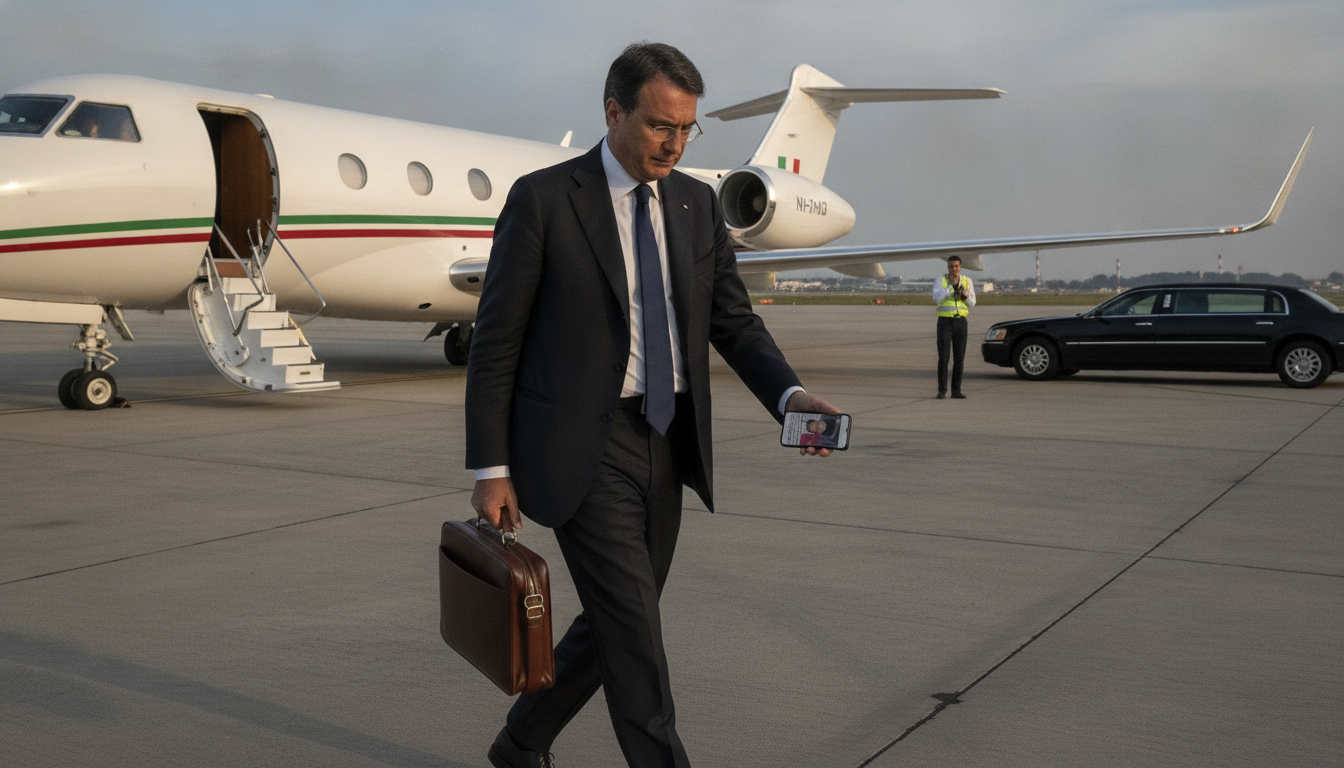
Tajani cancels US visit after Trump’s remarks about Prime Minister Meloni
Tajani cancels US visit scheduled June 21 after Trump’s TV interview said Prime Minister Meloni ‘begged’ for a photo, prompting diplomatic protest in Rome.
Italy’s Deputy Prime Minister and Foreign Minister Antonio Tajani on June 19 announced he was cancelling a planned trip to the United States, saying President Donald Trump’s recent television remarks about Prime Minister Giorgia Meloni were “insulting.” Tajani cancels US visit just two days before it was due to begin, escalating a diplomatic rift between Rome and Washington over comments aired after the G7 summit. The decision came after an Italian television interview in which Mr. Trump described his interaction with Ms. Meloni at the summit and suggested she had sought a photo.
Trump’s television interview and the disputed account
In an interview aired on June 19, President Trump recounted his encounter with Prime Minister Meloni during the G7 meeting, saying he had not been obliged to speak with her and later characterizing the exchange in dismissive terms. The remarks, broadcast by an Italian network, included an allegation that Ms. Meloni had asked insistently to be photographed with the president, a portrayal that Italian officials called inaccurate.
Italian officials and political allies of Ms. Meloni seized on the comments as both factually wrong and diplomatically inappropriate, saying the language used by a sitting U.S. president toward a partner at a major summit crossed a line. The comments have reverberated through Rome’s political circles, prompting calls for clarification and formal protest.
Meloni posts video denying Trump’s version
Prime Minister Giorgia Meloni responded quickly on social media, posting a video message in which she flatly rejected the portrayal of events and called the account “a complete fabrication.” In the video, Ms. Meloni expressed surprise and indignation, saying neither she nor Italy had acted as Mr. Trump described and that she was “taken aback” by the implication.
Her office emphasized that the leader’s conduct at multilateral meetings follows established diplomatic protocols and underscored that Italian officials did not “beg” for photographs or favors. The video was circulated widely and helped crystallize domestic political support for a stronger response from Rome.
Tajani cancels US visit and cites insult to Italy
Antonio Tajani, who holds the posts of deputy prime minister and foreign minister, announced on June 19 via social media that he would not proceed with the U.S. visit planned to begin on June 21. Tajani framed his decision as a matter of principle, citing the tone and content of the president’s televised remarks as incompatible with the treatment Italy expects from a close ally.
The abrupt cancellation removes a scheduled opportunity for high-level talks and signals a rare public rupture between two NATO partners. Tajani’s statement stopped short of calling for a formal diplomatic severance, but it did indicate that Rome intended to register its displeasure at the highest levels.
Details of the G7 encounter cited by both sides
The exchange at the center of the dispute took place during this month’s G7 summit in Évian, where leaders held a series of meetings and bilateral interactions. President Trump’s version depicted a brief encounter he judged unremarkable except for what he described as a persistent request for a photograph.
Italian officials contest that timeline and motive, arguing the meeting was typical of summit diplomacy and that the characterization broadcast in the interview misrepresented Meloni’s conduct. Observers note that disagreements over small gestures can carry outsized symbolic weight when amplified by mass media and partisan politics.
Diplomatic fallout and immediate consequences
The cancellation of the visit has immediate practical effects: planned bilateral meetings and working-level exchanges will need to be postponed or reassigned, and a window for direct dialogue is now narrower. Rome’s move also obliges Washington to decide whether to offer clarification, an apology, or to treat the matter as closed.
Analysts say the episode could complicate cooperation on shared priorities ranging from security to economic coordination, even if the substantive policy agendas remain aligned. The incident underscores how personal remarks by heads of state can quickly become issues of statecraft when they touch on dignity and national pride.
Political implications in Italy and among allies
Domestically, the episode has allowed Italy’s leadership to project firmness toward what it frames as disrespect from a powerful partner, a posture that may resonate with nationalist and conservative constituencies. At the same time, opposition figures warn that prolonged strain with the United States could carry risks for Italy’s strategic interests.
Among other allied capitals, officials are likely to watch whether Washington offers a formal response or correction, as such a move would shape how quickly normal diplomatic rhythms can resume. For now, officials in Rome say they will await further clarification before deciding on next steps.
The cancellation by Tajani has transformed a brief summit anecdote into a substantive diplomatic dispute, leaving bilateral consultations in flux and raising questions about how allied relations will be managed in the coming days. The situation remains fluid, and both Rome and Washington may yet take steps to reduce tensions and restore scheduled talks.

