
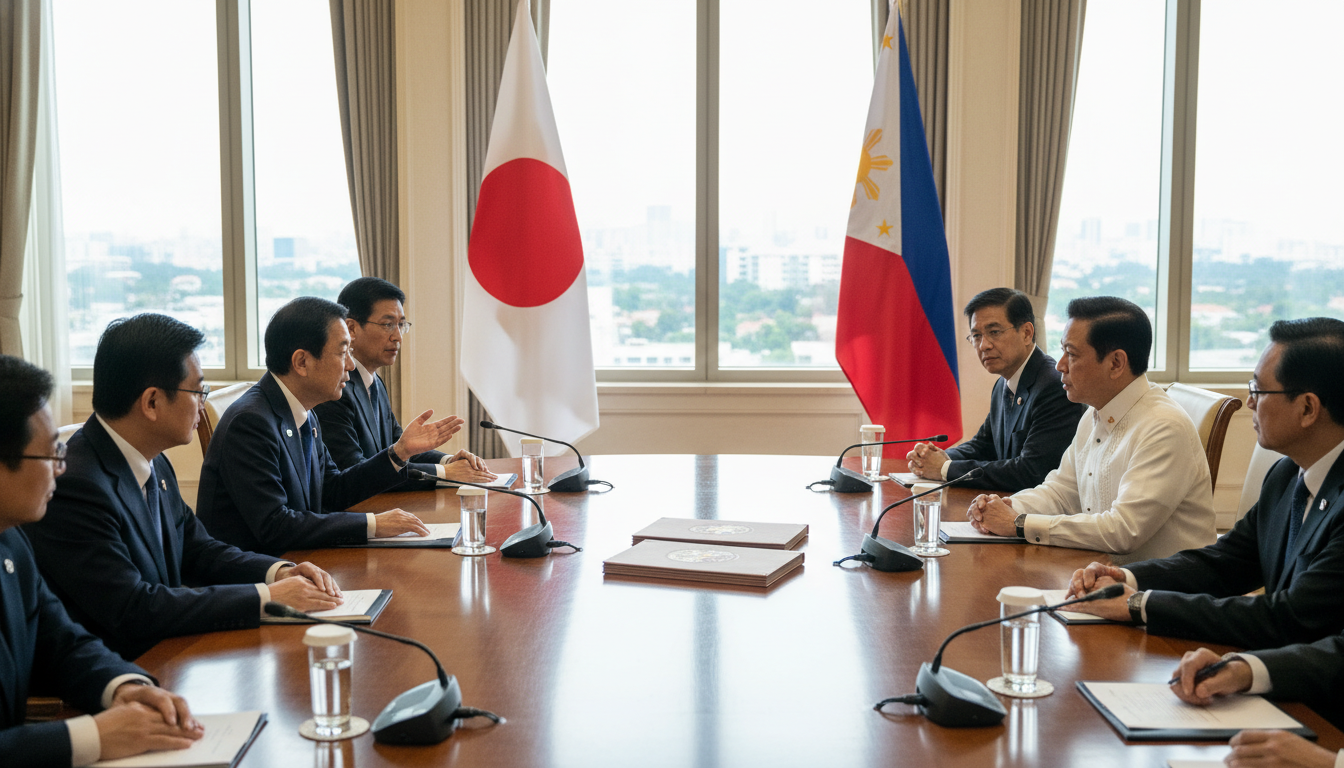
Japan, Philippines to begin formal talks on an intelligence-sharing agreement
Japan and the Philippines will start formal negotiations next week on an information security agreement to enable the exchange of classified security information, officials said. (japantimes.co.jp)
Takaichi and Marcos to open formal talks
Japanese Prime Minister Sanae Takaichi and Philippine President Ferdinand Marcos Jr. are scheduled to meet during a state visit that runs from May 26 to May 29, 2026. Their talks are expected to include the opening of negotiations on an intelligence-sharing pact that would permit the secure transfer of classified security data between Tokyo and Manila. (mofa.go.jp)
The decision to pursue a formal information security agreement follows a series of high-level exchanges between the two capitals this year. Both governments have publicly signalled a desire to deepen defence cooperation amid an increasingly fraught regional security environment. (mod.go.jp)
Bilateral defense agenda on state visit
The state visit will include a summit meeting and discussions with business leaders and the Filipino community in Japan, underscoring the multipronged nature of the visit. Security cooperation has been flagged by Manila and Tokyo as a central agenda item, with both sides preparing to discuss logistics, equipment transfers and intelligence mechanisms. (mofa.go.jp)
Officials in both capitals have already held defence-level talks in recent weeks that laid groundwork for political-level negotiations. Tokyo’s defence ministry and Manila’s defence authorities emphasised the need to enhance situational awareness and information sharing as tensions rose in regional waters. (mod.go.jp)
Defense ministers’ recent agreements and initiatives
In early May, Japan’s defence minister met his Philippine counterpart and President Marcos to expand ties, including exploratory talks on a weapons transfer arrangement that could see Japan provide surplus destroyers to the Philippine navy. These meetings helped fast-track discussions on interoperability and support mechanisms. (apnews.com)
The two defence ministries’ joint statements emphasised continued exchanges on regional affairs and confirmed that dialogues on concrete cooperation, including information sharing, would continue under both governments’ leadership. That momentum is being carried into the upcoming summit-level negotiations. (mod.go.jp)
Scope and purpose of the proposed information security agreement
The proposed information security agreement would set the legal and technical rules for protecting classified information exchanged between Japan and the Philippines. Such pacts typically define classification standards, handling procedures and penalties for unauthorized disclosure, enabling deeper operational collaboration. (mofa.go.jp)
For Tokyo and Manila, the pact would allow more timely sharing of intelligence on maritime incidents, surveillance data and other security-relevant information that can improve joint responses to coercive actions at sea. Officials say secure information flows are a prerequisite for more advanced defence cooperation. (mod.go.jp)
Regional context: tensions and shared concerns
The move to negotiate an intelligence-sharing agreement occurs against a backdrop of rising tensions in the South China Sea and concerns about coercive activities around maritime features. Both Japan and the Philippines have cited the need to protect maritime stability and safeguard sea lines of communication as drivers for closer security coordination. (apnews.com)
Taiwan’s security has also entered recent diplomatic exchanges, with Manila and Tokyo acknowledging the strategic risks posed by any escalation and the potential implications for neighbouring countries. Those regional anxieties have sharpened political will in both capitals to create formal mechanisms for exchanging classified information. (japantimes.co.jp)
Negotiation timeline and likely next steps
Diplomats and defence officials are expected to open technical talks after the summit, with teams scheduled to work on legal text, classification reciprocity and communications security. Depending on progress, negotiators may follow a phased approach that begins with limited categories of information and expands over time. (mod.go.jp)
The negotiation process could take several months, as both sides must reconcile different legal frameworks and protections for classified material. Any final agreement would then require approval through domestic procedures in Tokyo and Manila before it can enter into force. (mofa.go.jp)
The two countries’ push for a formal information security agreement marks a notable step in practical security cooperation between Tokyo and Manila. As the talks begin next week, observers will watch how quickly negotiators can translate strategic alignment into binding technical arrangements that support joint responses to regional risks.

