
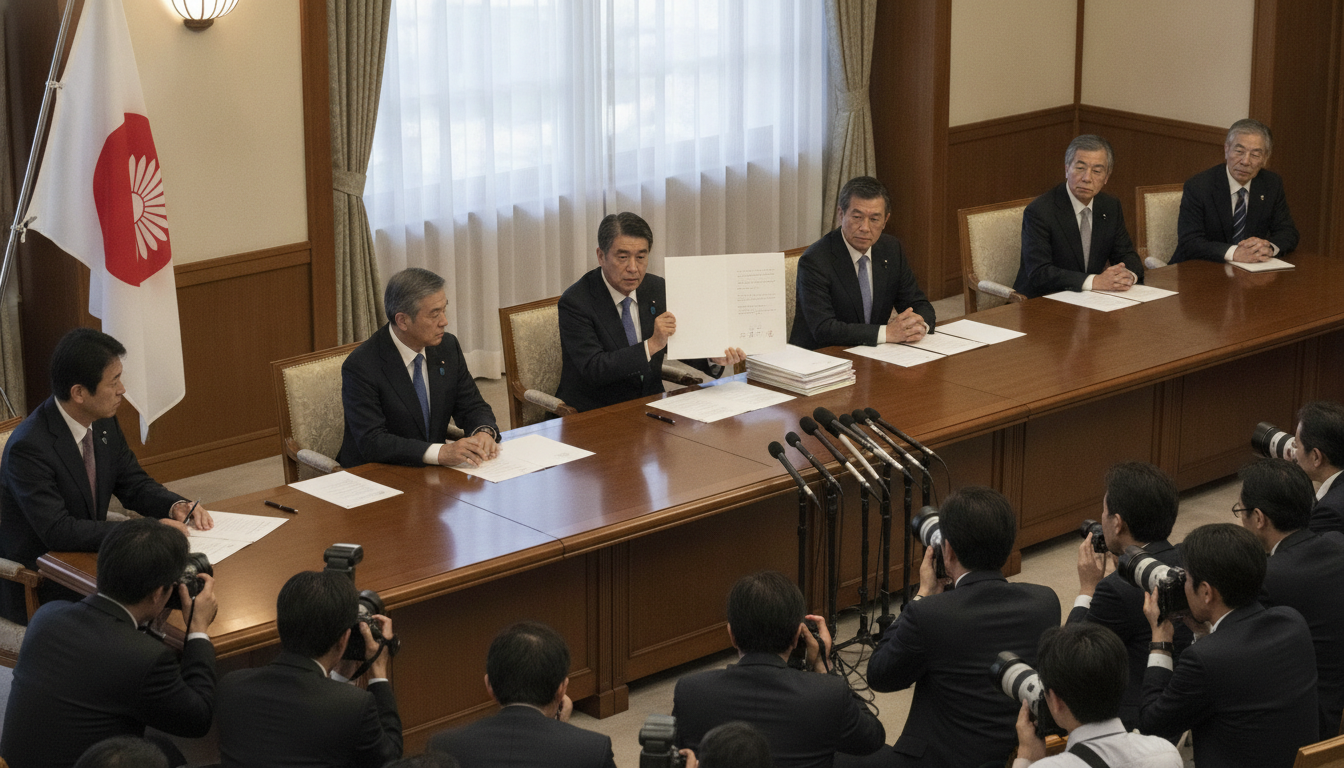
Japan cabinet approves 1% consumption tax on food for two years starting April 2027
Japan’s cabinet approved a bill to cut the consumption tax on food to 1% from 8% for two years beginning April 2027, while questions remain over how the revenue shortfall will be financed.
Prime Minister Sanae Takaichi’s government said the measure is intended to ease household costs ahead of next year, but officials have not identified specific funding to cover the lost tax receipts. The bill will be submitted to the Diet for deliberation amid growing scrutiny from opposition parties and fiscal analysts.
Cabinet Approval and Bill Submission
The cabinet formally agreed to a bill that would reduce the consumption tax on food to 1% from the current 8% rate for a two-year period beginning April 2027. The decision was announced after a cabinet meeting led by Prime Minister Sanae Takaichi in Tokyo.
Government officials confirmed the legislation will be transmitted to the Diet for passage, setting the stage for parliamentary debate this summer and autumn. The administration framed the move as a targeted relief measure to help households cope with rising living costs.
Tax Change Details and Scope
Under the proposal, the reduced consumption tax on food would apply to eligible food purchases, lowering the effective tax burden to 1% for the specified period. The measure is described by the government as temporary, with the standard consumption tax rate otherwise remaining unchanged.
Officials have outlined that the cut is aimed specifically at food items, but finer points—such as exemptions, treatment of takeout and delivery, and application to prepared foods—will be clarified in implementing regulations. Lawmakers and business groups will be watching for technical definitions that could affect retailers and restaurants.
Budget Shortfall and Funding Questions
Despite approving the bill, the cabinet offered limited detail on how the government intends to offset the revenue shortfall created by the reduced tax on food. Finance ministry officials have indicated that identifying funding sources remains a priority, but no concrete package was presented at the time of the cabinet decision.
Fiscal experts warn that a prolonged reduction in consumption tax receipts will place pressure on public finances, particularly given existing commitments to social spending and debt service. Analysts and opposition members are expected to press the government in the Diet for a clear financing plan before any final vote.
Political Reactions and Parliamentary Outlook
The announcement has already provoked a range of political responses, with the ruling coalition championing the tax cut as urgent relief for households. Prime Minister Takaichi and senior ministers framed the proposal as responsive economic policy designed to bolster public support ahead of upcoming legislative sessions.
Opposition parties have signaled skepticism, calling for detailed fiscal accounting and questioning the policy’s long-term prudence. Parliamentary debate is likely to be vigorous, with committees examining both the economic merits of the cut and the credibility of the government’s plan to finance the gap.
Economic and Consumer Effects
Proponents argue the measure will put immediate cash back in the pockets of consumers, potentially lifting spending in food-related sectors and providing modest stimulus to the economy. Retailers, supermarkets and food-service businesses may see short-term sales benefits if consumers respond to lower prices.
However, economists caution that a temporary cut could produce only transient effects and may complicate pricing strategies for businesses. The broader economic impact will depend on implementation details, consumer confidence, and whether the measure is accompanied by other fiscal or monetary actions.
Implementation Schedule and Administrative Steps
If passed by the Diet, the reduced consumption tax on food is scheduled to take effect in April 2027 and remain in place for two years. Ministries will need to draft implementing rules, update tax collection systems, and issue guidance to businesses well ahead of the start date.
Tax authorities must coordinate with retailers and payment processors to ensure smooth application of the altered rate and to prevent confusion at checkout points. The government has signaled an intention to move quickly through the legislative process, but administrative readiness will be critical to avoid disruptions.
The coming weeks of parliamentary review will determine whether the bill advances unchanged, is amended to include financing measures, or faces delays as lawmakers seek greater fiscal clarity.

