
Japanese schools use Minecraft to rebuild prewar Tokyo streetscape to teach WWII
Japanese educators use Minecraft to recreate prewar Bunkyo ward, helping students grasp World War II history as firsthand memories disappear.
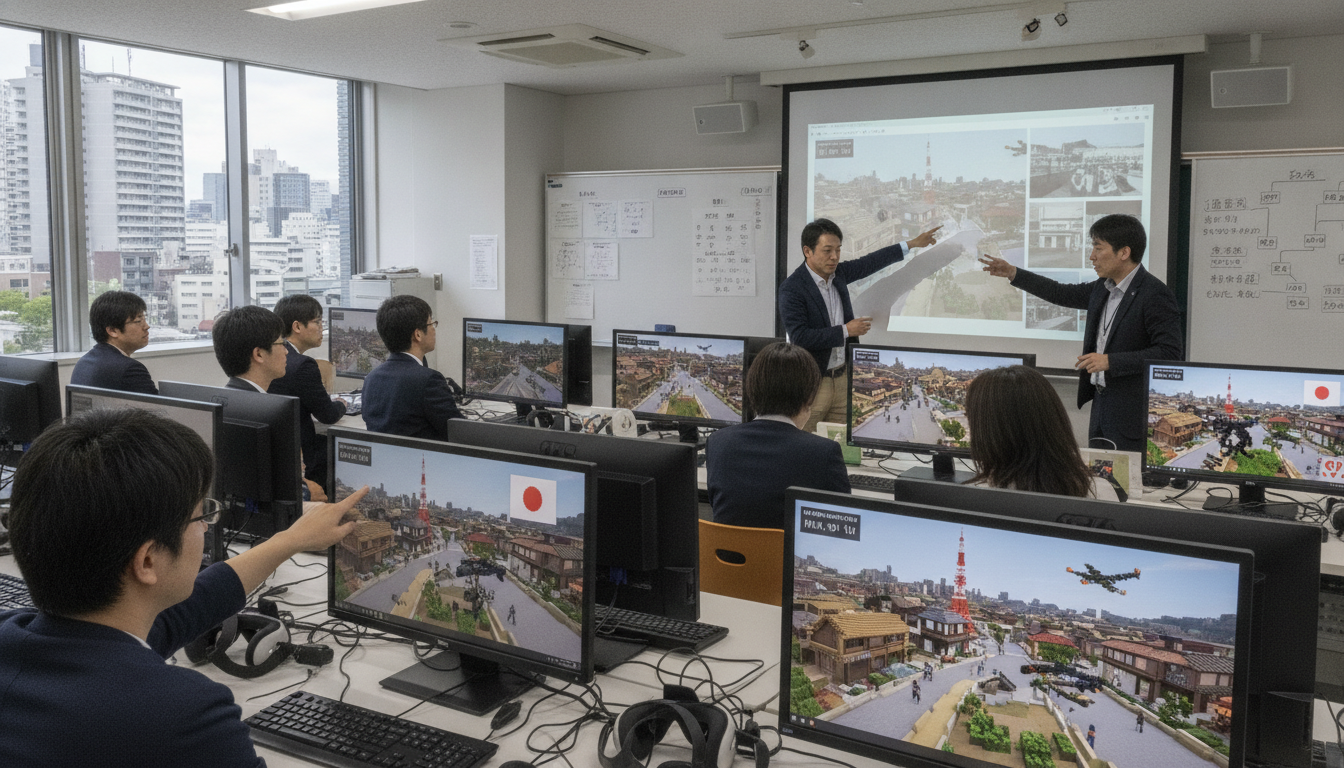
As Japan’s wartime survivors grow fewer, educators in Tokyo are turning to Minecraft and other video games to recreate the streetscape of prewar Bunkyo ward and teach students the human impact of World War II. The digital reconstruction project pairs historical maps, photographs and survivor testimony with guided classroom activities to give children a tangible sense of urban life before the 1945 incendiary bombings. Organizers say the approach aims to close the gap left by fading personal memories and to encourage critical reflection about the past.
Schools Recreate Prewar Bunkyo Ward in Minecraft
Students and teachers have collaborated to digitally rebuild neighborhoods in Bunkyo ward using Minecraft’s block-based tools. Working from municipal archives and vintage photographs, pupils layer streets, homes and landmarks into a virtual model intended to reflect the ward’s appearance before wartime destruction.
Classroom sessions move beyond construction: students compare the reconstructed environment with modern maps and discuss how wartime policies and bombing raids changed daily life. Educators describe the exercise as a way to make history spatially immediate without relying solely on textbooks.
Teachers Cite Decline in Firsthand WWII Memory
Schools across Japan face a shrinking pool of eyewitnesses who can speak about wartime experiences directly to younger generations. With the passage of time, survivors’ memories and local oral histories are becoming less accessible, prompting teachers to look for new pedagogical tools.
Officials and curriculum planners say adopting digital reconstructions can supplement dwindling oral testimony by preserving visual and spatial records of neighborhoods lost in the war. The goal is not to replace survivor voices but to create additional pathways for students to encounter and question the past.
How the Minecraft Project Operates in Classrooms
Project teams begin by digitizing public-domain maps and scanning archival photographs that show street patterns and building styles. Students then translate those sources into Minecraft blocks under teacher supervision, recreating scale and orientation as closely as possible within the game’s constraints.
Lessons are structured to include research, construction and reflection phases. After building, pupils walk through the virtual neighborhood, record observations, and compare their reconstructions with documentary evidence to assess accuracy and assumptions.
Balancing Historical Accuracy and Ethical Concerns
While Minecraft makes historical reconstruction accessible, educators acknowledge limits to the medium’s realism and the risk of trivializing trauma. To manage those concerns, teachers partner with local historians, museum curators and municipal archivists to vet source material and provide contextual briefings.
Classroom discussions are designed to foreground the consequences of wartime decisions and the human cost of urban bombing. Ethical guidelines developed by schools encourage students to treat the virtual space as a site for learning and remembrance rather than entertainment.
Student Reactions and Learning Outcomes
Teachers report heightened engagement and deeper retention of historical facts compared with more conventional lessons. Students often show greater curiosity about everyday life in prewar Tokyo, asking questions about housing, shops and the routines that defined neighborhoods before the bombings.
Educators also note that the project develops digital literacy and collaborative skills as pupils negotiate design choices and reconcile different historical sources. For many students, sketching a rebuilt street in Minecraft produces an emotional response that prompts further research and discussion.
Local Partnerships and Expansion Plans
The initiative has drawn interest from municipal cultural offices and local museums, which see digital reconstructions as a way to broaden public history outreach. Organizers are exploring ways to integrate oral histories and recorded testimonies into the virtual environment to enrich the learning experience.
Some schools are considering expanding the model to other wards and historical periods, while others are seeking funding to create guided virtual tours accessible to students nationwide. Planners emphasize that any expansion would require continued collaboration with archives and surviving witnesses to maintain accuracy.
As Japan contends with a shrinking population of World War II eyewitnesses, the use of Minecraft and similar digital tools reflects a pragmatic response to the challenge of keeping history alive for new generations. Educators say the reconstruction projects are not a substitute for survivor testimony but a complementary method that helps students visualize the physical and social landscape of wartime Japan while prompting critical inquiry into the causes and consequences of conflict.

