
Japan-Ecuador trade agreement advances as Tokyo seeks crude oil and rare earths diversification
Japan pursues a Japan-Ecuador trade agreement to diversify crude oil and rare earth supplies, expanding ties with South America after a Mercosur accord.
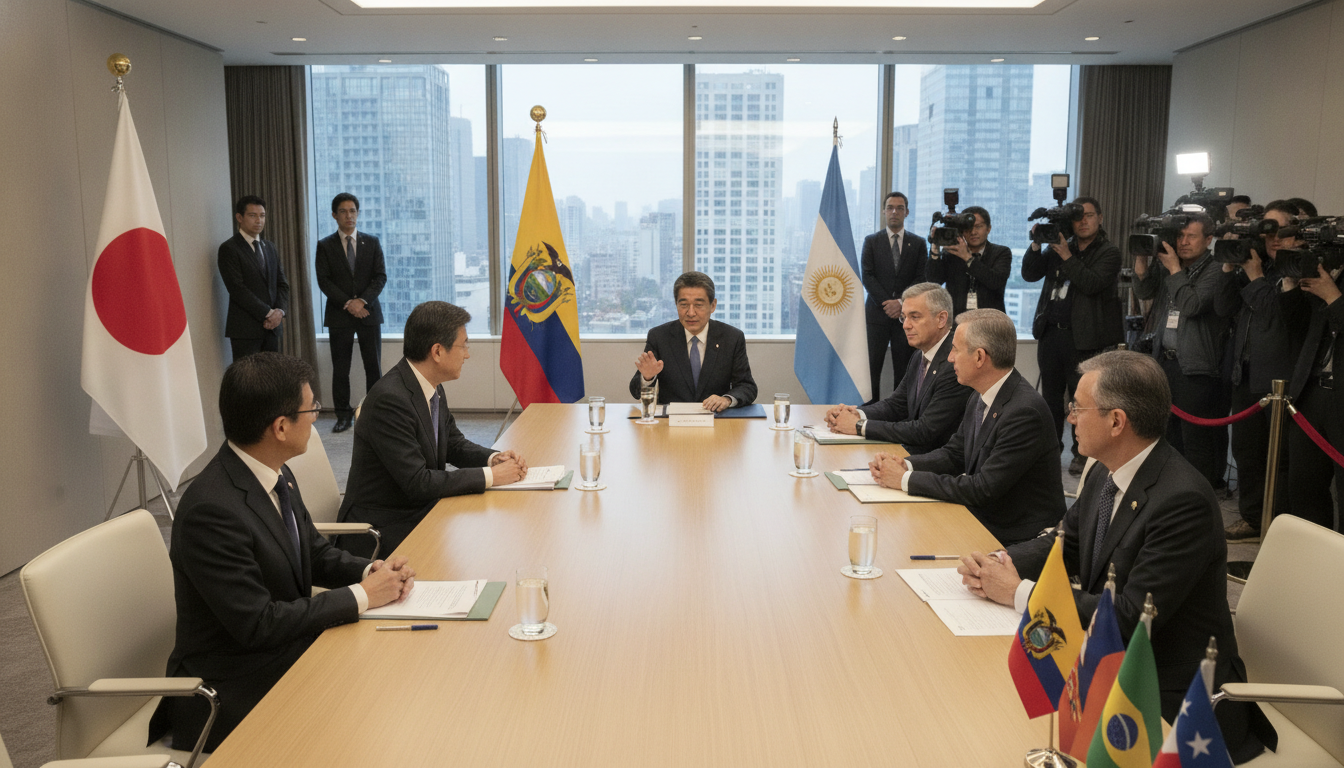
Tokyo is moving to deepen economic cooperation with South America by pursuing a Japan-Ecuador trade agreement that officials say would broaden access to crude oil and rare earths. The move follows a preliminary accord with the Mercosur trade bloc and comes as Japan seeks to secure a more diversified supply base for key commodities. Japanese Foreign Minister Toshimitsu Motegi met his Ecuadorian counterpart Roberto Kury Pesantes in Quito on Aug. 6, signaling Tokyo’s intent to accelerate talks. The meetings underscore a wider push to convert diplomatic outreach into concrete commercial ties.
Tokyo’s strategic outreach to South America
Japan’s effort to negotiate a Japan-Ecuador trade agreement comes within a broader strategy to strengthen links across South America. Tokyo has emphasized the region’s resource potential and market opportunities as part of its economic diplomacy. Officials frame the talks as complementary to existing partnerships and to the preliminary arrangement reached with Mercosur. Economic and political officials on both sides have described the engagement as pragmatic and focused on supply-security objectives.
Mercosur preliminary accord as a springboard
The preliminary agreement with the Mercosur bloc has created momentum for bilateral negotiations with individual South American states. Japanese diplomats say the Mercosur framework helps reduce transactional friction and opens channels for more detailed, country-level deals. For Tokyo, the bloc-level understanding offers a template for standards and procedural cooperation that can be adapted in talks with Ecuador. Observers note that the sequencing—bloc-level understanding followed by bilateral pacts—reflects a cautious, layered approach to trade expansion.
Ecuador talks center on crude oil and rare earths
Japanese officials have made it clear that crude oil and rare earths are priorities in discussions with Quito. Ecuador is a significant producer of hydrocarbons, and its mining and geological sector contains deposits relevant to high-tech supply chains. Japan’s focus on rare earths reflects industrial demand for materials used in electronics, automotive components and renewable-energy technologies. Negotiators are reportedly exploring frameworks that would facilitate stable exports while addressing environmental, regulatory and investment concerns.
Economic and strategic motivations in Tokyo
Beyond raw-material procurement, Tokyo’s pursuit of a Japan-Ecuador trade agreement is motivated by broader economic and strategic considerations. Diversifying suppliers helps reduce concentration risk for critical inputs and supports industrial resilience amid global market volatility. Japan’s trade policy also aims to secure long-term investment opportunities for firms in sectors such as energy, mining, logistics and infrastructure. Analysts say these arrangements can strengthen bilateral ties while offering Japanese companies preferential access or streamlined procedures.
Domestic and international constraints
Negotiations face domestic political and regulatory constraints in both countries, including environmental standards, local-content rules and fiscal implications for Ecuador. Japanese stakeholders will be attentive to social and sustainability conditions that shape foreign investment in extractive sectors. Internationally, Tokyo must balance these new engagements with existing relationships with traditional suppliers and multilateral trade commitments. The complexity of natural-resource agreements means timelines can extend as technical, legal and political issues are settled.
Diplomatic signals and next steps
The Aug. 6 meeting between Foreign Minister Toshimitsu Motegi and Roberto Kury Pesantes, photographed and cited by the Japanese Ministry of Foreign Affairs, signals a diplomatic opening that negotiators will now attempt to operationalize. Officials expect follow-up working-level talks on trade terms, regulatory cooperation and potential investment guarantees. Tokyo has not published a detailed timetable for concluding a Japan-Ecuador trade agreement, and negotiators face the task of aligning commercial goals with domestic review processes. Observers expect the pace to depend on how quickly both sides reconcile market access with safeguards.
Japan’s initiative to broaden sources of crude oil and rare earths through a Japan-Ecuador trade agreement reflects a broader recalibration of supply-chain strategy. As discussions progress, details on tariff schedules, investment protections and environmental commitments will determine the agreement’s scope and durability. The coming months are likely to reveal whether this diplomatic momentum translates into a formal pact or a phased program of sectoral cooperation.

